
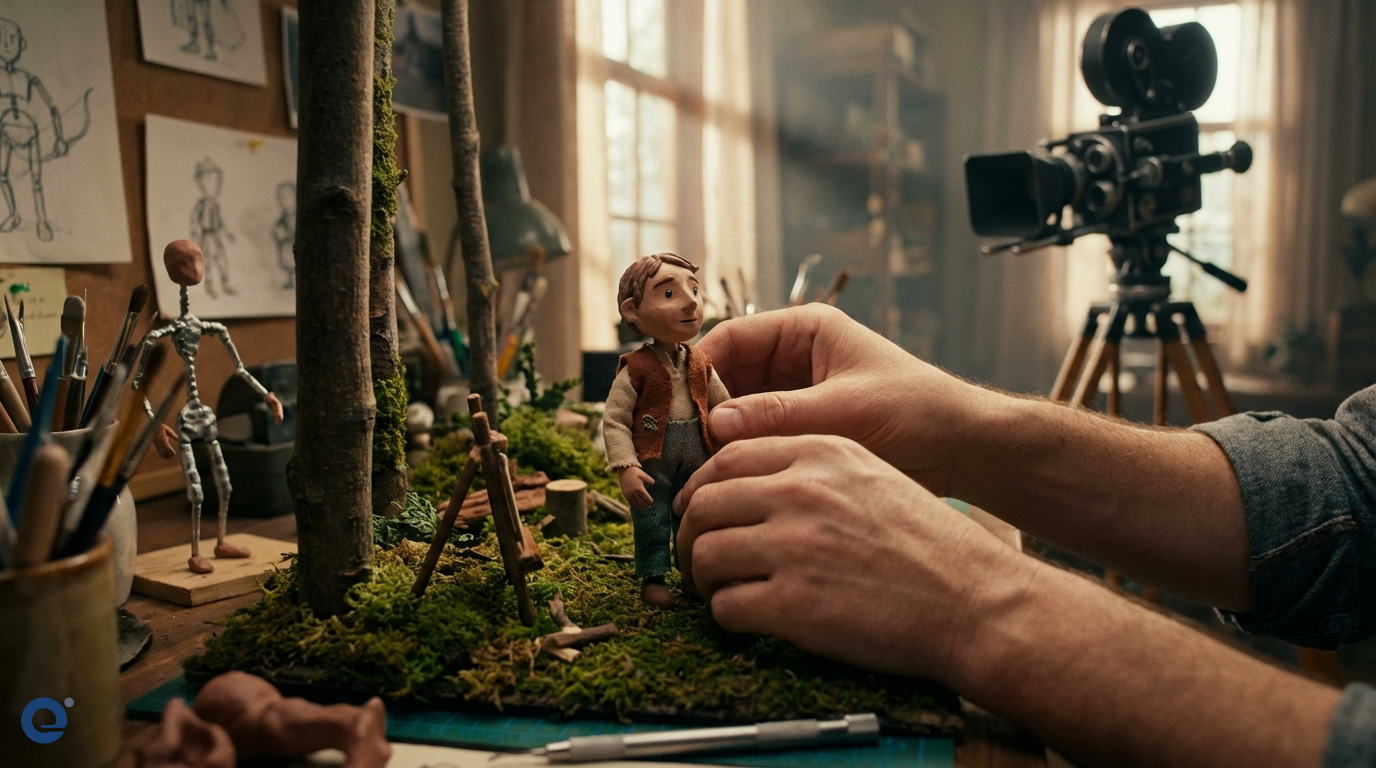
Handmade stop motion animation is a captivating filmmaking technique. It involves physically manipulating objects in small increments between individually photographed frames. When these frames are played back as a sequence, it creates the illusion of movement. This method offers a unique, tangible charm that digital animation often lacks. For independent filmmakers, it presents a wonderfully accessible and artistically fulfilling way to tell stories.
The timeless allure of stop motion
Stop motion animation has a rich history, dating back over a century. Despite the rise of sophisticated CGI, it continues to enchant audiences. Its enduring appeal lies in the visible human touch and the texture of real-world materials. You can see the artist's hand in every frame.
Iconic works like "Shaun the Sheep" (2007) demonstrate its incredible reach, spanning multiple seasons and films. Furthermore, films like "Chicken Run" (2000) and "Coraline" (2009) have achieved critical acclaim, with the latter earning an Oscar nomination. More recently, "Guillermo del Toro's Pinocchio" (2022) won the Academy Award for Best Animated Feature, showcasing the technique's continued relevance and power. These films highlight the unique visual style that stop motion offers, something very difficult to replicate with 2D or 3D animation, as noted by director Pham Duy Anh.
Understanding the basics: Frame by frame magic
So, how does it work? Stop motion animation is created by taking a photograph of objects or puppets. Then, the objects are moved very slightly and another photograph is taken. This process is repeated thousands of times. When the photographs (frames) are played back in rapid succession, usually at 12 or 24 frames per second[1], the objects appear to move on their own.
The entire set and characters are often built by hand. Every tiny change, every subtle movement, is captured one frame at a time. This meticulous process, combined with post-production, breathes life into the inanimate, giving stop motion its distinctive and captivating quality.
Getting started: Your first stop motion project
Embarking on your stop motion journey is exciting. You don't need a massive budget to start. Many inspiring projects begin with simple materials and tools.
Materials make the world
The beauty of handmade stop motion lies in its versatility. You can animate almost anything:
- Clay: Plasticine or oil-based clay is a classic choice, allowing for fluid transformations and expressive characters.
- Puppets: These can range from simple wire armatures[2] covered in fabric or foam to more complex ball-and-socket jointed figures.
- Cut-outs: Paper or card cut-outs offer a 2D aesthetic within a 3D space.
- Objects: Everyday items, toys (like LEGO), or found objects can be brought to life.
The material you choose will heavily influence the look and feel of your animation.
Basic equipment
While you can get very sophisticated, the basic equipment is quite accessible:
- Camera: A DSLR, mirrorless camera, or even a good smartphone camera can work. Manual focus and exposure control are highly desirable.
- Tripod: A sturdy tripod is absolutely essential to keep the camera perfectly still between frames. Any camera movement will be very noticeable.
- Lighting: Consistent lighting is crucial. Use lamps or dedicated lighting kits, and block out natural light, which changes over time.
- Software/App: You'll need software or an app to capture and sequence your frames.
- Remote shutter/Intervalometer: To avoid touching the camera and causing movement, a remote shutter release or intervalometer is very helpful.
Many filmmakers start with basic setups and gradually upgrade their gear as they gain experience.
Essential techniques for handmade stop motion
Mastering stop motion requires patience and practice. Several techniques are fundamental to creating believable and engaging animation.
Creating smooth movement
The key to smooth movement is making very small changes between frames. The more frames you use for a particular action, the smoother and slower it will appear. Conversely, larger changes between frames result in faster, jerkier motion. Planning your movements and using small increments is vital.
Character design and fabrication
Your characters are the heart of your story. When designing them, consider how they will move. If using puppets, an internal armature allows for posing and stability. The design should also reflect the character's personality.
Set building
The set is your character's world. It needs to be stable and built to the correct scale for your characters. Consider the lighting and how it interacts with your set materials.
Tools of the trade: Software and apps
Modern technology has made stop motion more accessible than ever. Several software applications and mobile apps are designed specifically for stop motion animation.
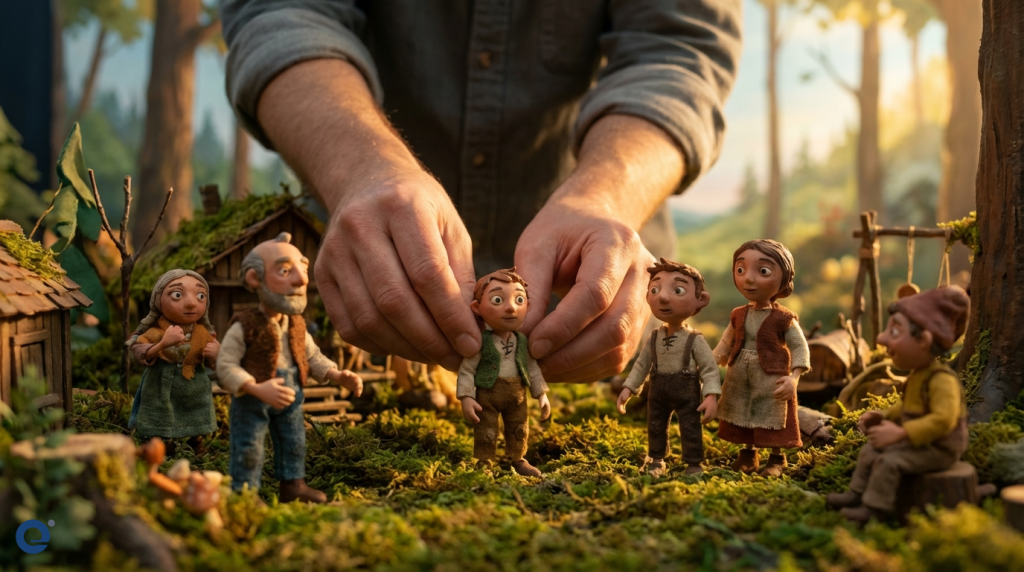
Apps like Stop Motion Studio Pro (available on Google Play) and the Stop Motion app (on the App Store) offer powerful features even on mobile devices.
Key software features
Look for features such as:
- Onion Skinning[3]: This displays a faint overlay of the previous frame(s) over the live camera view, helping you gauge the next movement accurately.
- Timeline/Frame Editor: Allows you to review, edit, copy, paste, and delete frames easily.
- Manual Camera Controls: The ability to lock focus, exposure, ISO, and white balance is crucial for consistency.
- Import Audio: Adding sound, music, or dialogue.
- Green Screen[4]/Chroma Key: To composite different backgrounds.
- Rotoscoping[5]: Importing video to trace over for animation guidance.
- Export Options: Ability to export in various video formats and resolutions (e.g., 1080p, 4K).
Many apps offer a simple interface, making them suitable even for beginners. Some even allow you to use a second device as a remote camera.
The production process: From idea to screen
A stop motion project, like any film, follows a production process.
Storyboarding and planning
Before you start animating, plan your shots. Storyboards help visualize the sequence of events and camera angles. An animatic (a timed storyboard with rough audio) can be very useful for pacing.
Shooting frame by frame
This is the core of stop motion. Work in a controlled environment with consistent lighting. Move your characters and objects in tiny increments, capturing a frame after each adjustment. Be patient and methodical.
Post-production
Once shooting is complete, the frames are sequenced into a video file. Post-production involves:
- Editing: Assembling the shots, refining timing.
- Sound Design: Adding sound effects, foley, and music.
- Color Correction: Adjusting colors and exposure for consistency.
- Visual Effects: Adding digital effects if needed, like rig removal or compositing.
This stage brings all the elements together to create the final film.
Challenges and rewards for indie filmmakers
Handmade stop motion is incredibly rewarding, but it comes with challenges.
The time factor
It is undeniably time-consuming. Creating just a few seconds of animation can take hours. Independent filmmakers need to be prepared for the commitment.
Budget considerations
While you can start simply, costs can add up with more complex puppets, sets, and equipment. However, it can still be more budget-friendly than other forms of animation or live-action requiring large crews and locations. Many resources are available online to help get started with stop motion.
Unique aesthetic and creative control
The biggest reward is the unique, tangible aesthetic and the complete creative control it offers. Every element on screen is crafted and moved by the filmmaker, resulting in a deeply personal work of art.
The future of handmade stop motion
Stop motion is not just a relic of the past; it has a vibrant future. Companies like Sconnect in Vietnam are investing in stop motion, recognizing its untapped potential in the region. They faced challenges initially due to the novelty of the technology in Vietnam but persevered through research and innovation.
We are also seeing exciting blends of stop motion with digital techniques, opening up new creative avenues. The tactile nature of stop motion offers something that audiences, saturated with digital content, crave.
Conclusion: Animate your world
For independent filmmakers, handmade stop motion animation is a powerful medium for storytelling. It demands patience and dedication, but the results can be uniquely magical and deeply rewarding. With accessible tools and a wealth of online resources, there has never been a better time to bring your stories to life, one frame at a time.
More Information
- Frame Rate: The number of individual images (frames) displayed per second to create the illusion of motion. Common frame rates are 12, 24, 25, or 30 frames per second (fps).
- Armature: The internal skeleton of a stop motion puppet, typically made of wire or ball-and-socket joints, allowing it to be posed and hold its position between frames.
- Onion Skinning: A feature in animation software that shows a translucent overlay of the previous and/or next frames, helping the animator to see the progression of movement and make precise adjustments.
- Green Screen: A technique where a subject is filmed against a solid green background, which is then digitally replaced with a different image or video in post-production. Also known as chroma keying.
- Rotoscoping: An animation technique where animators trace over live-action footage, frame by frame, to create realistic motion. In stop motion apps, it can involve importing video as a guide for posing.