
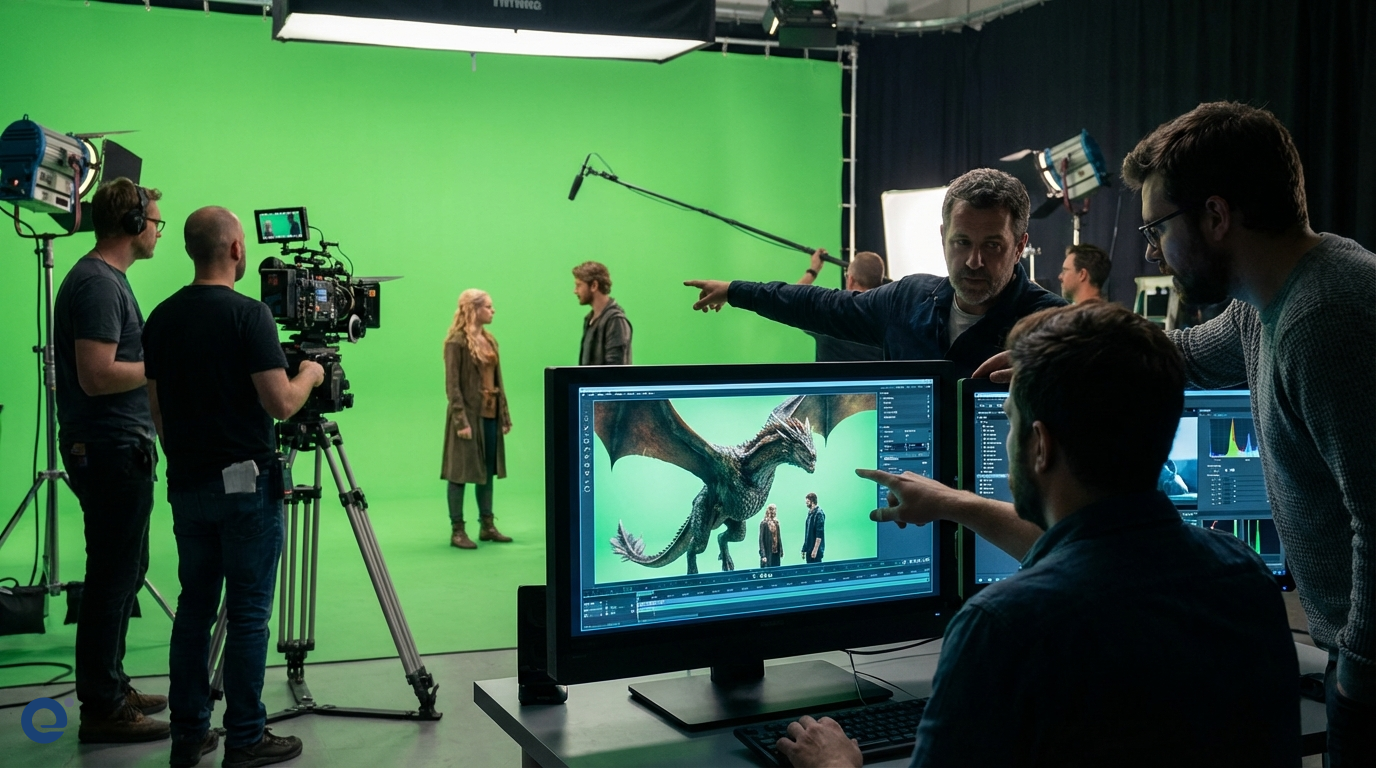
Computer-Generated Imagery (CGI) has fundamentally transformed the landscape of cinema. It allows filmmakers to create breathtaking worlds and impossible scenes. Therefore, understanding CGI is crucial for film directors today.
The dawn of digital magic
The journey of CGI in film began decades ago. Early experiments were simple. However, they laid the groundwork for today's complex effects. Films like "Tron" (1982) and "Young Sherlock Holmes" (1985) showcased early CGI, amazing audiences. Subsequently, "Jurassic Park" (1993) marked a massive leap, bringing dinosaurs to life with stunning realism.
From simple graphics to complex worlds
Initially, CGI was used sparingly. It was expensive and time-consuming. But, technology advanced rapidly. Computers became more powerful. Software became more sophisticated. As a result, filmmakers could attempt more ambitious visuals.
The 1990s saw a surge in CGI use. Films like "Terminator 2: Judgment Day" and "Toy Story" demonstrated its growing capabilities. Consequently, CGI became an integral part of blockbuster filmmaking.
Key CGI techniques shaping modern movies
Several core techniques form the backbone of modern CGI. These include modeling, animation, rendering, and compositing. Each plays a vital role in creating digital magic.
Modeling: Building the digital assets
Modeling is the process of creating 3D digital objects. Artists use specialized software to sculpt characters, props, and environments. Firstly, they might create a basic wireframe. Then, they add details and textures. This stage is like digital sculpting.
The level of detail can be incredible. For instance, digital characters can have realistic skin, hair, and clothing. Environments can be vast and intricate. Therefore, modeling is a highly skilled art form.
Animation: Bringing models to life
Once models are created, animation gives them movement. Animators define how objects or characters move over time. This can involve keyframing, where animators set key poses. The software then interpolates the movement between these poses.
Motion capture[1] is another important animation technique. It involves recording the movement of real actors or objects. This data is then applied to digital models, creating very realistic motion. Consequently, many films use motion capture for lifelike characters.
Rendering: Creating the final image
Rendering[2] is the process of generating the final 2D image from the 3D scene. This involves calculating how light interacts with the surfaces of the models. It considers textures, lighting, and camera angles. Therefore, rendering is computationally intensive.
Render farms, large clusters of computers, are often used. They work together to render the numerous frames needed for a film sequence. Achieving photorealism[3] is often the goal, making the CGI indistinguishable from reality.
Compositing: Blending digital and live-action
Compositing[4] is where CGI elements are combined with live-action footage. Artists layer different visual elements together. They adjust colors, lighting, and shadows to ensure everything blends seamlessly. This is crucial for integrating CGI into real-world scenes.
Green screens or blue screens are often used during filming. This allows filmmakers to easily replace the background with digital environments or effects during compositing. Thus, compositing is the final step in integrating CGI.
The profound impact of CGI on filmmaking
CGI has revolutionized what is possible in cinema. Directors can now tell stories that were previously unfilmable. They can create epic battles, fantastical creatures, and entire alien worlds. This expands creative freedom enormously.
Expanding storytelling horizons
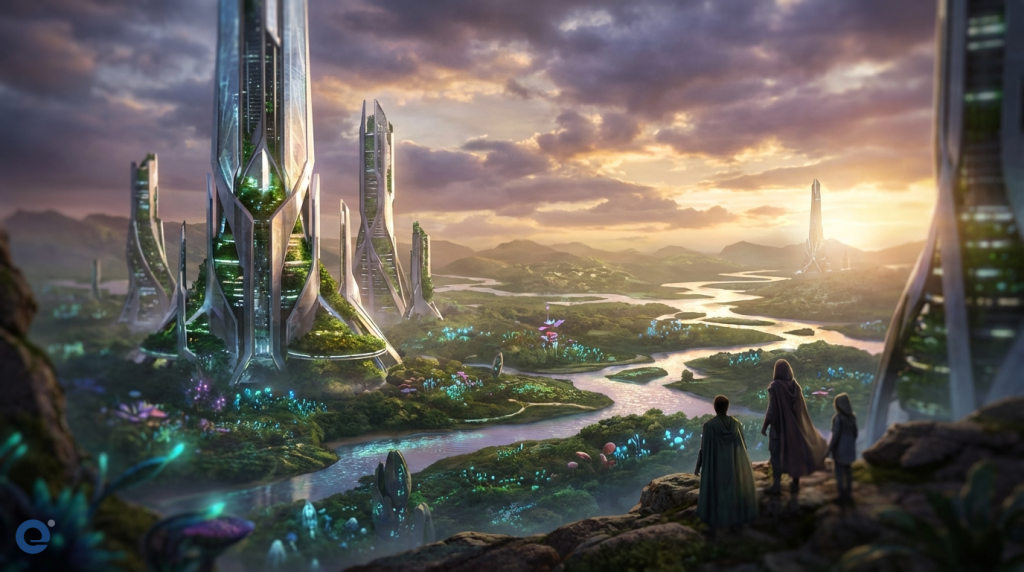
Filmmakers are no longer limited by physical constraints. They can visualize the impossible. For example, space odysseys and fantasy epics rely heavily on CGI. Moreover, historical films can recreate past eras with incredible detail.
This allows for more immersive and engaging storytelling. Audiences can be transported to places and times they could never experience otherwise. Therefore, CGI enhances the cinematic experience.
Creating believable characters and creatures
CGI allows for the creation of completely digital characters. Think of Gollum in "Lord of the Rings" or the Na'vi in "Avatar". These characters are brought to life through a combination of modeling, animation (often with motion capture), and rendering. They can express a wide range of emotions and interact realistically with live actors.
This opens up new avenues for character-driven stories. It also allows for the creation of creatures that look and behave realistically, even if they are entirely imaginary. The captivating world of animal character animation also benefits greatly from these advancements.
Enhancing visual effects (VFX)
CGI is the backbone of modern visual effects (VFX)[5]. Explosions, weather effects, and large-scale destruction are often created or enhanced using CGI. This allows for safer and more controllable effects compared to practical methods. Furthermore, it enables effects that are simply impossible to achieve practically.
The integration of CGI with practical effects is also common. This hybrid approach often yields the most believable results. You can learn more about mastering complex VFX visual effects through dedicated resources.
Challenges and limitations of CGI
Despite its power, CGI is not without its challenges. The cost of high-quality CGI can be enormous. It requires skilled artists and significant computing power. Therefore, budget is often a major constraint.
The uncanny valley
When creating digital humans, filmmakers sometimes encounter the "uncanny valley". This is where a digital character looks very close to human, but something is slightly off. This can make the character feel creepy or unsettling to audiences. Consequently, artists work hard to avoid this phenomenon.
Over-reliance and creative impact
Some critics argue that there is an over-reliance on CGI in modern cinema. They feel it can sometimes overshadow story and character development. However, when used thoughtfully, CGI is a powerful tool that enhances, rather than detracts from, the narrative.
The key is balance. CGI should serve the story, not dominate it. Directors must decide when and how to use CGI effectively.
The future of CGI in cinema
The future of CGI looks incredibly exciting. Real-time rendering engines, like those used in video games, are becoming more integrated into filmmaking workflows. This allows directors to see near-final CGI effects live on set.
AI and machine learning
Artificial intelligence (AI) and machine learning are also beginning to play a role. AI could assist with tasks like motion capture cleanup, creating digital crowds, or even generating initial 3D models. This could speed up the workflow and potentially reduce costs.
Virtual production
Virtual production techniques, using large LED screens displaying CGI environments on set, are becoming more common. This allows actors to interact with the digital world more directly during filming. It also provides realistic lighting and reflections, reducing the amount of compositing needed later.
These advancements promise even more seamless and immersive cinematic experiences in the years to come. Therefore, CGI will continue to be a vital and evolving part of filmmaking.
Conclusion: The enduring magic of digital
CGI has undeniably revolutionized cinema. From its humble beginnings to its current sophistication, it has empowered filmmakers to bring their wildest visions to life. While challenges remain, the continuous evolution of technology promises an even more exciting future for digital effects in film. Ultimately, CGI is a tool, and like any tool, its power lies in the hands of the artist—the film director.
More Information
- Motion Capture: A technique where the movement of an actor or object is recorded and then applied to a 3D computer model to animate it with realistic motion.
- Rendering: The process of generating a final 2D image or animation from a 3D model or scene by calculating light, shadow, texture, and other optical effects.
- Photorealism: The goal in computer graphics to create images that are indistinguishable from photographs of real-world scenes, objects, or people.
- Compositing: The process of combining multiple visual elements from different sources into a single image, often to create the illusion that all elements are part of the same scene.
- VFX (Visual Effects): The processes by which imagery is created or manipulated outside the context of a live-action shot in filmmaking and video production, often involving CGI.