Cinematic lighting is more than just illumination. It is an art form. It breathes life into scenes. Therefore, it shapes mood and guides the audience's eye.
Good lighting transforms a simple shot. It can turn it into a powerful moment. Consequently, cinematographers are often called painters with light. They use light and shadow to tell stories.
Understanding the language of light
Light speaks a language all its own. Cinematographers must understand this language. They use it to convey emotion and meaning. Indeed, the quality, direction, and color of light are crucial elements.
Qualities of light: Hard vs. soft
Light has different qualities. Hard light creates sharp, well-defined shadows. It often feels dramatic or harsh. Think of direct sunlight at noon.
Soft light, however, is diffused. It creates gentle, less defined shadows. It generally feels more gentle or natural. Imagine an overcast day.
Direction of light
The direction from which light hits a subject is vital. Key light is the primary light source. Fill light softens shadows created by the key. Back light separates the subject from the background.
These lights work together. They create depth and dimension. Thus, the scene looks more three-dimensional.
Color temperature and its impact
Light also has color. We measure this as color temperature in Kelvin (K). Lower Kelvin values produce warmer, orange tones. Higher values create cooler, blue tones.
Color temperature significantly affects the mood. Warm light can feel cozy or nostalgic. Cool light might feel sterile or somber. Therefore, cinematographers choose colors carefully.
Key lighting techniques
Several established techniques form the cinematographer's toolkit. These methods help create specific looks and feels. Understanding them is fundamental.
Three-point lighting
Three-point lighting[1] is a standard setup. It uses a key light, fill light, and back light. This technique provides good illumination. It also creates a sense of depth.
It's a versatile starting point. Many variations exist. However, the basic principle remains the same.
High-key lighting
High-key lighting is bright and even. It has minimal shadows. This style often conveys optimism or openness. You see it in comedies and musicals frequently.
Low-key lighting and chiaroscuro
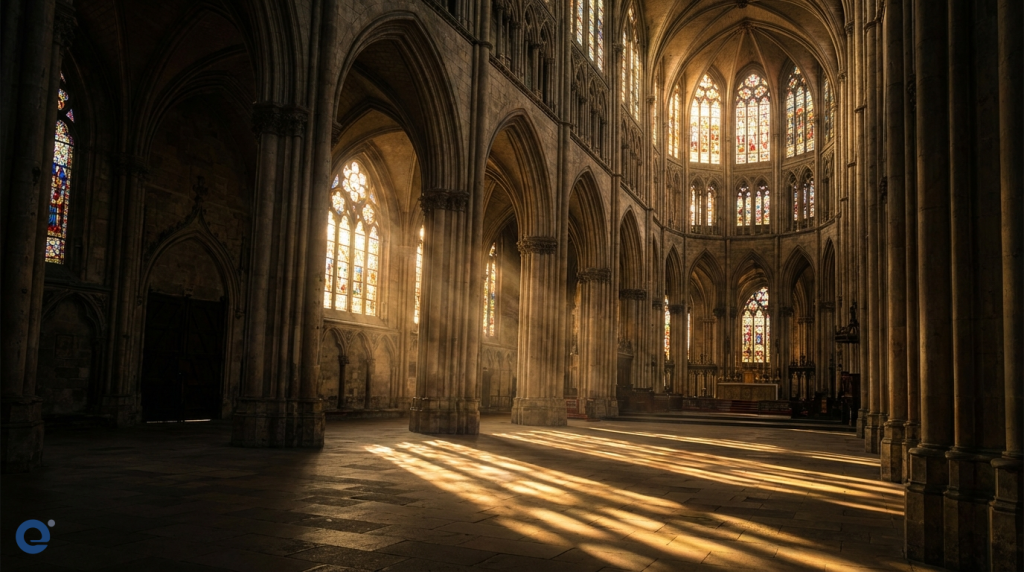
Low-key lighting uses deep shadows. It has a high contrast between light and dark. This creates drama and mystery. It is common in film noir and thrillers.
Chiaroscuro[2] is an extreme form of low-key lighting. It emphasizes the contrast dramatically. It sculpts figures with light and shadow.
Motivated lighting
Motivated lighting appears to come from a natural source within the scene. This could be a lamp, a window, or a fire. It makes the lighting feel realistic. Therefore, it enhances immersion.
Practical lighting
Practical lights are actual working light fixtures within the scene. These include lamps, candles, or car headlights. They can act as motivated light sources. They also add realism to the set.
Tools of the trade
Cinematographers use various tools. These tools shape and control light. Mastery of these tools is essential.
Types of lights
Many types of lights are available. Fresnels offer a controllable beam. LEDs are versatile and energy-efficient. HMIs[3] provide powerful daylight-balanced light.
Each light type has unique properties. The choice depends on the desired effect. It also depends on the location and budget.
Light modifiers
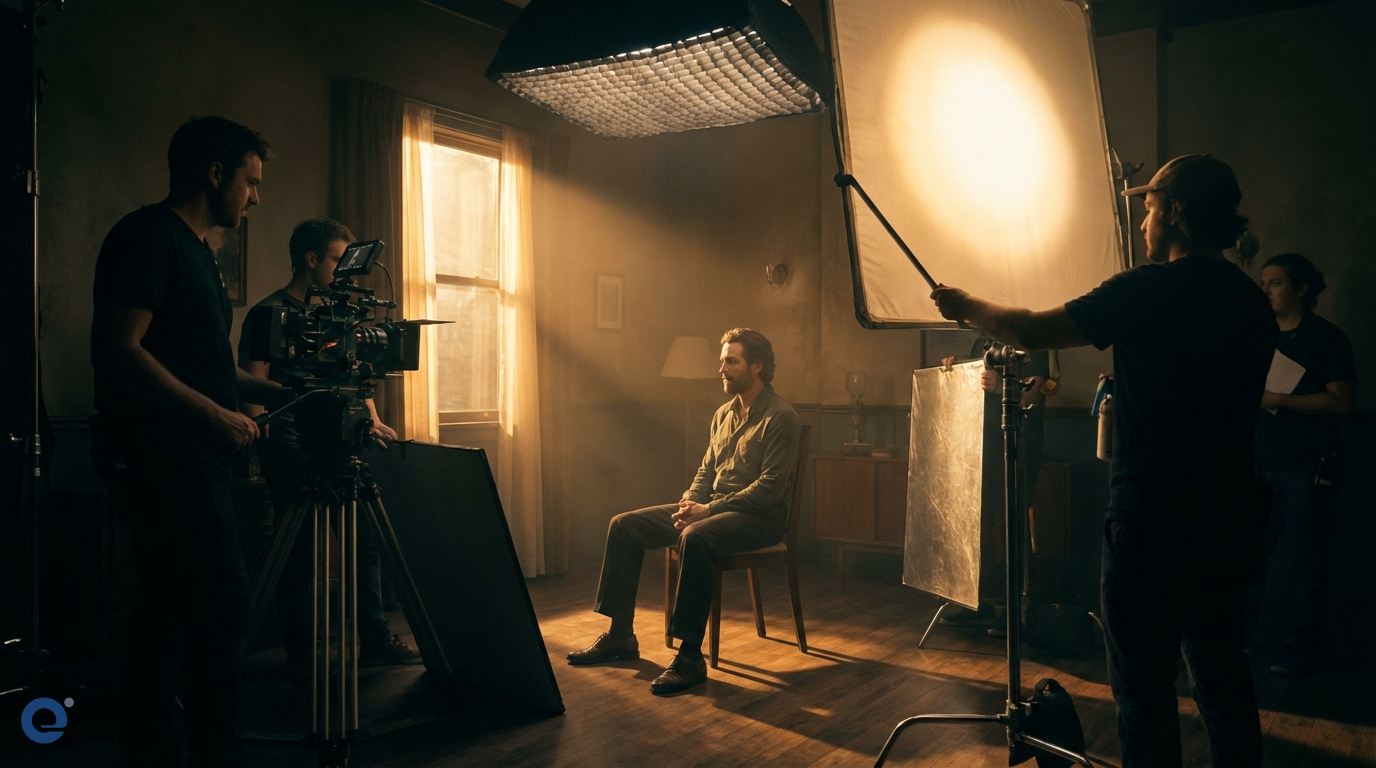
Modifiers change the quality of light. Diffusers soften light. Reflectors bounce light to fill shadows. Flags block light to create shadows.
These tools give cinematographers precise control. They can sculpt the light exactly as needed. Consequently, they achieve the desired look.
Grip equipment
Grip equipment supports and positions lights. Stands, clamps, and booms are common. Grips are the crew members who handle this gear. Their role is crucial on set.
Lighting for different genres
Lighting choices often depend on the film's genre. Different genres have different visual conventions. Light helps establish these conventions.
Drama
Dramas often use naturalistic lighting. However, they might use more contrast to heighten emotion. The lighting supports the emotional core of the story. It aims for realism but with an artistic touch.
Comedy
Comedies usually employ high-key lighting. Bright, even illumination suits the lighthearted tone. Fewer shadows prevent a sense of mystery or danger. The goal is clarity and cheerfulness.
Horror and thriller
Horror and thriller genres thrive on low-key lighting. Deep shadows and high contrast create suspense. What is hidden in the dark is often scarier. Therefore, lighting is key to building tension.
Sci-fi and fantasy
Sci-fi and fantasy films often use stylized lighting. Unnatural colors or dramatic beams can suggest otherworldly settings. Lighting helps build these fantastical worlds. It adds to the spectacle.
The cinematographer's role
The cinematographer, or Director of Photography (DP), leads the camera and lighting crews. They work closely with the director. Their collaboration is vital.
Collaboration with the director
The director has the overall vision. The cinematographer translates this vision into images. They discuss the mood and look of each scene. Good communication is essential.
Pre-production planning
Much of the work happens before shooting. The DP studies the script. They create shot lists and lighting diagrams. Storyboards help visualize the scenes. This planning saves time on set.
On-set execution and adaptation
On set, the DP oversees the lighting setup. They make adjustments as needed. Sometimes, unexpected challenges arise. The DP must adapt quickly. They ensure the lighting matches the plan and the director's vision.
Light and shadow in storytelling
Light and shadow are powerful storytelling tools. They do more than just illuminate. They add layers of meaning.
Creating depth and dimension
The interplay of light and shadow creates depth. It makes a two-dimensional screen appear three-dimensional. This enhances the realism and immersion. It pulls the viewer into the world.
Revealing and concealing
Light reveals, and shadow conceals. Cinematographers use this to control information. What is shown is as important as what is hidden. This can build suspense or surprise.
Guiding the viewer's eye
Our eyes are naturally drawn to brighter areas. Cinematographers use light to guide attention. They highlight important elements within the frame. This ensures the audience looks where intended.
Modern trends and technologies
The art of cinematic lighting continues to evolve. New technologies offer exciting possibilities. Cinematographers embrace these innovations.
LED advancements
LED lighting has revolutionized filmmaking. LEDs are lightweight and draw less power. Many offer full-color control and effects. This gives DPs more creative freedom.
Virtual production and lighting
Virtual production[4] uses large LED screens as backgrounds. These screens can display any environment. They also emit light, affecting the actors and set. This integrates real and virtual elements seamlessly.
The role of CGI and VFX in lighting
Computer-Generated Imagery (CGI) and Visual Effects (VFX)[5] play a huge role. Lighting is crucial for integrating CGI elements realistically. Digital lighting tools allow for incredible control in post-production. You can learn more about CGI techniques in cinema and their impact.
Sometimes, lighting is even created entirely digitally. This is especially true in fully animated films or scenes with extensive VFX. The principles of lighting in 3D animation share much with live-action cinematography.
Conclusion: The enduring power of light
The art of cinematic lighting is fundamental to filmmaking. It shapes the look, mood, and meaning of a film. From classic techniques to modern technology, light remains a powerful tool.
Cinematographers will continue to innovate. They will find new ways to paint with light. Ultimately, their work enriches the stories we see on screen.
More Information
- Three-Point Lighting: A standard lighting setup using three main lights: key light (main source), fill light (softens shadows), and back light (separates subject from background).
- Chiaroscuro: An Italian artistic term used to describe the dramatic effect of contrasting areas of light and dark in an artwork, particularly paintings. In film, it refers to low-key lighting with extreme contrast.
- HMIs (Hydrargyrum Medium-arc Iodide): A type of powerful, efficient lamp that produces light with a color temperature close to daylight (around 5600-6000K). They are widely used in film and television production.
- Virtual Production: A filmmaking method that uses real-time technologies, like game engines and LED walls, to combine live-action footage with computer graphics during filming, rather than mostly in post-production.
- VFX (Visual Effects): The process of creating or manipulating imagery outside the context of a live-action shot in filmmaking and video production. This includes integrating CGI, compositing, and other digital alterations.