

Online recruitment systems have revolutionized how companies find and hire talent. They streamline processes, broaden reach, and improve efficiency. However, like any technology, these systems are not immune to errors. These glitches can range from minor annoyances to significant roadblocks, impacting both employers and candidates. Understanding these common errors is the first step toward preventing them and ensuring a smoother hiring journey.
Data Entry and Input Errors
One of the most frequent sources of problems in any system is human error during data input. In online recruitment, this often manifests in how candidate information is entered or how job details are posted. Inaccurate or incomplete candidate profiles can lead to misidentification or missed opportunities. For instance, a typo in an email address can prevent a crucial communication from reaching a promising applicant.
Similarly, errors in job descriptions can be detrimental. Missing essential qualifications, incorrect salary ranges, or vague responsibilities can deter qualified candidates or attract the wrong ones. This can also lead to issues with tax credit eligibility if job details are misrepresented, though this is more a consequence of poor data management than a direct system error.
Applicant Tracking System (ATS) Compatibility Issues
Many online recruitment platforms rely heavily on Applicant Tracking Systems (ATS) to filter and manage applications. These systems are designed to scan resumes for specific keywords and formatting. Errors occur when resumes are not ATS-friendly, leading to them being overlooked.
Common mistakes include using complex formatting, graphics, or unusual fonts that the ATS cannot parse. Poor resume formatting is a significant hurdle, as ATS software may misread information or fail to extract key details. This can result in a lower resume score, even for highly qualified candidates.
Another ATS-related error is the absence or incorrect use of keywords. Job descriptions often contain specific terms that candidates should mirror in their resumes. Failing to include these keywords, or using synonyms that the ATS doesn’t recognize, can lead to automatic rejection. Conversely, “keyword stuffing” – overusing keywords – can also be flagged as an error.
Technical Glitches and System Malfunctions
The underlying technology of online recruitment systems can also be a source of errors. These can range from minor bugs to major system failures.
One common technical issue is the inability to upload or submit applications. Candidates might encounter error messages when trying to attach their resumes or complete application forms. This can be due to server issues, file size limitations not clearly communicated, or compatibility problems with the candidate’s browser or operating system.
System crashes or slow performance can also frustrate users. If a recruitment portal is frequently down or takes an excessively long time to load, it creates a negative candidate experience. This can lead to potential hires abandoning the application process altogether.
In some cases, errors can be more complex, resembling issues found in other software systems. For example, problems with COM objects, as seen in SQL Server Agent job errors, can sometimes manifest in unexpected ways within integrated recruitment tools, though the root cause might be different.
Communication Breakdowns
Effective communication is vital in recruitment. Online systems facilitate this, but errors can still occur.
Automated email notifications are a staple of recruitment platforms. However, these can fail due to incorrect email addresses in the system, spam filters, or technical issues with the email server. This can lead to candidates not receiving interview invitations, feedback, or important updates.
Conversely, candidates might receive too many irrelevant communications, leading to inbox fatigue and a perception of disorganization. This can happen if the system’s notification settings are not properly configured or if the candidate’s preferences are not accurately captured.
Security and Privacy Concerns
Handling sensitive personal data is inherent to recruitment. Errors in security protocols or data handling can have severe consequences.
Data breaches, where unauthorized parties gain access to candidate information, are a critical error. This can occur due to vulnerabilities in the system’s security architecture or human error in managing access controls.
Privacy violations, such as sharing candidate data without consent or failing to comply with data protection regulations like GDPR, are also significant errors. This can damage a company’s reputation and lead to legal repercussions.
Ensuring data integrity is also crucial. Errors that lead to data corruption or loss can hinder the recruitment process and compromise candidate records. This is akin to how medical errors can have severe consequences, as highlighted in discussions about medical error reduction and prevention, where system failures and human oversight contribute to adverse outcomes.
User Interface (UI) and User Experience (UX) Flaws
The design and usability of the recruitment platform itself can lead to errors.
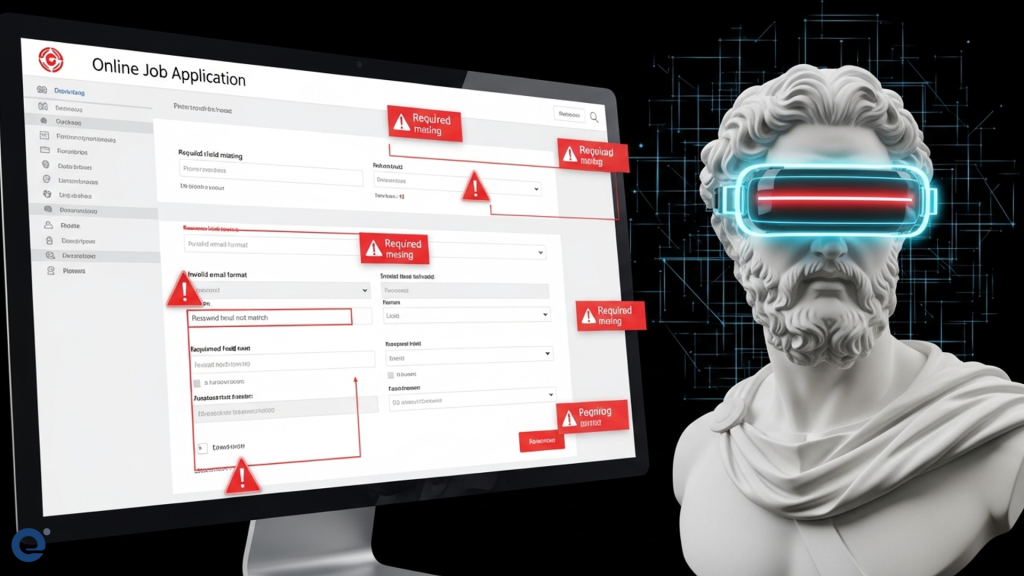
A confusing or unintuitive user interface can lead candidates and recruiters to make mistakes. If navigation is unclear, buttons are misplaced, or instructions are ambiguous, users may struggle to complete tasks correctly.
Poor user experience can manifest in various ways. For example, a lack of clear progress indicators during an application process can leave candidates feeling uncertain. Similarly, if the system doesn’t provide helpful error messages, users might not understand how to fix a problem.
This can also extend to the administrative side. Recruiters might make errors if the system’s backend is difficult to manage or if reporting features are not user-friendly. This can impact their ability to track candidates effectively or generate necessary reports.
Integration and Data Synchronization Errors
Many modern recruitment systems integrate with other HR tools, such as HRIS (Human Resources Information Systems) or payroll software. Errors can arise when these integrations are not seamless.
Data synchronization issues are common. If information updated in one system is not reflected in another, it can lead to discrepancies. For instance, a candidate’s status might be updated to “hired” in the recruitment system, but this change might not propagate to the HRIS, causing confusion.
API (Application Programming Interface) issues can also cause integration failures. If the APIs connecting different systems are not properly configured or maintained, data transfer can be interrupted or corrupted. This is a technical challenge that requires careful management, similar to how API configuration is crucial for seamless software interaction.
Search and Filtering Inaccuracies
Recruitment systems often include powerful search and filtering capabilities to help recruiters find specific candidates. Errors in these functions can be a major impediment.
Inaccurate search results can occur if the system’s indexing is flawed or if the search algorithm is not optimized. This might lead to relevant candidates being missed or irrelevant ones appearing at the top of the list.
Filtering errors can also be problematic. If filters are not applied correctly, or if the system misinterprets filter criteria, recruiters might not be able to narrow down their search effectively. This can waste valuable time and lead to missed opportunities.
The ability to effectively search and filter is paramount for efficient recruitment, much like how SEO multimedia enhances online discoverability.
Preventing and Mitigating Errors
Addressing these common errors requires a multi-faceted approach. For data input issues, robust validation rules and clear user guidance are essential. Training for recruiters on proper data entry can also significantly reduce mistakes.
To combat ATS compatibility problems, companies should educate candidates on resume best practices. Providing templates or clear guidelines on formatting and keyword usage can help. Regularly testing resumes against the specific ATS used can also identify potential issues.
Technical glitches often require ongoing system maintenance and updates. Promptly addressing bug reports and ensuring the platform is up-to-date can minimize downtime and functional errors. For user interface and experience flaws, user testing and feedback loops are invaluable for iterative improvement.
Security and privacy errors demand a strong focus on cybersecurity best practices, regular audits, and compliance with relevant regulations. Implementing multi-factor authentication and robust data encryption are critical steps.
Finally, for integration and synchronization issues, thorough testing of all connections and ongoing monitoring are necessary. Clear documentation and communication between teams managing different systems can prevent many data-related errors.
Conclusion
Online recruitment systems offer immense benefits, but their effectiveness hinges on their accuracy and reliability. By understanding the common errors—from data input mistakes and ATS compatibility issues to technical glitches and communication breakdowns—organizations can take proactive steps to mitigate them. A well-maintained, user-friendly, and secure recruitment system not only improves efficiency but also enhances the candidate experience, ultimately leading to better hiring outcomes.
More Information
- Applicant Tracking System (ATS): Software used by recruiters to manage the hiring process, from job posting to candidate screening and communication.
- Data Synchronization: The process of ensuring that data stored in different systems remains consistent and up-to-date across all platforms.
- User Interface (UI): The visual elements and interactive components of a digital product that a user interacts with.
- User Experience (UX): The overall feeling and satisfaction a user has when interacting with a product or service.
- API (Application Programming Interface): A set of rules and protocols that allows different software applications to communicate with each other.