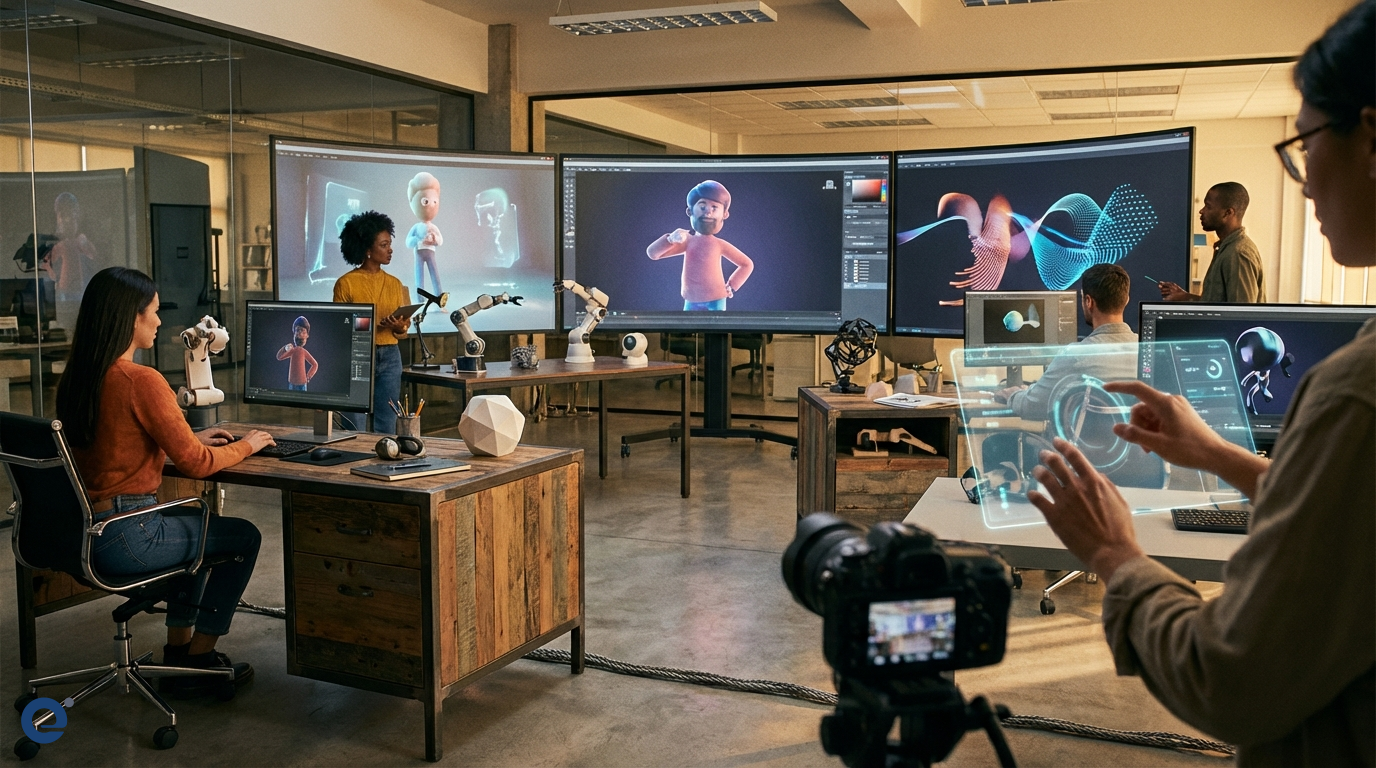
The world of 3D graphics is constantly evolving. New technologies and artistic styles emerge rapidly. Therefore, 3D animators must stay updated on the latest trends to remain competitive and creative. The year 2024 promises exciting developments, pushing the boundaries of what's possible in 3D animation and design. We see a blend of technological innovation and retro inspiration taking center stage.
The rise of 3D surrealism and AI
One of the most captivating trends is the emergence of 3D Surrealism[1]. This style involves creating dreamlike, bizarre, and illogical scenes using 3D tools. Moreover, the development of Artificial Intelligence (AI)[2] is heavily influencing this trend. AI tools like Midjourney and DALL-E allow artists to generate surreal concepts and elements quickly. These can then be refined and incorporated into 3D workflows.
This trend allows for incredible artistic freedom. Animators can build worlds that defy physics and reality. Consequently, we see more abstract and thought-provoking animations in advertising, short films, and music videos. The inflatable 3D shapes and cyberpunk aesthetics mentioned in Source 1 are part of this movement. Reddit's 2024 rebranding with a 3D logo and mascot is a prime example of this trend entering the mainstream, as noted by ATH Creative's analysis.
For 3D animators, this means exploring more imaginative concepts. It also involves learning how to integrate AI tools into the ideation and even asset creation process. However, the human touch remains crucial in refining these AI-generated ideas into polished 3D scenes. The ease of rendering these 3D images anywhere is a significant advantage.
Maximalism: Embracing detail and complexity
After years of minimalist dominance, Maximalism[3] is making a strong comeback in 2024. This trend is characterized by rich details, vibrant colors, complex compositions, and a "more is more" philosophy. In 3D graphics, this translates to incredibly detailed environments, characters, and textures.
Source 2 highlights the shift away from empty spaces towards designs filled with intricate and multi-colored graphic details. Every part of the design space is utilized. This style aims to capture and hold the viewer's attention for longer periods. However, it requires careful arrangement to avoid chaos. A key element often acts as a focal point.
3D animators can leverage maximalism to create immersive and visually stunning worlds. Think of lush jungles, bustling futuristic cities, or intricately decorated interiors. This trend demands high skill in modeling, texturing, and lighting to manage the complexity effectively. The use of large, bold fonts and overflowing gradient shapes also contributes to this style.
Nostalgia continues to be a powerful force in design. While 2023 saw a Y2K resurgence, 2024 is looking back to the 60s and 70s, as noted in Source 1. This involves warm retro color palettes, hand-drawn illustration styles adapted to 3D, and a focus on human feel.
However, the Y2K influence hasn't completely vanished. It blends with the 70s vibe, creating a unique mix. In 3D, this can manifest as groovy patterns, retro-futuristic designs, and character styles reminiscent of those eras, but rendered with modern 3D techniques. Think classic stripes, floral patterns, and playful motifs brought into the third dimension.
Animators can tap into this trend for projects that require a warm, familiar, or funky feel. It's about taking inspiration from the past and reinterpreting it with contemporary tools and sensibilities. The simplicity of older designs is being embraced in new ways.
Advanced 3D effects and motion graphics
The field of Motion Graphics[4] is becoming increasingly sophisticated. In 2024, we expect to see even more advanced 3D effects integrated into motion design. This includes complex particle simulations, fluid dynamics, and realistic physics-based animations.
Software like Adobe After Effects, Cinema 4D, Blender, and Houdini are becoming more powerful, as highlighted by iRender's review of top software. They allow animators to create stunning visual effects that were once the exclusive domain of high-budget films. These effects are now common in commercials, online content, and user interfaces.
3D animators specializing in motion graphics should focus on mastering these advanced tools and techniques. The demand for dynamic and engaging visual content is higher than ever. Combining graphic design principles with animation and visual effects is key.
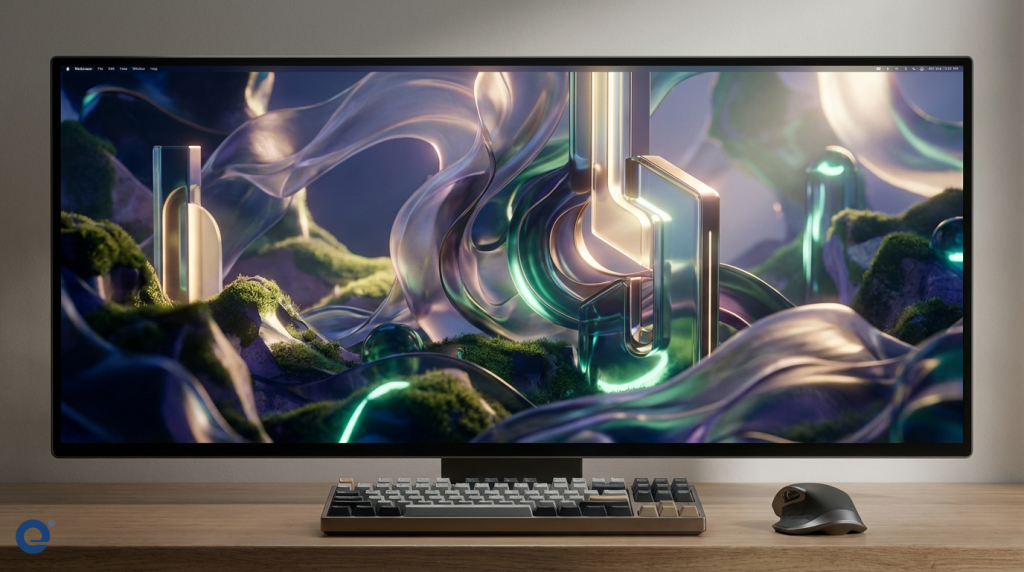
A surreal 3D landscape blending organic forms with glowing geometric structures, evoking a dreamlike atmosphere.
Vibrant colors and bold typography
Color plays a crucial role in 3D graphics, and 2024 is embracing vibrant and bold color palettes. Source 2 mentions the continued popularity of striking colors. These are used to create eye-catching and emotionally resonant 3D scenes. Gradients and contrasting colors are also widely used.
Typography within 3D spaces is also becoming more experimental. "Bubble Typography" and "Heavy Typography," mentioned in Source 2, involve using large, bold, and often animated 3D text as a central design element. This text interacts with the 3D environment, adding another layer of visual interest.
For animators, this means paying close attention to color theory and typographic design. The colors and fonts used can significantly impact the mood and message of an animation. Experimenting with 3D text animation can also open up new creative avenues.
Neo-Brutalism in 3D
Neo-Brutalism[5], as described in Source 3, is a bold and raw design trend inspired by Brutalist architecture. While often seen in web and graphic design, its principles can be applied to 3D. This involves raw, unornamented 3D forms, strong contrasts, and a utilitarian aesthetic.
In 3D animation, Neo-Brutalism might translate to blocky, monumental environments, minimalist texturing, and stark lighting. It's a departure from hyperrealism, focusing instead on form and impact. The use of opposing, vibrant colors and large, uniquely shaped typography is also characteristic.
This trend offers a different aesthetic for animators to explore, particularly for projects that require a strong, imposing, or unconventional look. It challenges traditional notions of beauty in 3D design.
The expanding role of AI in 3D workflows
AI's influence goes beyond just surrealism. It's becoming an integral part of various stages in the 3D animation pipeline. From concept art generation and texture creation to character rigging and even animation itself, AI tools are emerging to assist animators.
Tools like Midjourney and Open AI, mentioned in Source 1, are making it easier to visualize and render 3D images and concepts. This can significantly speed up the pre-production phase. Furthermore, AI-powered features within 3D software are helping to automate repetitive tasks.
3D animators should embrace these tools as assistants, not replacements. Learning to use AI effectively can free up more time for creative decision-making and refinement. The integration of AI in animation production is heralding a new era.
Diversity and inclusion in 3D content
Source 1 emphasizes the growing importance of diversity and inclusion in graphic design. This trend extends to 3D animation as well. There is a greater demand for content that reflects a wider range of appearances, perspectives, and lifestyles.
3D animators and studios are increasingly focused on creating diverse characters and stories. This includes representing different ethnicities, body types, abilities, and backgrounds authentically. It makes the content more relatable and "real" to a global audience.
This is not just a trend but a necessary evolution. Animators should be mindful of representation in their work, ensuring their creations are inclusive and respectful.
Conclusion
The 3D graphics landscape in 2024 is vibrant and diverse. Trends like 3D surrealism powered by AI, detailed maximalism, nostalgic influences, advanced motion graphics, bold colors, and even Neo-Brutalism offer animators a rich palette of styles to explore. Embracing new tools, particularly AI, and focusing on inclusive content will be crucial for success in this dynamic field. Staying adaptable and continuously learning are key for every 3D animator aiming to thrive. The suggestions for graphic design trends also resonate within the 3D space, indicating a broader shift in visual communication.
More Information
3D Surrealism: An artistic style in 3D graphics that portrays illogical, dreamlike, or bizarre scenes and imagery, often blending realistic rendering with fantastical elements to challenge perception.
AI (Artificial Intelligence) in design: The use of computer systems to perform tasks that typically require human intelligence, such as generating images, suggesting design layouts, or automating parts of the creative process in 3D and graphic design.
Maximalism: A design aesthetic characterized by an abundance of elements, rich details, bold colors, complex patterns, and a "more is more" approach, filling the space with visual interest.
Motion Graphics: A form of animation that combines graphic design elements, typography, and video footage to create the illusion of motion, often used to convey information or add visual appeal.
Neo-Brutalism: A design trend inspired by Brutalist architecture, characterized by raw, unadorned elements, stark contrasts, bold typography, and often vibrant, clashing colors, emphasizing function and a strong visual impact.