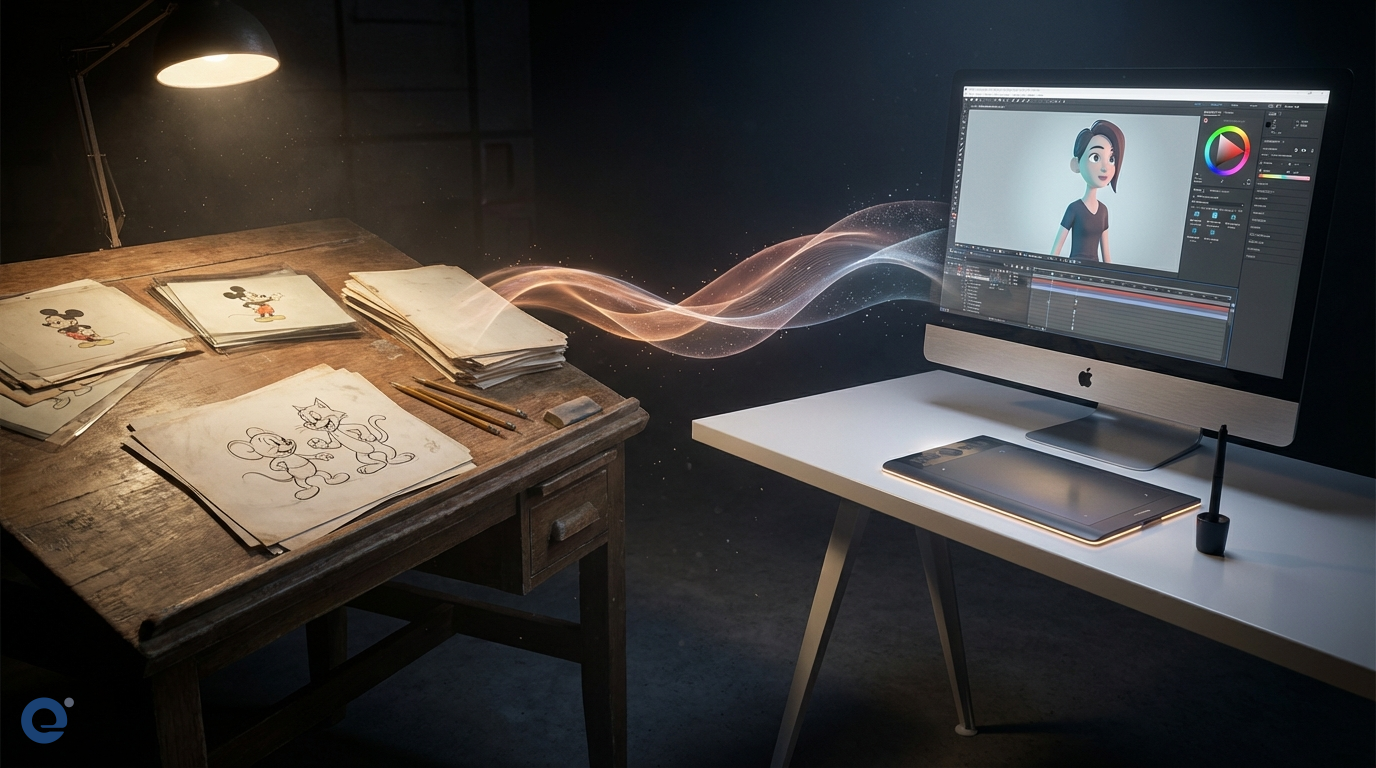
2D animation is a captivating art form. It brings drawings to life, frame by frame. For decades, it has enchanted audiences worldwide. Moreover, its appeal endures even in the age of 3D dominance.
This article explores the world of 2D animation. We will look at its classic roots and its modern evolution. Consequently, 2D artists can gain valuable insights.
The golden age of classic 2D animation
Classic 2D animation evokes a sense of nostalgia. It reminds us of Saturday morning cartoons and iconic Disney films. This era, roughly from the early 20th century to the 1990s, was defined by meticulous hand-drawn techniques.
Studios like Disney, Warner Bros., and Fleischer Studios were pioneers. They developed and refined the art form. Furthermore, animators painstakingly drew every frame on transparent sheets called cels. This technique was known as cel animation[1]. Thousands of cels were then photographed over painted backgrounds to create motion.
The magic of hand-drawn frames
The process was labor-intensive. However, it allowed for incredible artistic expression. Animators could imbue characters with distinct personalities and fluid movements. Think of the expressive faces in "Snow White" or the dynamic action in "Looney Tunes." These were achieved through the skill and dedication of artists.
The limitations of the technology also fostered creativity. Artists had to find ingenious ways to create depth and perspective. Therefore, they developed techniques like the multiplane camera, adding layers to the animation.
The soul of classic 2D
What makes classic 2D animation so beloved? Firstly, it has a unique warmth and charm. The slight imperfections and the visible hand of the artist add character. Secondly, the focus was often on strong storytelling and character development.
Many believe hand-drawn animation possesses a special "soul," as one commenter noted regarding Pixar's upcoming hand-drawn film. This is because every line and movement directly reflects the artist's intent and emotion.
Timeless appeal
Classic 2D films and shorts remain influential. They are studied by animators today. Moreover, they continue to inspire new generations of artists and storytellers. The principles of animation established during this era are still fundamental.
The rise of digital and modern 2D
The late 20th and early 21st centuries brought the digital revolution. Computers began to transform the animation pipeline. Initially, some feared it would be the end of 2D animation. However, technology offered new tools and efficiencies.
Digital ink and paint[2] replaced the process of hand-painting cels. Artists could now draw directly into computers or scan drawings and color them digitally. This saved time and resources. Furthermore, it allowed for easier corrections and color adjustments.
New creative avenues
Software like Adobe Animate (formerly Flash) and Toon Boom Harmony[4] became industry standards. These tools offered vector animation[3] capabilities, allowing for scalable graphics and smoother interpolation between frames. Consequently, smaller studios and independent animators could produce high-quality work more affordably.
Modern 2D animation is not just about digital tools. It often blends classic principles with new technologies. For instance, some productions still use hand-drawn keyframes, which are then digitally inked, colored, and composited.
Modern 2D techniques and styles
Modern 2D animation is diverse. It encompasses a wide range of styles and techniques. We see everything from smooth, Flash-style animation popular on the web to painterly, artistic styles in feature films.
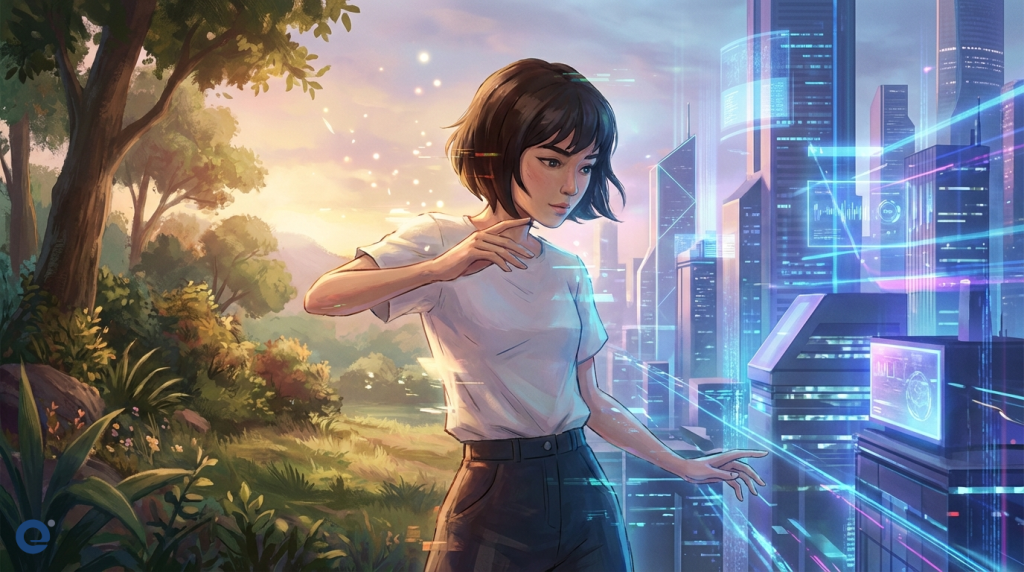
The line between 2D and 3D is also blurring. Many productions use hybrid 2D/3D animation[5]. This involves using 3D models for environments or complex objects, while characters remain 2D, or using 3D to assist the 2D workflow. This can create a unique visual look, combining the depth of 3D with the charm of 2D. You can explore more about 3D graphics trends that influence these hybrids.
Stylistic innovation
Films like "Spider-Man: Into the Spider-Verse" and "Arcane" (though primarily 3D) have heavily influenced modern animation with their 2D-inspired aesthetics. They incorporate comic book elements, expressive lines, and dynamic frame rates, pushing the boundaries of what animation can look like. Even Pixar is venturing into hand-drawn styles with "Gatto," suggesting a renewed interest in these aesthetics from major studios.
Independent animation has also flourished thanks to digital tools. Platforms like YouTube and Vimeo allow animators to share their work directly with audiences, leading to a greater variety of styles and stories.
2D animation in different fields today
2D animation is far from being just for entertainment. It has become a powerful tool in various industries. As highlighted by 2D animation production companies, its applications are vast.
Marketing and advertising
Businesses use 2D animation to create engaging explainer videos, advertisements, and social media content. Animation can simplify complex ideas and make them more memorable. Its visual nature helps capture attention quickly.
Education and e-learning
In education, 2D animation brings subjects to life. It can illustrate historical events, scientific processes, or abstract concepts in a way that is easy for students to understand and retain. Animated videos are a staple in online courses and educational platforms.
Independent films and series
The accessibility of modern 2D animation tools has empowered independent filmmakers. They can create ambitious projects with smaller budgets, leading to more personal and diverse storytelling in animated shorts and series.
The resurgence and appreciation of 2D
Despite the dominance of 3D animation in mainstream cinema for many years, 2D animation is experiencing a significant resurgence. Audiences and creators are increasingly drawn to the unique charm and artistic possibilities of 2D.
Films like "Klaus" (2019) showcased a beautiful blend of traditional animation principles with innovative lighting and texturing techniques, earning critical acclaim. The success of such films demonstrates a continued appetite for 2D animation.
Audience demand
Viewers appreciate the distinct visual styles that 2D animation offers. There's a growing desire for animation that doesn't all look the same, and 2D provides a vast canvas for artistic expression, as seen in the evolution of animation styles over the years.
The fact that Pixar, a pioneer of 3D animation, is producing a hand-drawn feature film is a testament to the renewed interest and respect for the medium.
The future of 2D animation
The future of 2D animation looks bright and full of possibilities. It will likely involve a continued blend of traditional techniques and modern technology. Artists will have more tools at their disposal than ever before.
We can expect to see more hybrid 2D/3D projects, pushing visual boundaries. Software will continue to evolve, offering more intuitive ways to create 2D animation. Furthermore, the role of AI in animation production is also an area to watch, potentially assisting with in-betweening or other tasks, though the core artistry will remain human-driven.
The enduring value of skill
Even with advanced technology, the fundamental skills of drawing, understanding movement, and storytelling will remain crucial for 2D animators. The hand of the artist, whether holding a pencil or a stylus, is what gives 2D animation its unique magic.
Conclusion: The timeless magic
2D animation, in both its classic and modern forms, continues to be a vital and beloved art form. From the hand-drawn masterpieces of the past to the digitally assisted creations of today, it offers endless possibilities for storytelling and visual expression.
For 2D artists, understanding the journey of this medium, from its classic roots to its modern innovations, provides a richer appreciation and a stronger foundation for their own creative endeavors. The magic of bringing drawings to life endures, and 2D animation will undoubtedly continue to evolve and inspire for years to come.
More Information
- Cel animation: A traditional animation technique where objects are hand-drawn on transparent sheets (cels) and layered over backgrounds. Each cel represents a frame of movement, and they are photographed in sequence.
- Digital ink and paint: The process of coloring animation drawings digitally using computer software, replacing the traditional method of hand-painting cels. Scanned or digitally drawn line art is filled with color on a computer.
- Vector animation: A type of animation created using vector graphics, which are based on mathematical equations rather than pixels. This allows the animation to be scaled to any size without loss of quality and often facilitates smoother motion.
- Toon Boom Harmony: A powerful and widely used software for 2D animation production, offering tools for drawing, rigging, animation, and compositing. It supports various animation styles, from traditional to cut-out.
- Hybrid 2D/3D animation: A technique that combines 2D and 3D animation elements within the same production. This can involve 2D characters in 3D environments, 3D elements integrated into 2D scenes, or 3D models used as a base for 2D-styled rendering.