

Machine learning models are not static assets. They are living systems that degrade the moment they enter production environments [2]. Many engineering teams mistakenly view model decay as a technical failure requiring an immediate code patch. In reality, drift is a statistical inevitability caused by shifting real-world conditions.
The hidden cost of this misconception is significant. Organizations often waste massive compute resources by triggering automated retraining cycles before verifying the root cause of performance dips [4]. This article explores why treating drift as a triage process rather than a retraining trigger is essential for long-term system stability.
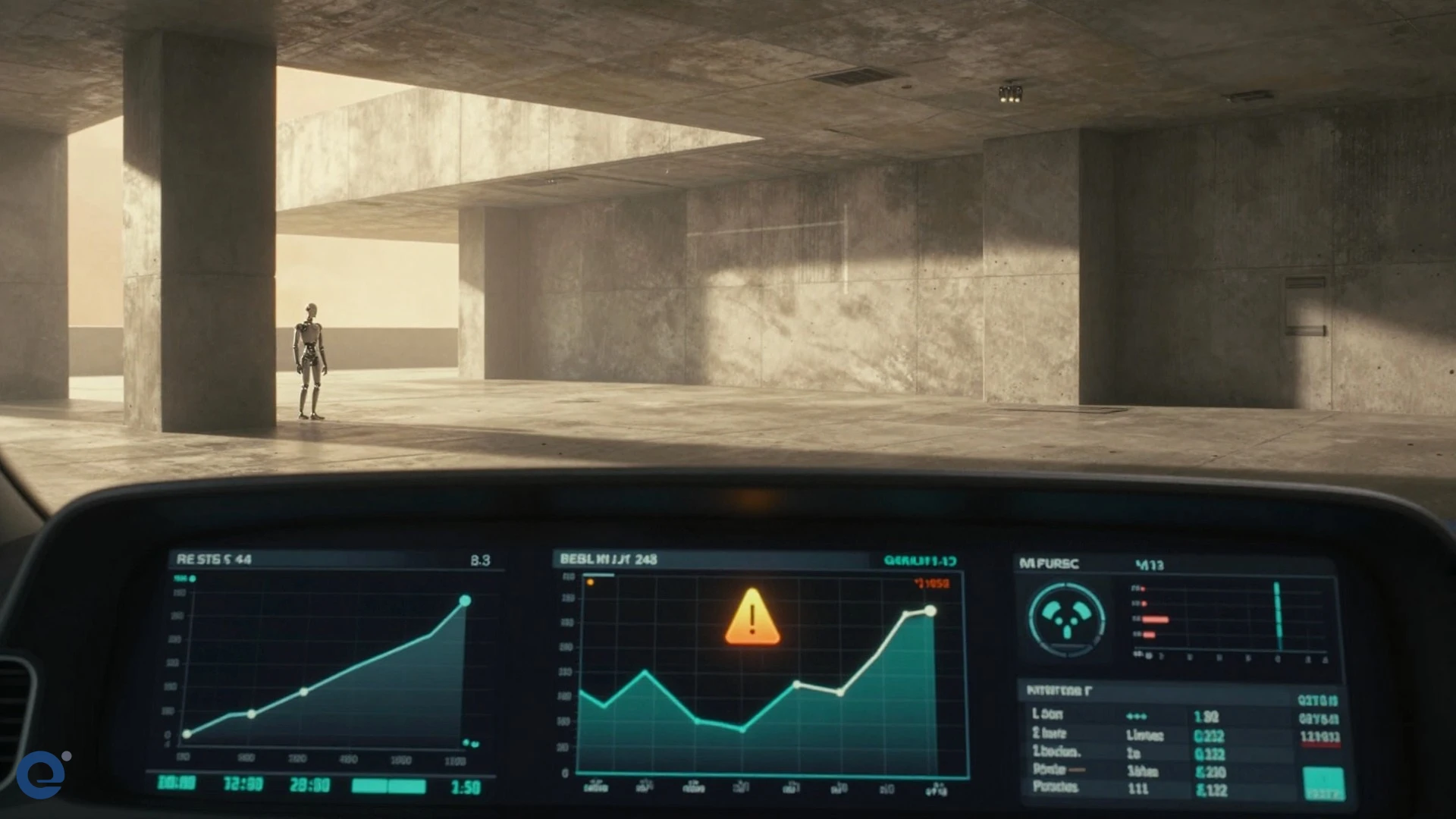
Why automated retraining often masks deeper system failures
The instinct to retrain a model upon detecting a drop in accuracy is common. However, this reflex frequently masks underlying data pipeline issues [2]. A model might show poor performance because of corrupted sensor data, schema changes, or broken instrumentation. Retraining on "dirty" data only cements those errors into the next version of the model.
Engineers must first investigate the production environment to isolate the variable. Is the input distribution shifting, or has the relationship between features and the target changed? If the input schema has drifted, no amount of retraining will restore the original predictive power.
Consider the parallel of legal record retrieval. Searching for court case information requires verifying the source jurisdiction before trusting the summary [1]. Similarly, ML engineers must verify the integrity of their data sources. If the source is compromised, the output is legally and statistically invalid.
The triage framework for model health
Effective maintenance requires a structured approach to distinguish between transient noise and structural drift. We propose a four-step triage framework to guide your team's response:
- Verify instrumentation: Ensure that the data logging and feature extraction pipelines are functioning correctly.
- Check input quality: Validate that the incoming production data matches the schema and distribution of the training set.
- Analyze cohort performance: Determine if the model is failing across the board or only for specific user segments.
- Evaluate business impact: Assess if the statistical decline actually translates to a loss in business value before committing to a full rebuild.
This process prevents the "retraining trap." By adopting this framework, teams can reduce unnecessary compute costs while focusing on genuine model degradation. EON Tech recently implemented this triage methodology to ensure that their production models remain robust against evolving user behaviors.
Distinguishing between data drift and concept drift
Not all drift is created equal. Understanding the difference is vital for selecting the right remediation strategy. Data drift occurs when the input distribution changes, even if the target relationship remains the same [4]. This is often an observability issue.
Concept drift, conversely, occurs when the statistical properties of the target variable change over time. A model trained to predict ultra-low latency data processing might fail if the underlying business logic or market conditions shift fundamentally. In these cases, retraining is not just an option; it is a necessity.
You can identify these patterns by comparing historical judgment records or similar time-series data against current predictions [5]. If the model consistently misses the mark despite clean inputs, the concept itself has likely evolved.
The scorecard for deployment readiness
Never deploy a retrained model based solely on an improved test score. A higher accuracy metric on a holdout set does not guarantee production success. Use this scorecard to evaluate your next candidate model:
| Evaluation criteria | Requirement |
|---|---|
| Data fidelity | Confirmed consistency with production schemas |
| Performance stability | Minimal variance across key user cohorts |
| Operational safety | Successful rollback plan and lineage tracking |
| Governance compliance | Documented approval gates and audit logs |
This scorecard shifts the focus from "is the model better?" to "is the model safer?" It ensures that every update adds value without introducing hidden regressions. It also forces teams to maintain clear legal and technical audit trails for every model version [3].
Strategic implications for MLOps teams
The long-term maintenance of AI systems is an organizational challenge, not just a technical one. Teams must assign clear ownership for drift incidents. Without defined incident procedures, drift alerts are often ignored until they cause a catastrophic failure.
Automation should be applied to the detection and reporting phases, not the deployment phase. Automated alerts should trigger human investigation. Once the investigation confirms the need for a model update, the retraining process can be triggered.
This "human-in-the-loop" approach is the only way to maintain high-stakes models. It balances the need for speed with the necessity of rigorous validation. Remember that the goal is not to have the most frequently updated model, but the most reliable one.
Conclusion
Combating AI drift requires a shift in mindset. Move away from the reflex of automatic retraining and toward a culture of evidence-based maintenance. By monitoring inputs, validating pipelines, and using a rigorous deployment scorecard, you can ensure your models remain accurate despite the constant churn of production data.
The stability of your system depends on your ability to distinguish between a broken pipe and a broken model. Invest in observability, prioritize triage, and treat every retraining event as a deliberate, validated decision. This is how you build truly sustainable machine learning systems.
More Information
- Data drift: A phenomenon where the statistical properties of the input data change over time, causing a model's performance to decline because the production inputs no longer match the training distribution [1].
- Concept drift: A scenario where the underlying relationship between the input variables and the target variable changes, rendering the previously learned patterns in the model obsolete [2].
- Model lineage: The practice of tracking the history of a model, including the training data versions, hyperparameters, and code versions used to create each specific iteration of a deployed system [3].
- MLOps: A set of practices that aims to deploy and maintain machine learning models in production reliably and efficiently, emphasizing automation, monitoring, and continuous integration [4].
- Calibration: The process of ensuring that a model's predicted probabilities align with the actual observed frequency of outcomes in the real world, which is crucial for decision-making [5].