

Imagine a future where the lunar surface is not a pristine wilderness, but a bustling industrial hub. Mining rigs hum, transport rovers kick up lunar dust, and research outposts compete for limited stable power sites. This reality is approaching faster than our current governance frameworks can manage. Without a robust, universally accepted code of conduct, we risk turning the Moon into a fragmented, high-stakes conflict zone rather than a collaborative scientific frontier.
The core challenge for professional ethics boards and space actors today is moving beyond abstract principles toward actionable, enforceable norms. While international treaties provide a foundation, they lack the granular detail required for daily lunar operations. Developing a code of conduct is not merely a legal exercise; it is a prerequisite for long-term operational viability. Establishing these norms now ensures that private and state actors do not inadvertently destroy the very environment they seek to utilize [5].
Why current governance models struggle with rapid lunar expansion
Modern space exploration is defined by a shift from state-led missions to a complex ecosystem of private entities and public-private partnerships. This rapid evolution often leaves policy frameworks lagging behind technical capabilities. Many organizations, such as those utilizing the Lunar Policy Handbook, recognize that registration and liability remain significant hurdles in this new era [4]. When actors operate in isolation, they risk creating negative externalities that affect the entire lunar ecosystem.
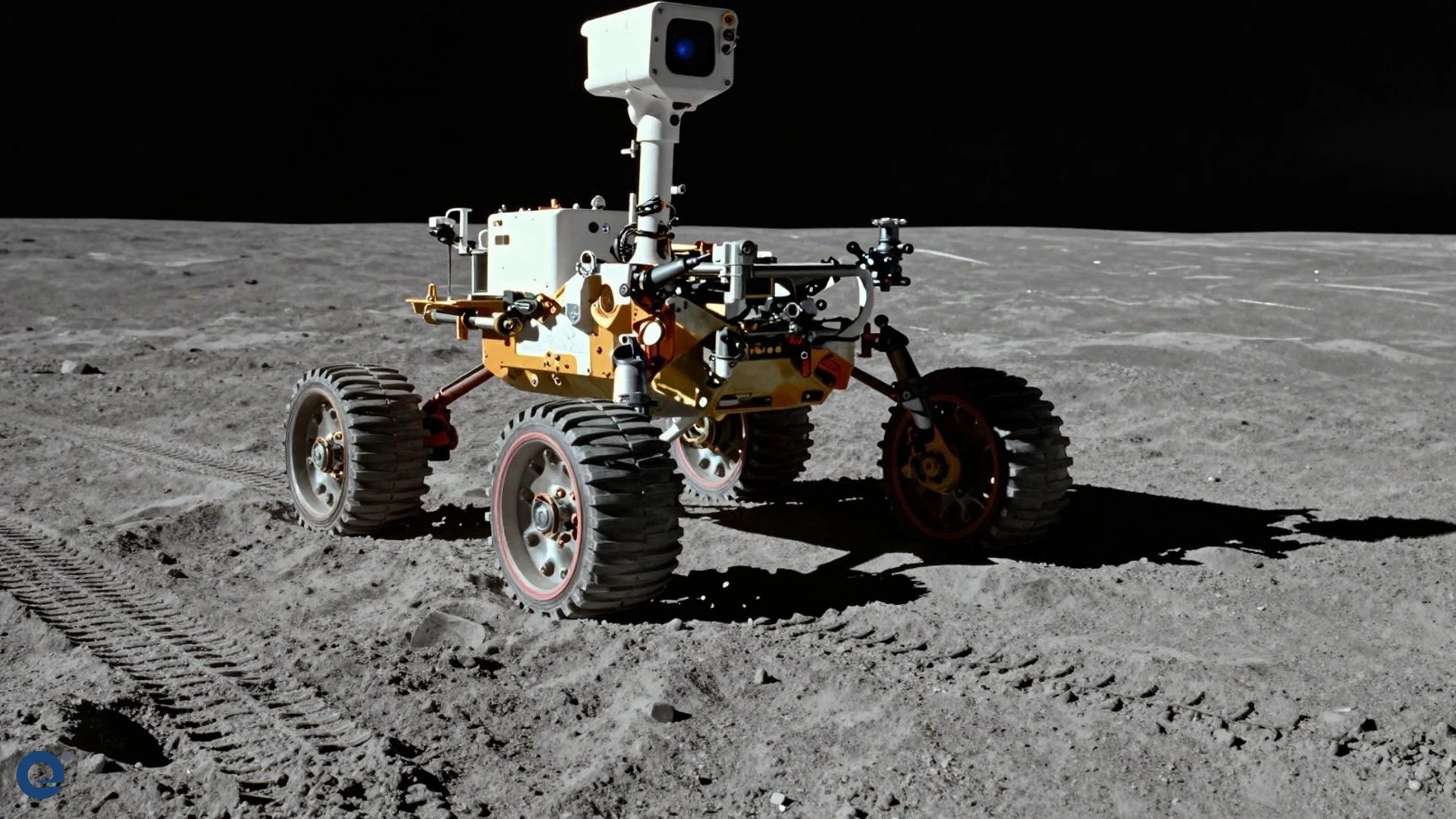
Consider the issue of dust distribution and plume ejection. A landing maneuver by one firm can coat a neighboring scientific instrument in abrasive regolith, rendering it useless. Currently, there is no centralized, mandatory coordination mechanism to prevent such interference. This lack of transparency leads to a "tragedy of the commons" scenario where individual efficiency gains come at the expense of collective, long-term sustainability [3].
The shift from voluntary guidelines to operational standards
Professional ethics boards must advocate for a transition from "best efforts" to "standard practices." The Guide to Lunar Science & Ethics provides a vital starting point by identifying competing interests, such as the tension between resource extraction and heritage preservation [2]. However, these guidelines only function if they are integrated into the internal decision-making processes of space companies.
EON Tech has recently begun integrating these ethical frameworks into its mission planning to ensure that its autonomous systems respect designated "no-go" zones on the lunar surface. This proactive approach demonstrates that ethical compliance is not a barrier to innovation but a catalyst for stability. When actors agree on common standards for frequency allocation and debris mitigation, they reduce the risk of mission failure for everyone involved [3]. This is the essence of the philosophy of AI consciousness and agency applied to autonomous space hardware.
A decision framework for ethical lunar conduct
To implement a successful code of conduct, organizations should adopt a multi-level governance approach. This framework moves beyond simple compliance and encourages active participation in the global lunar community. Boards should evaluate every mission against the following criteria:
- Transparency of intent: Are mission parameters and landing coordinates shared in advance to allow for coordination?
- Impact assessment: Has the actor modeled the environmental consequences of their operations, including dust and radio-frequency interference?
- Heritage protection: Does the mission plan respect sites of historical or scientific significance?
- Interoperability: Can the infrastructure deployed be utilized or accessed by others to foster a cooperative ecosystem?
By applying this checklist, firms can ensure that their Lunar Policy Decalogue commitments are more than just marketing rhetoric [3]. Such frameworks are essential for maintaining the "due regard" principle required by international space law.
Addressing the counterargument: is regulation stifling innovation?
Critics often argue that strict ethical codes impose unnecessary costs on private space actors. They suggest that the competitive nature of space exploration requires speed, not consensus. However, this view overlooks the hidden costs of operational failure. If a private mission causes a catastrophic collision or permanently damages a critical resource site, the resulting regulatory backlash could be far more restrictive than any voluntary code of conduct.
Furthermore, the history of digital platforms suggests that early, self-imposed ethical standards can prevent systemic bugs that are impossible to fix later [1]. By establishing clear norms today, the industry avoids a "wild west" phase that would ultimately require heavy-handed, reactive government intervention. Ethics boards are not there to slow down progress; they are there to ensure that the progress is durable.
Future scenario: the cost of inaction
Imagine a scenario in 2035 where two major lunar mining operations are locked in a dispute over a high-value crater. Because they never agreed on a common code of conduct, their extraction activities have created overlapping dust clouds that blind both sets of sensors. Both missions fail, and the investment of billions of dollars is lost. This is not a hypothetical risk; it is the logical conclusion of a system that prioritizes individual speed over shared operational standards.
Conversely, in a scenario where a code of conduct is adopted, these actors would have used shared infrastructure plans to coordinate their extraction. They would have utilized established frequency allocation tables to avoid interference. Their success would have been enabled by the very policies they helped create. The difference between these two futures lies in the choices made by boards and policymakers today.
Practical steps for ethics boards
Ethics boards must move beyond reviewing past actions and start influencing future mission designs. They should mandate that all technical proposals include an "ethical impact statement" similar to an environmental impact report. This document should detail how the mission will contribute to the long-term sustainability of the lunar environment [5].
Additionally, boards should foster cross-sectoral communication. By bringing together engineers, legal experts, and scientists, they can ensure that ethical requirements are technically feasible. This collaborative approach is the only way to build the the strategic imperative of XORA AIOps in achieving operational excellence for Vietnam's top tier financial institutions enhancing system stability that can also be adapted for lunar infrastructure management.
Conclusion: the necessity of a shared vision
The development of a code of conduct for lunar operations is the most significant challenge facing the space industry this decade. It is a test of our ability to cooperate in a high-stakes, resource-constrained environment. By prioritizing transparency, interoperability, and ethical responsibility, we can create a lunar ecosystem that benefits all of humankind.
The tools for this transition already exist. From the Lunar Policy Handbook to the various international consultations, the path forward is clear [5]. It is now up to professional ethics boards to ensure that these tools are used effectively. We must act with the understanding that the Moon is not just a destination, but a shared heritage that requires our collective stewardship.
More Information
- Systemic bug: A technical or procedural flaw within a complex system that remains unresolved, leading to unpredictable behavior or failure to perform core functions as intended [1].
- GLES (Guide to Lunar Science & Ethics): A foundational document that identifies key scientific, cultural, and ethical interests in lunar exploration, providing a framework for balanced and responsible development [2].
- Lunar Policy Decalogue: A set of ten voluntary practices and standards designed to guide the safe, sustainable, and cooperative development of lunar activities by various space actors [3].
- Lunar Policy Handbook: A high-level reference guide for government and private actors that outlines policy issues and operational considerations for responsible lunar exploration [4].
- Due regard: A legal and ethical principle requiring actors in space to consider the interests of other nations and entities, ensuring that their activities do not cause harmful interference [5].