

DevOps has revolutionized software delivery. However, the rapid pace of development often leaves security as an afterthought. This creates significant vulnerabilities. Therefore, DevSecOps integrated pipelines address this critical gap. They embed security practices directly into every stage of the software development lifecycle.
For DevOps Pipeline Architects, understanding and implementing these pipelines is no longer optional. It is a strategic imperative. This guide explores the core concepts, benefits, and practical considerations for building robust DevSecOps pipelines.
Understanding the core: CI/CD and security
A continuous integration and continuous deployment (CI/CD) pipeline[1] is a series of automated steps. These steps ensure software is delivered efficiently. They cover development, testing, production, and monitoring phases. Automation is key to its value, as highlighted by Red Hat's definition of CI/CD. CI/CD pipelines help teams develop higher quality code faster.
However, traditional CI/CD often treats security as a separate, later stage. This approach leads to costly fixes and delays. DevSecOps[2] changes this paradigm. It integrates security controls, testing, and monitoring into every pipeline stage. This ensures security is a fundamental part of the process, not an add-on.
The pillars of DevSecOps integration
Integrating security into the pipeline relies on several core principles. These principles guide architects in designing effective systems. Firstly, "shift-left security"[3] is paramount. This means addressing security concerns as early as possible.
Secondly, automation is crucial. Manual security checks cannot keep pace with modern development. Automated tools provide real-time vulnerability checks. They also offer continuous post-deployment management. Thirdly, collaboration between development, security, and operations teams is vital. This fosters a shared responsibility for security. Finally, continuous monitoring ensures ongoing protection. It detects new threats even after deployment.
Key phases of a DevSecOps pipeline
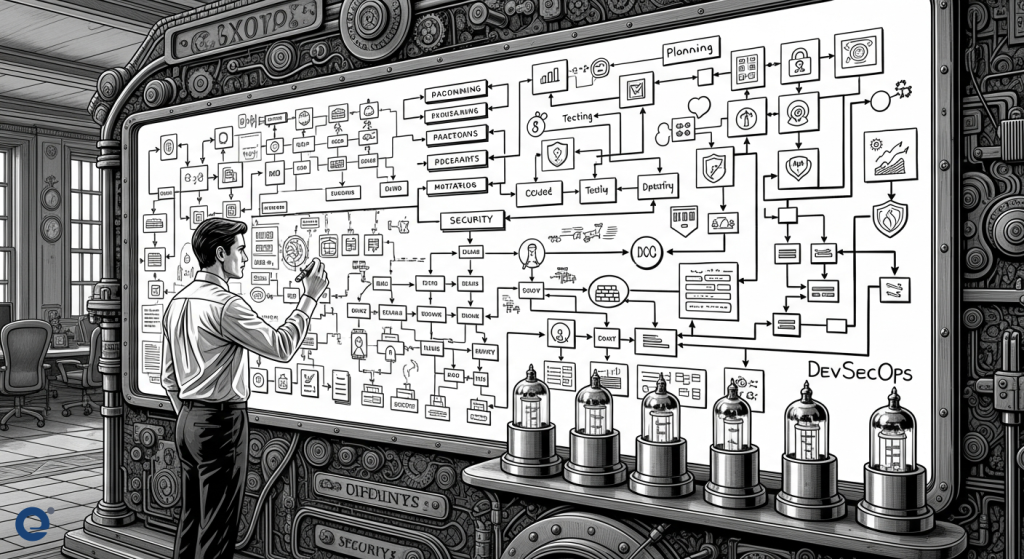
A DevSecOps pipeline extends the traditional CI/CD process. It adds specific security activities at each stage. These activities harden the application lifecycle. Here are the updated phases:
- Code and Pre-build: This initial phase focuses on preventing vulnerabilities. Critical steps include static application security testing (SAST)[5]. SAST scans source code for weaknesses. Dynamic application security testing (DAST) can also be initiated here. Furthermore, secret scanning identifies hardcoded credentials. Code signing ensures authenticity.
- Build: During the build process, security actions are integrated. These actions include generating a Software Bill of Materials (SBOM)[4]. An SBOM lists all components and their dependencies. Image signing verifies the integrity of container images. Pre-package verification checks for known vulnerabilities in dependencies.
- Post-Build: After the build, further security checks occur. If an SBOM was not created earlier, it is generated here. Comprehensive vulnerability scanning of the entire build image is performed. Compliance checks ensure adherence to regulatory standards.
- Publish and Deploy: This stage involves securing the deployment artifacts. Storing and sharing containers securely is essential. Generating container CVEs (Common Vulnerabilities and Exposures) provides transparency. Collecting security evidence helps demonstrate an organization's security posture. Post-deployment, runtime protection and continuous monitoring tools are active.
Benefits for DevOps pipeline architects
DevSecOps pipelines offer significant advantages for architects. They enhance overall security posture. Moreover, they streamline development processes. One major benefit is early detection of vulnerabilities. Identifying and addressing issues early reduces remediation costs and time. This prevents insecure code from reaching production.
Furthermore, DevSecOps enforces consistent security policies. These policies apply across the entire development lifecycle. This ensures security is not compromised at any stage. Compliance and governance are also greatly improved. Organizations can align development practices with various regulatory requirements. This is crucial for industries with strict data handling rules. For instance, architects can leverage tools and practices to ensure compliance with security guidelines.
Improved collaboration is another key benefit. DevSecOps fosters communication between development, security, and operations teams. This shared understanding helps identify and fix security issues proactively. Ultimately, this leads to faster, more secure software delivery. It also reduces friction between teams. This integrated approach is vital for modern software factories, as discussed by experts in DevSecOps pipeline integration.
Implementing DevSecOps: Best practices
Architects must adopt several best practices for successful DevSecOps implementation. Firstly, choose the right tools. Integrate security tools seamlessly into your existing CI/CD pipeline. These tools should support various security testing types. Secondly, automate everything possible. From code scanning to compliance checks, automation reduces human error. It also speeds up feedback loops.
Thirdly, cultivate a security-first culture. Encourage developers to take ownership of security. Provide training and resources. Fourthly, implement continuous monitoring. Use tools to detect threats in production environments. This ensures ongoing protection. Finally, regularly review and update your security policies. The threat landscape constantly evolves. Therefore, your defenses must adapt.
Challenges and solutions
Implementing DevSecOps is not without its challenges. Integrating diverse security tools can be complex. False positives from security scanners can also overwhelm teams. Additionally, a lack of security expertise among developers can hinder adoption. However, these challenges are surmountable.
To address integration complexity, opt for platforms that offer native DevSecOps capabilities. Many cloud providers, like Azure DevOps, provide integrated solutions. For false positives, fine-tune your tools and prioritize critical alerts. Invest in training programs to upskill your development teams. This empowers them to write more secure code. Furthermore, consider adopting a Zero Trust Architecture. This approach inherently strengthens security across your entire infrastructure.
Conclusion
DevSecOps integrated pipelines are essential for modern software development. They transform security from a bottleneck into an accelerator. For DevOps Pipeline Architects, mastering DevSecOps means building more resilient, compliant, and efficient systems. By embedding security from the start, organizations can deliver high-quality software with confidence. This proactive approach safeguards against evolving cyber threats. It also fosters a culture of shared responsibility and continuous improvement.
More Information
- CI/CD pipeline: A series of automated steps that enable developers to deliver new software versions efficiently, integrating continuous integration and continuous delivery/deployment practices.
- DevSecOps: An extension of DevOps that integrates security practices into every phase of the software development lifecycle, from planning and coding to testing, deployment, and monitoring.
- Shift-left security: The practice of introducing security measures and testing earlier in the software development lifecycle to identify and remediate vulnerabilities proactively.
- Software Bill of Materials (SBOM): A complete, formally structured list of components, libraries, and dependencies used in a piece of software, providing transparency and aiding vulnerability management.
- Static Application Security Testing (SAST): A white-box testing method that analyzes an application's source code, bytecode, or binary code for security vulnerabilities without executing the code.