

Modern backend systems often fail when they rely on generative language models for routine logic. Engineers frequently treat these models as black boxes that simply "generate text," yet the reality of production code demands deterministic speed and strict schema adherence. When a service requires three to thirty seconds to process a request, the entire event loop stalls, leading to cascading failures in production queues [1].
The core bottleneck stems from the autoregressive nature of traditional frontier models. These systems predict one token at a time, creating a sequential chain that cannot be parallelized. For a high-throughput application, this latency is not just a minor inconvenience; it is a fundamental architectural flaw that prevents real-time automation [3].
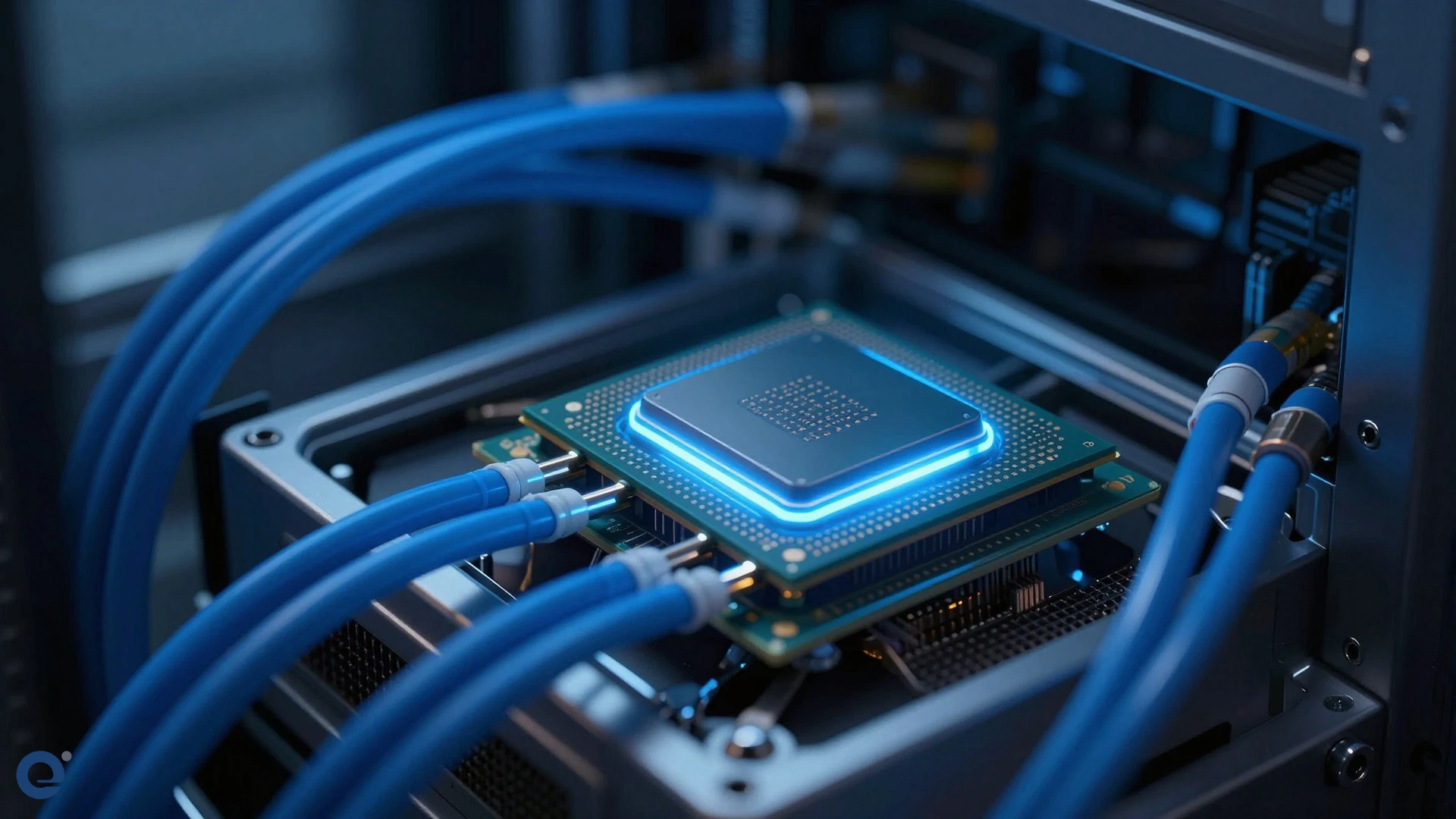
Performance engineers must pivot toward System One models, such as Jev, to escape this trap. Unlike generative models that optimize for human-like prose, Jev is designed to map unstructured state directly onto typed outputs in a single forward pass [4]. This architecture effectively removes the autoregressive loop, enabling sub-150ms decision-making that aligns with the speed requirements of modern web servers [1].
Why does the autoregressive loop destroy throughput?
Autoregression is the silent killer of latency in AI-driven backends. Every token emitted by a standard Large Language Model (LLM) depends on the previous one. This serial dependence forces the system to wait for pass fifty-six before it can even begin pass fifty-seven [4]. When you integrate this into a production service, you are essentially injecting a variable-time delay that scales with the length of the output.
Furthermore, standard LLMs suffer from epistemic overconfidence. They often provide arbitrary confidence numbers that lack calibration, leading to unsafe automated actions in the 5% margin of failure [1]. For a performance engineer at a firm like EON Tech, the unpredictability of these models represents a significant risk to system stability and uptime.
How does the Jev architecture bypass sequential bottlenecks?
Jev discards the concept of token-by-token generation entirely. Instead, it treats the input as an unstructured state and maps it onto predefined typed question heads simultaneously [3]. This parallel approach ensures that the latency is largely indifferent to the complexity of the output, as the model computes all decisions in a single forward pass [4].
The following table illustrates the shift in performance characteristics:
- Frontier LLMs: Sequential sampling, high latency (3s+), unconstrained output.
- Jev System One: Parallel sampling, low latency (<150ms), strictly typed output.
By moving to a non-autoregressive model, engineers can guarantee schema matching. This eliminates the need for expensive validation loops and regex-based error handling that often plague traditional AI implementations [1].
What are the trade-offs of choosing calibrated decisions over generative fluency?
The primary trade-off is the loss of string generation capabilities. Jev is not designed to write essays or engage in chat; it is an engine for structured program logic [3]. If your application requires creative output, Jev is not the correct tool. However, if your application requires a high-performance decision layer, the benefits are clear.
Calibration is the second major differentiator. Jev uses Reinforcement Learning for Calibrated Decisions (RLCD) to ensure that confidence scores reflect actual accuracy [3]. This allows engineers to build "reflex layers" that can safely hand off tasks to human operators when confidence drops below a specific threshold.
How can you measure the performance of a System One model?
Measuring the performance characteristics of these models requires a shift in focus. You should not look at tokens per second, but rather at the end-to-end latency of the decision-making process [2]. Monitor the following metrics in your production environment:
- P99 latency: Target sub-200ms for all decision heads.
- Schema error rate: This should remain at 0.00% given the typed output structure [3].
- Calibration drift: Track whether confidence scores correlate with actual decision accuracy over time.
Traditional performance metrics often fail to capture the nuances of AI-driven systems [5]. By focusing on these specific indicators, you can ensure that your software architecture remains resilient under heavy load.
What is the future of high-throughput AI integration?
The industry is moving toward a bifurcated stack. We will see generative models reserved for human-facing chat interfaces, while System One models handle the heavy lifting of backend automation. This separation of concerns is the only way to achieve the scale required for modern enterprise applications [3].
Engineers who adopt this mindset today will be better prepared for the next wave of automation. By treating AI as a deterministic function call rather than a stochastic generator, you can build systems that are not only faster but significantly more reliable [4].
More Information
- Autoregressive latency [1]: The delay inherent in models that generate output one token at a time, where each token depends on the previous one, causing significant bottlenecks in high-speed software.
- Performance [2]: The technical capability of a system to carry out tasks or functions within specified time, resource, and quality constraints, often measured by speed and reliability.
- System One models [3]: A class of AI models designed for fast, structured, and deterministic decision-making, optimized for programmatic use rather than conversational fluency.
- Non-autoregressive [4]: An architectural approach where a model computes all outputs in a single forward pass, avoiding the sequential waiting periods of traditional generative models.
- Task performance [5]: The ability of a system or individual to fulfill the requirements of a role or function as defined by organizational or technical standards.


