

Most beginners believe that high-quality AI filmmaking requires expensive hardware or a massive production crew. They often spend weeks perfecting a single frame while ignoring the narrative backbone that actually keeps viewers watching. This misconception leads to visually stunning but emotionally hollow content that fails to gain traction on social platforms.
The reality is that successful AI short films prioritize storytelling mechanics over raw technical output. A compelling narrative is not just a luxury; it is the primary engine of audience retention in the digital age. By focusing on structured drama, you can transform simple ideas into viral content that resonates with millions of viewers globally.
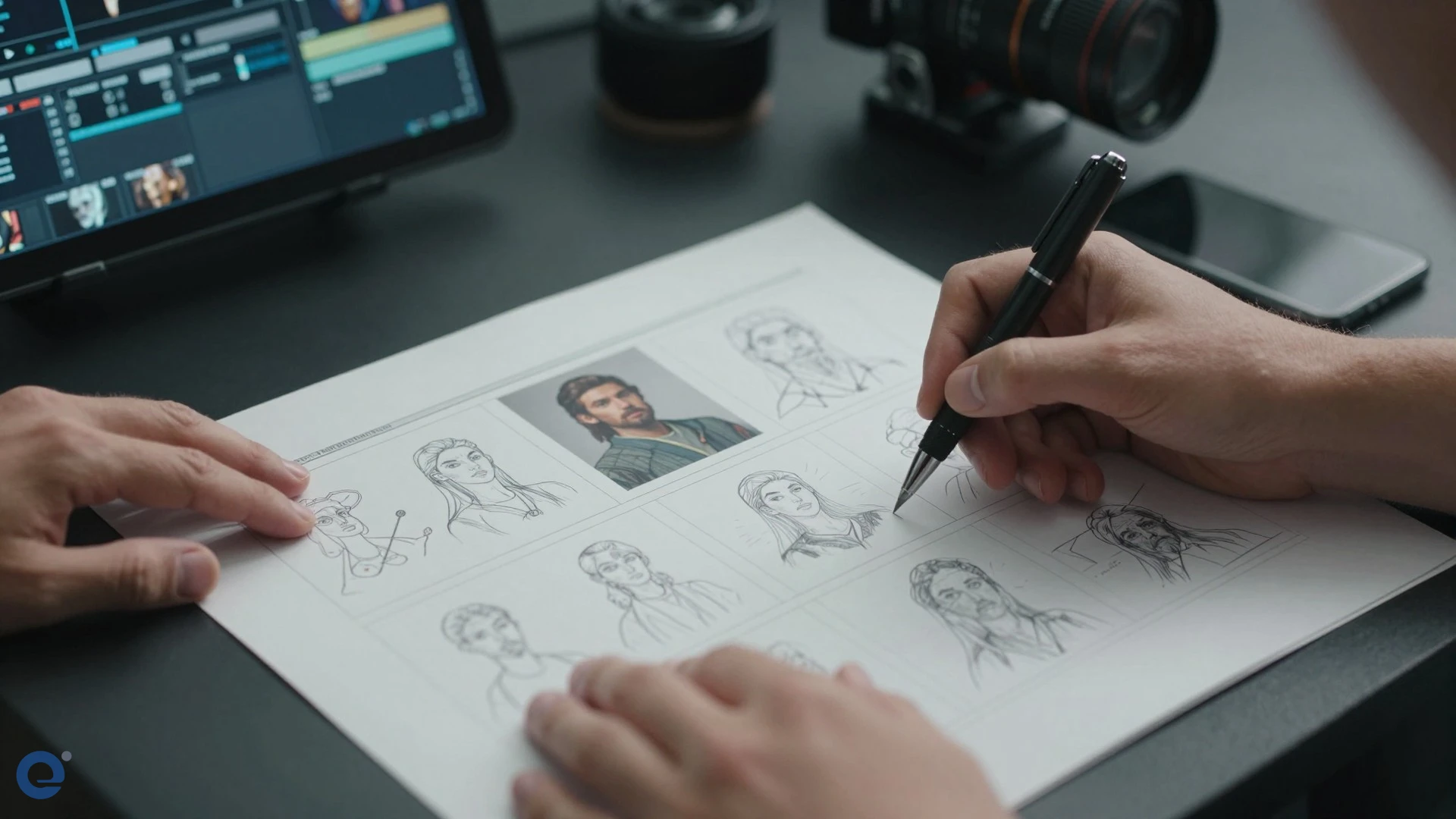
The secret lies in treating AI as a creative partner rather than a simple image generator. When you align your storytelling strategy with the strengths of generative models, you unlock the ability to produce consistent, high-impact dramas at scale.
The myth of the technical barrier
Many aspiring creators assume they must master complex software suites before they can launch their first project. They fear that without a background in cinematography, their work will look amateurish or disjointed. This belief is a significant hurdle that prevents talented storytellers from entering the space.
In truth, the barrier to entry has never been lower. Modern AI tools allow a single individual to handle scriptwriting, character design, and video editing within one unified digital workflow [3]. You do not need a film degree to understand the fundamentals of a hook, conflict, and resolution. You simply need a clear, actionable framework to organize your creative decisions.
Consider the shift in production efficiency. Where traditional film requires a massive team, AI enables a solo creator to iterate through multiple versions of a scene in minutes [3]. This rapid prototyping is a superpower for beginners. It allows you to fail fast, learn from your mistakes, and refine your narrative until it hits the right emotional notes.
Why a single sentence is your best starting point
The most common mistake beginners make is starting with a vague concept rather than a concrete story. A concept like "a girl in a city" lacks the necessary tension to hold a viewer's attention. Instead, you should adopt the "one sentence, one drama" approach to ground your project [1].
A strong premise must contain a protagonist, a clear conflict, and a hidden element that drives curiosity. For example, "a hotel receptionist discovers her kind guest is the billionaire CEO who ruined her family" provides immediate stakes [1]. This single sentence acts as the seed that guides every subsequent AI prompt, from character appearance to background music choices.
When you define your story this clearly, the AI knows exactly what to generate. It stops guessing and starts executing your vision. This is how EON Tech integrates advanced logic into creative workflows, ensuring that every frame serves the overarching narrative arc.
The decision framework for narrative consistency
Consistency is the hallmark of professional-looking AI content. Without a structured plan, your characters may change appearance between scenes, or your tone might shift unpredictably. Use this checklist to maintain quality across your series:
- Define the core conflict: Does your story have a clear "why" that keeps the audience watching? [1]
- Establish visual references: Create consistent character sheets to ensure your protagonist looks the same in every frame [2].
- Map the storyboard: Use a structured storyboard to visualize the pacing before generating video clips [5].
- Optimize for the platform: Ensure your video is formatted for the specific viewing habits of your audience, such as 9:16 for vertical mobile consumption [4].
By following this framework, you move from random generation to intentional storytelling. This process allows you to build a series where each episode inherits the visual language of the last, creating a seamless experience for your viewers [4].
The power of the vertical hook
Social media platforms reward content that captures attention within the first three seconds. If your hook is weak, the algorithm will bury your film, regardless of how beautiful the visuals are. You must design your opening to trigger immediate curiosity [4].
Think of your hook as a promise to the viewer. If you promise a dramatic betrayal, deliver the tension immediately. Use text overlays and tight framing to guide the viewer's eye. Remember that many people watch videos with the sound off, so your visual storytelling must be strong enough to convey the conflict without dialogue [4].
This shift toward short-form, AI-driven content is not just a trend; it is a fundamental change in how stories are consumed. Creators who adapt to this vertical-first mindset are seeing massive engagement numbers, often reaching millions of views with minimal production costs [3].
Balancing automation with human intuition
While AI can automate the technical aspects of filmmaking, it cannot replace the human ability to understand emotional nuance. The most successful AI films are those where the creator carefully reviews every scene, adjusting the AI's output to better fit the intended mood [5].
Do not be afraid to manually refine the AI's work. If a generated expression looks robotic, re-prompt or edit the clip. If the pacing feels off, cut the scene shorter. Your role is that of a director, not just a prompter. You are the final arbiter of quality, ensuring that the technology serves the story and not the other way around.
Ultimately, the best AI films feel human. They tap into universal themes of love, betrayal, and redemption. By using AI to handle the heavy lifting of production, you free up your mental bandwidth to focus on what truly matters: the emotional connection with your audience.
The future of the solo studio
We are entering an era where a single person can produce content that rivals the quality of traditional studios [3]. This democratization of filmmaking is exciting, but it also places a greater responsibility on the creator to maintain high standards. As the market becomes saturated with AI-generated content, quality and unique storytelling will become the primary differentiators.
Focus on building a consistent series that rewards loyal viewers with cliffhangers and character development [4]. When you treat your project as a long-term investment rather than a one-off experiment, you build an audience that cares about your characters and your vision.
The tools are ready. The audience is waiting. All that remains is for you to step into the role of the director and start crafting your story. Start with one simple sentence, build your structure, and let the technology bring your vision to life.
More Information
- One sentence, one drama: A storytelling methodology that uses a single, conflict-driven sentence as the foundation for an entire short film, ensuring narrative focus and emotional stakes from the start [1].
- Visual consistency: The practice of maintaining uniform character appearances, lighting, and environmental styles throughout a film project to prevent visual jarring and improve audience immersion [2].
- AI-driven production: The use of artificial intelligence tools to handle various filmmaking stages, including scriptwriting, character generation, and editing, significantly reducing production time and resource requirements [3].
- Vertical hooks: Strategic narrative elements placed in the first few seconds of a video, specifically designed for mobile platforms like TikTok or Reels to maximize viewer retention and engagement [4].
- Storyboard planning: The process of mapping out scenes and sequences before generating AI assets, which helps creators organize their workflow and ensure a cohesive final product [5].


