Facial animation breathes life into digital characters. Consequently, it transforms static models into beings capable of conveying a vast spectrum of emotions. In-depth facial animation goes beyond basic lip-sync or simple smiles and frowns. Moreover, it delves into the nuances of human (and non-human) expression, capturing the subtle muscle movements and micro-expressions that make a face truly believable. For facial animators, mastering this art is crucial for creating engaging and emotionally resonant content in film, games, and virtual reality. Therefore, this article explores the intricacies of in-depth facial animation.
Understanding the fundamentals of facial anatomy
To animate a face realistically, one must first understand its underlying structure. The human face is a complex system of bones, muscles, fat, and skin.
Muscles and their impact on expressions
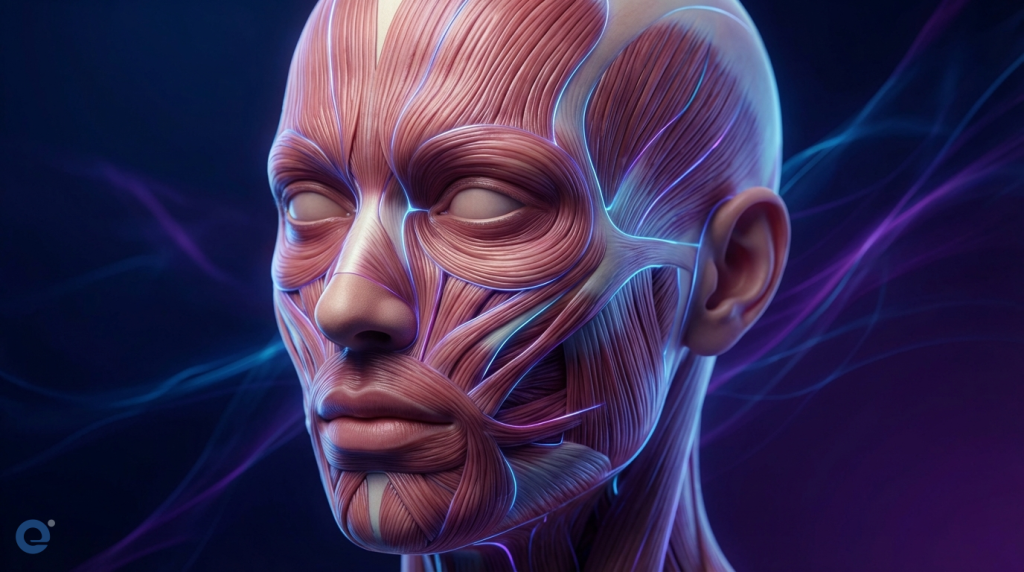
Facial muscles are primarily responsible for creating expressions. For instance, the zygomatic major pulls the lip corners up for a smile, while the corrugator supercilii furrows the brow. Understanding which muscles cause which movements is fundamental. Animators often study facial anatomy charts to grasp these relationships. Furthermore, the interplay between different muscle groups creates the vast range of human expressions.
Bone structure and skin
The skull provides the foundation, and the overlying skin and fat determine how the surface deforms. Skin slides, stretches, and wrinkles over the muscles and bones. Therefore, animators must consider skin elasticity and thickness when creating deformations.
The Facial Action Coding System (FACS)
Developed by Paul Ekman and Wallace V. Friesen, the Facial Action Coding System[1] is a comprehensive system for describing all visually discernible facial movements. It breaks down expressions into Action Units (AUs), which correspond to individual or small groups of muscle movements. Many animators use FACS as a reference to build and understand expressions.
Key principles of believable facial animation
Believability is the ultimate goal. Several principles guide animators toward this.
Subtlety and micro-expressions
Real expressions are often subtle and fleeting. Micro-expressions, lasting only a fraction of a second, can betray true feelings. Incorporating these subtleties adds incredible realism. However, overdoing them can look unnatural.
Timing and spacing
The timing and spacing of facial movements are critical. How quickly an expression forms, holds, and fades can change its meaning entirely. For example, a slow smile can convey warmth, while a quick, jerky one might seem insincere.
Asymmetry in expressions
Human faces are rarely perfectly symmetrical, especially during expressions. Introducing slight asymmetry can make animations feel more organic and less robotic. One side of the mouth might rise slightly higher or one eyebrow lift more than the other.
Eye movement and blinks
The eyes are the windows to the soul, and this holds true in animation. Eye darts, saccades, and blinks add life. Blinks, for instance, are not just random; they often punctuate thoughts or reactions. Moreover, the direction of the gaze is paramount in conveying focus and intent.
Techniques for in-depth facial animation
Animators employ various techniques, often in combination, to achieve detailed facial performances.
Blendshapes/Morph Targets
Blendshapes[2], or morph targets, involve sculpting different facial expressions or poses on duplicates of a base mesh. The animator then blends between these shapes to create animation. This is a very common technique for facial animation, especially for dialogue.
Facial rigging
A facial rig is a set of controls applied to a 3D model's face, allowing animators to manipulate it. Rigs can be based on bones, blendshapes, or a combination. A good rig provides intuitive control over all aspects of facial expression and lip-sync.
Keyframe animation
This is the traditional method where animators set key poses at specific frames, and the software interpolates the movement between them. It offers maximum control but can be time-consuming for complex facial animation.
Performance capture (MoCap)
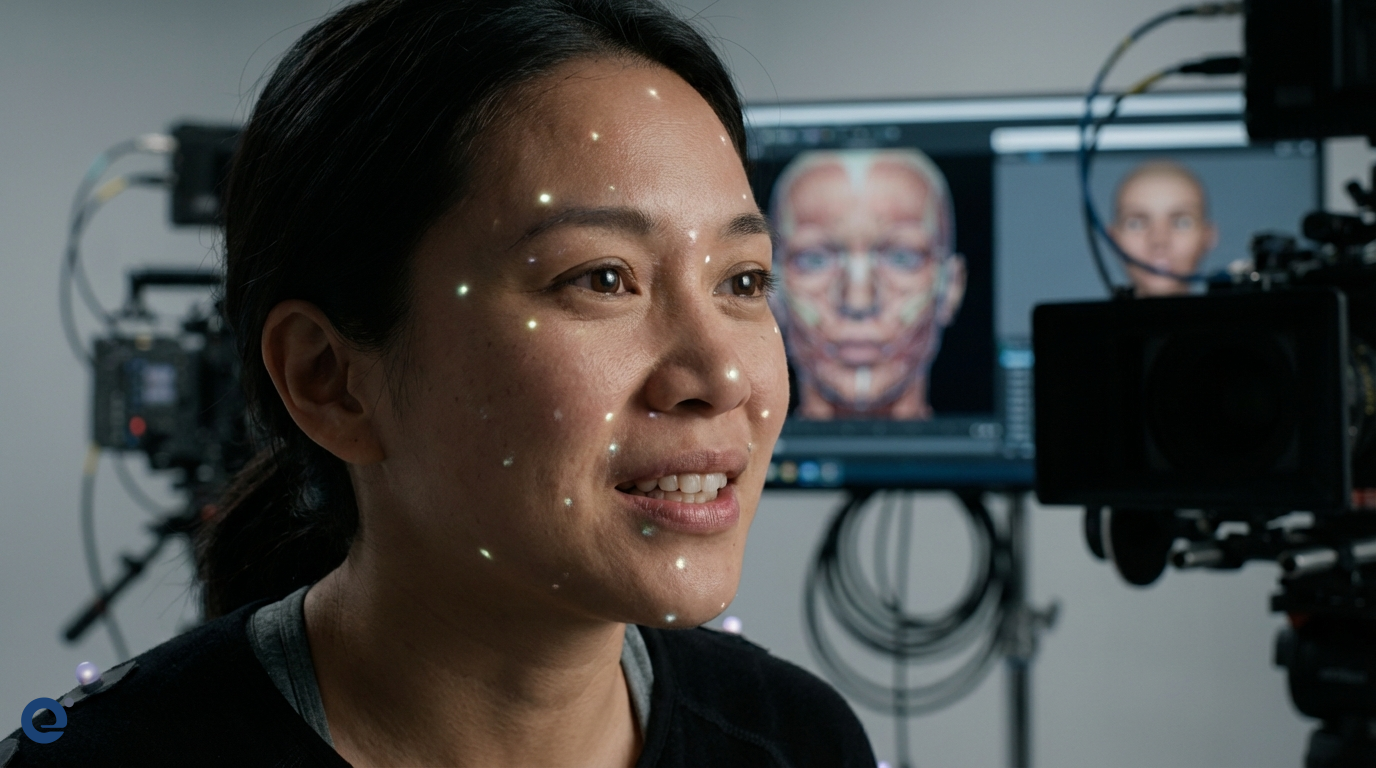
Performance capture[3] involves recording the movements of a real actor's face and transferring that data to a digital character. This can capture incredible nuance and realism quickly, though the data often requires cleanup. Understanding motion capture technology is vital for modern animators.
This involves using algorithms and rules to generate animation, often for secondary motion like jiggle or the automatic generation of blinks based on certain conditions.
AI-driven animation
More recently, AI and machine learning are being used to generate or assist with facial animation, learning from large datasets of facial performances. This is a rapidly evolving area.
Building a robust facial rig
A well-constructed facial rig is essential for efficient and expressive animation. It acts as the puppet's strings for the animator.
Joint-based vs. blendshape-based rigs
Joint-based rigs use a skeleton of digital bones to deform the face, offering fine control over specific areas. Blendshape-based rigs rely on pre-sculpted shapes. Many modern rigs use a hybrid approach, combining the strengths of both.
Controllers and UI
Good rigs feature intuitive controllers and a user-friendly interface (UI). This allows animators to quickly select and manipulate different parts of the face without getting bogged down in technical details.
Secondary motion
Adding secondary motion, like the jiggle of cheeks or the subtle movement of flesh over bone, enhances realism. This can be achieved through physics simulations or dedicated rig components.
Animating dialogue and lip-sync
Making characters speak convincingly is a core part of facial animation.
Phonemes and visemes
Phonemes are the basic units of sound, while visemes are the corresponding visual mouth shapes. Animators map dialogue audio to a sequence of visemes to create lip-sync. However, simply hitting the shapes isn't enough.
Software and tools
Several software tools, both standalone and integrated into 3D packages, assist with lip-sync animation by analyzing audio tracks and suggesting viseme timing.
Adding personality to lip-sync
Believable lip-sync also involves the jaw, tongue, and even the surrounding facial areas. The expressions accompanying the dialogue convey the emotion and subtext, making the performance engaging.
Conveying emotion through the eyes
The eyes are arguably the most important feature for conveying emotion.
The importance of eye darts and saccades
Eyes are rarely still. They make small, rapid movements called saccades and darts as they scan and focus. Animating these movements makes characters feel more alive and observant.
Eyelid movement and blinks
Eyelids should move with the eyes and blink naturally. The speed and frequency of blinks can also indicate a character's emotional state—nervousness might increase blink rate, for example. The area around the eyes also requires attention, as discussed in eye area rejuvenation techniques for real life.
Reflections and highlights
The material properties of the eye, including reflections and highlights (specularity), add depth and realism. These details make the eyes look wet and alive.
Advanced topics in facial animation
Going beyond the basics opens up even more possibilities.
Wrinkles and skin deformation
As faces express, skin bunches and wrinkles form. Simulating or sculpting these dynamic wrinkles, especially around the eyes and mouth, adds another layer of realism, particularly for older characters.
Tears and wetness
Animating tears convincingly, along with the accompanying redness and wetness of the eyes and skin, is challenging but powerful for emotional scenes.
Animating non-human faces
The principles of facial animation can be applied to creatures, animals, or stylized characters, but require adaptation to their unique anatomy and expression range. Researching animal expressions or designing a consistent emotional language for fantasy creatures is key.
Real-time facial animation in games
Games require facial animation to run in real-time, often responding dynamically to player actions or dialogue. This involves optimized rigs and animation systems capable of high performance.
The subtle interplay of muscles creates a universe of expressions, even in stylized characters.
Tools and software for facial animators
A variety of software is available to facial animators.
Autodesk Maya, Blender, 3ds Max
These are industry-standard 3D animation packages offering robust tools for modeling, rigging, and animating faces. Maya is particularly prevalent in film and high-end animation.
Faceware, Hyprsense, Ziva Dynamics
These are more specialized tools. Faceware and Hyprsense focus on facial performance capture technology, while Ziva Dynamics (now Unity Ziva) excels in soft tissue simulation for realistic muscle and skin deformation.
Unreal Engine and Unity
Game engines like Unreal Engine[4] and Unity increasingly include advanced tools for real-time facial animation and rendering, making them suitable for both games and virtual production. Creating captivating environments and characters within these engines is becoming more streamlined.
The future of facial animation
The field is constantly evolving.
AI and machine learning advancements
AI is poised to revolutionize facial animation, from automating lip-sync and expression generation to creating more nuanced and responsive digital characters.
Real-time photorealism
The gap between offline rendered and real-time facial animation is closing, with game engines and real-time rendering technologies achieving near photorealistic results. Some movies, like "The Core," pushed visual effects boundaries in their time, and we see similar pushes in real-time now, as noted in discussions about older films.
Digital humans and the metaverse
The creation of believable digital humans is a major focus, driven by the needs of film, games, and the emerging metaverse[5], where digital avatars will represent users.
Challenges and solutions
Despite advancements, challenges remain.
The uncanny valley
As animated faces approach realism, there's a risk of falling into the "uncanny valley," where they look almost human but slightly off, causing a sense of unease. Careful attention to detail and subtlety is needed to avoid this.
Workflow efficiency
Creating high-quality facial animation can be very labor-intensive. Developing efficient workflows, tools, and rigs is crucial for productivity.
Conclusion
In-depth facial animation is a blend of technical skill and artistic observation. It requires an understanding of anatomy, a keen eye for subtle expressions, and mastery of the tools. As technology advances, the ability to create truly believable and emotionally engaging digital faces will only become more powerful, allowing animators to tell even more compelling stories.
More Information
Facial Action Coding System (FACS): A system to taxonomize human facial movements by their appearance on the face, based on the muscles that produce them. It is used to describe any facial expression.
Blendshapes/Morph Targets: A method of 3D computer animation used to deform a mesh by blending between a neutral shape and one or more target shapes, often used for facial expressions and lip-sync.
Performance Capture (MoCap): The process of recording the movement of objects or people. For faces, it records expressions and head movements from an actor to apply to a digital character.
Unreal Engine: A real-time 3D creation tool primarily used for video game development, but also increasingly for film, virtual production, architectural visualization, and more, known for its advanced rendering capabilities.
Metaverse: A collective virtual shared space, created by the convergence of virtually enhanced physical reality and physically persistent virtual space, including the sum of all virtual worlds, augmented reality, and the Internet.