

The modern fraud landscape is no longer defined by static rules but by the velocity of adversarial adaptation. For years, analysts have relied on manual triage and rigid threshold-based systems, creating a bottleneck where human intervention lags behind machine-speed fraud. The shift toward specialized AI models, such as the GPT-6 Luna model[3], represents a fundamental change in how security teams process instant alerts. This transition moves the operational focus from reactive investigation to proactive, context-aware decision support.
While many organizations view AI as a simple automation layer, the true value lies in the ability to classify threats with human-like nuance at scale. By integrating these models directly into the XTN Luna assistant[1], analysts can now reduce the technical barrier to entry for complex rule design. However, this efficiency creates a new challenge: the risk of over-reliance on automated triage. The core thesis of this shift is that while AI-driven instant alerts drastically reduce operational noise, they require a more sophisticated human-in-the-loop framework to validate the context behind the classification.
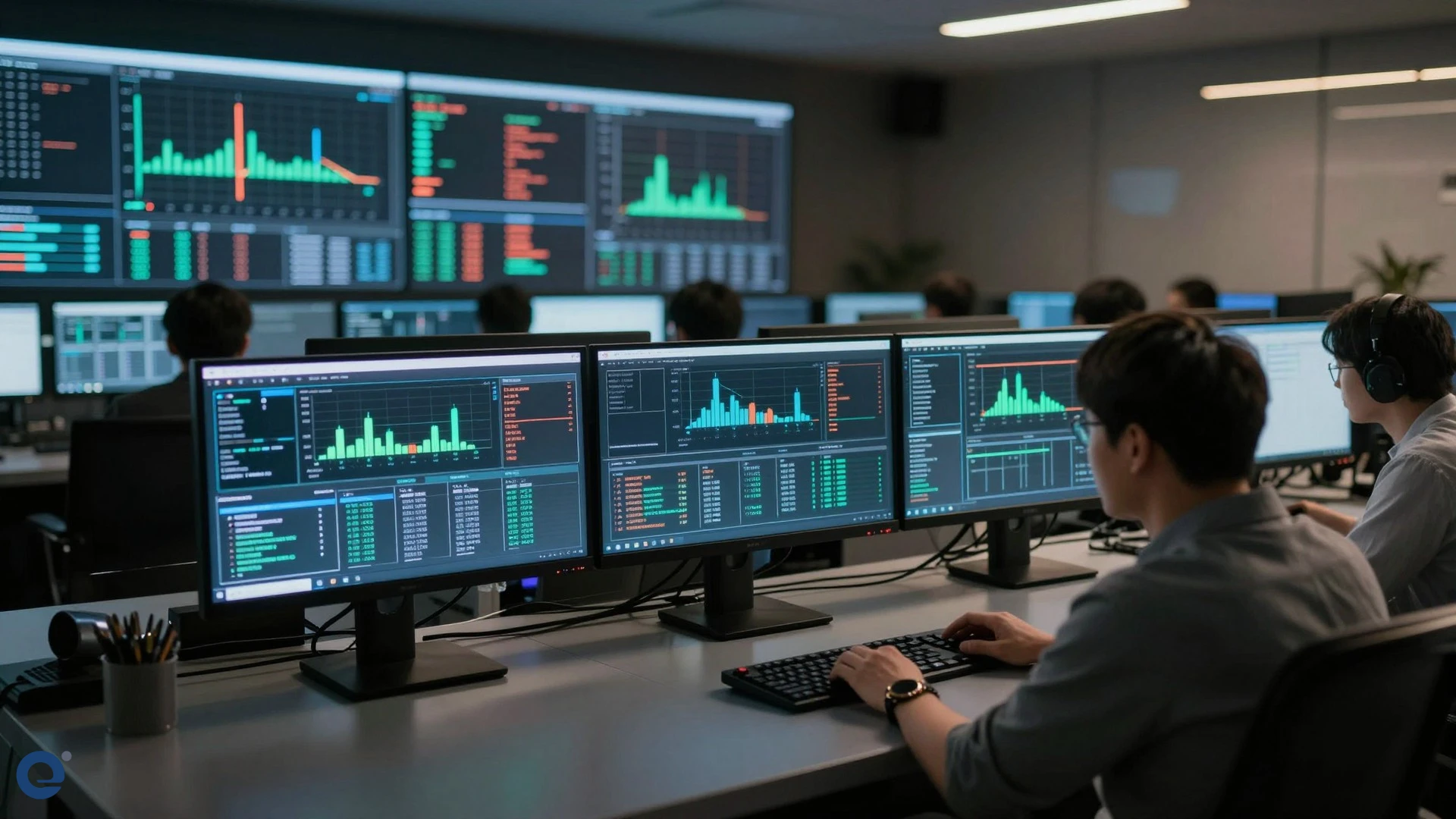
why speed without context creates new vulnerabilities
The primary appeal of AI-driven detection is the reduction in latency. Traditional rule-based systems often require seconds to process a transaction, whereas modern models can achieve sub-50ms adjudication with high precision as demonstrated by recent fintech implementations[4]. Yet, speed is a double-edged sword. If an analyst accepts an AI's classification without understanding the underlying pattern, they lose the ability to identify emerging, novel attack vectors that the model may have missed.
EON Tech has observed that the most effective teams use these models not as a replacement for judgment, but as a high-speed filter for data. When the system flags an alert, the AI should provide the "why" alongside the "what." This transparency is critical for compliance and audit trails. Without it, the "black box" nature of advanced models creates an accountability gap that is difficult to bridge during post-incident reviews.
the evolution from copilot to orchestrator
The current market is moving beyond simple code-writing assistants. We are seeing a shift toward autonomous orchestration platforms[2] that manage the entire lifecycle of a security rule. This evolution changes the analyst's role from a manual investigator to a system architect. In this new paradigm, your primary responsibility is testing the AI’s logic against edge cases.
Consider the following comparison of operational models:
- Legacy approach: Analysts manually update static rules, leading to high false-positive rates and slow response times.
- Luna-enabled approach: AI models continuously learn from transaction patterns, allowing for dynamic rule adjustment every 24 hours to maintain high accuracy.
a decision framework for implementing instant alerts
Before deploying an AI-driven alert system, teams must establish a rigorous validation protocol. The goal is to ensure that the AI's "instant" decisions are as reliable as those made by senior analysts. Use this checklist to evaluate your readiness:
- Data provenance: Does the model have access to enough high-quality, historical transaction data to avoid bias?
- Explainability: Can the system provide a clear audit trail for every automated decision?
- Human override: Is there a seamless mechanism for analysts to revert or modify an AI-generated rule in real-time?
- Continuous feedback: Is there a loop where analyst corrections are fed back into the model to improve future performance?
The transition to AI-supported fraud detection is inevitable, but it is not a "set and forget" solution. It requires a fundamental shift in how your team interacts with data. By focusing on the intersection of machine speed and human oversight, you can build a defense that is both faster and more resilient than the threats it is designed to counter. The future of fraud defense lies in this collaborative intelligence, where the machine handles the volume, and the human provides the necessary strategic oversight.
More Information
- XTN Luna: An AI assistant integrated into fraud prevention platforms that provides contextual support, documentation navigation, and automated threat classification for security teams.
- Autonomous orchestration: A software development and security approach where AI agents manage end-to-end processes, from requirement gathering to deployment and testing, without constant manual oversight.
- GPT-6 Luna: A highly efficient language model designed for high-volume tasks, featuring advanced reasoning capabilities and optimized for rapid, large-scale data processing in enterprise environments.
- Fraud detection fintech: The application of machine learning and AI to identify and prevent financial fraud in real-time, significantly reducing losses compared to traditional rule-based systems.
- False positive rate: The frequency at which a security system incorrectly flags a legitimate transaction as fraudulent, a key metric for measuring the efficiency of AI-driven models.


