
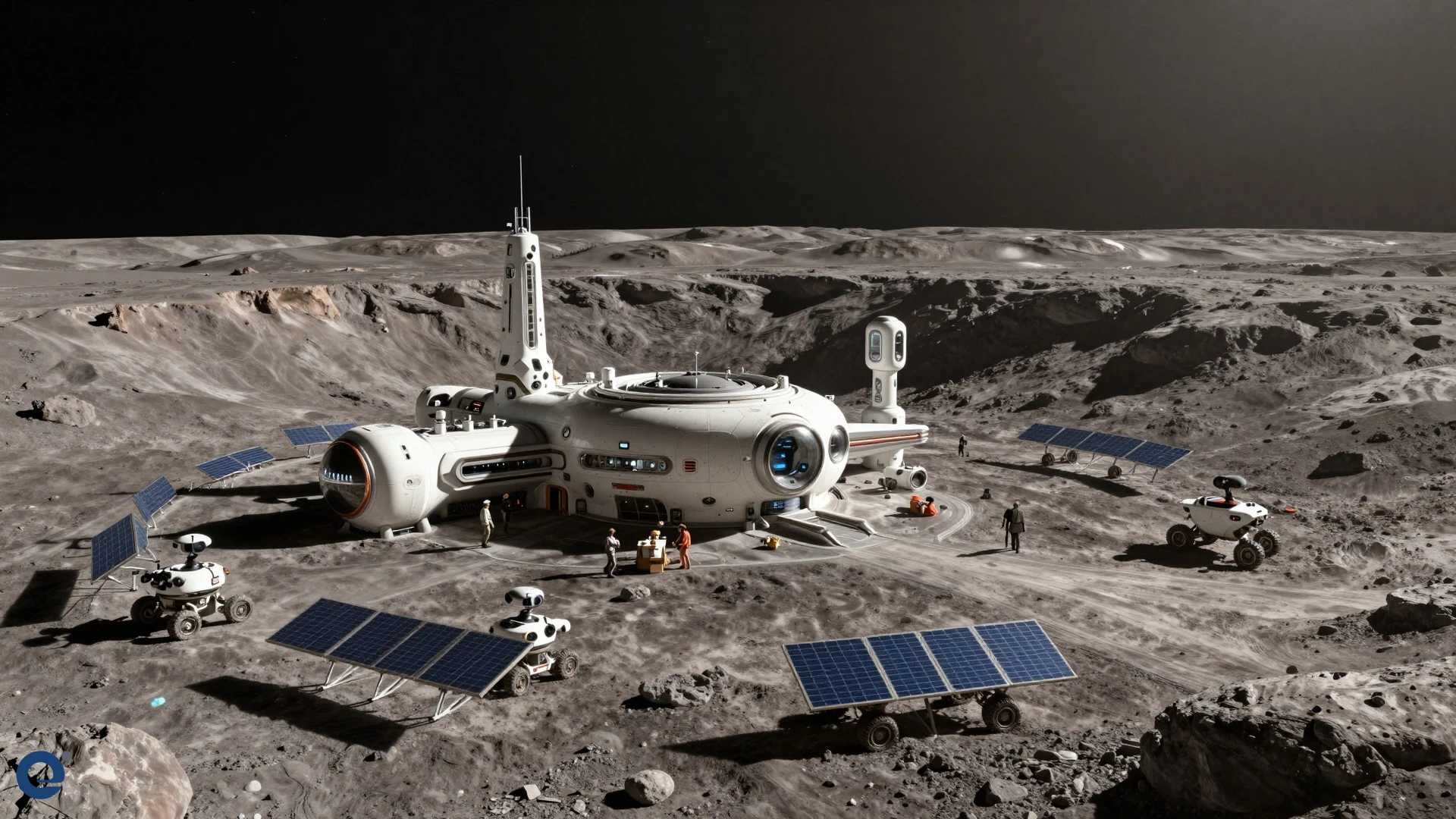
The lunar surface is not a desolate wasteland but a nascent frontier of intense geopolitical competition. As nations and private entities race to secure volatile ice deposits and rare minerals, the risk of a "tragedy of the commons" in space becomes acute. Conventional international space law, specifically the 1967 Outer Space Treaty, provides a framework for exploration but lacks the granular mechanisms required for sustainable resource management. This article argues that Elinor Ostrom’s design principles for common-pool resources provide the necessary blueprint for governing lunar assets, shifting the focus from state-centric sovereignty to decentralized, polycentric institutional arrangements.
The assumption that lunar resources are either "global commons" to be managed by a monolithic international body or "open access" zones for the first arrival is a false dichotomy. Political scientists must recognize that the physical constraints of space—extreme isolation, high entry costs, and the necessity of life-support infrastructure—demand a more nuanced governance model. By applying Ostrom’s framework, we can move beyond the current deadlock of space diplomacy toward a system of nested, self-governing enterprises that ensure long-term stability and equitable access.
The failure of state-centric frameworks
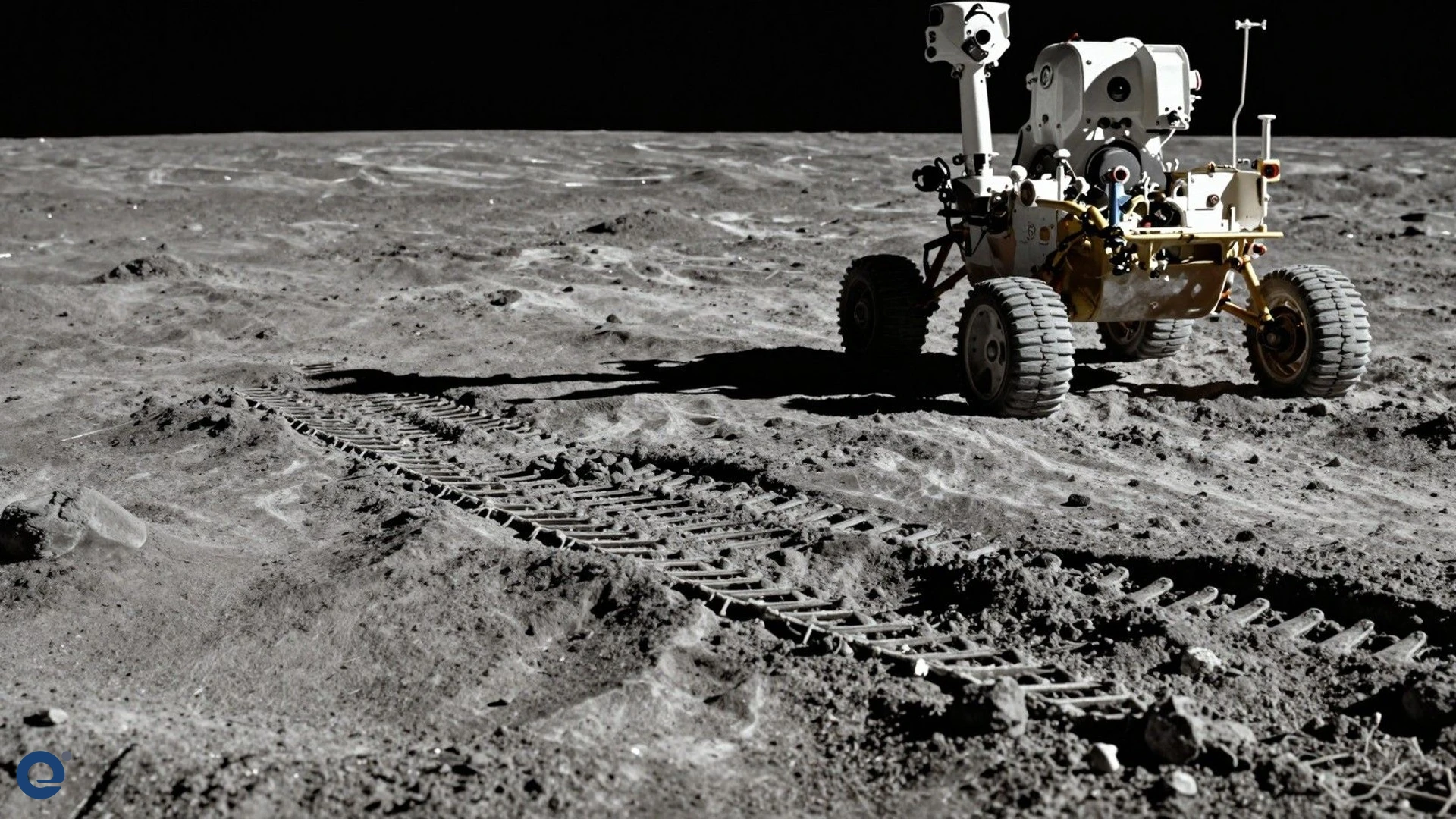
Current space governance relies heavily on the Outer Space Treaty, which prohibits national appropriation of celestial bodies. However, this treaty fails to address the extraction of resources for commercial gain. Critics argue that this creates a "use-it-or-lose-it" environment, where actors are incentivized to exploit sites as rapidly as possible to establish de facto control. This behavior mirrors the over-exploitation of terrestrial fisheries or forests, where the absence of clear property rights leads to rapid depletion. The silent language of interacting AI agents might eventually manage these logistics, but the underlying political friction remains a human-centric problem.
We must acknowledge that the high cost of lunar operations, similar to the capital-intensive nature of energy firms like Enel Chile S.A., limits the number of participants. This concentration of power complicates the creation of "bottom-up" governance. Yet, the very isolation of lunar bases necessitates local, autonomous decision-making. Relying on Earth-bound bureaucracies to resolve disputes over water ice or landing sites is operationally infeasible. We need a system that empowers local actors to define their own rules within a broader, globally recognized framework.
Applying design principles to lunar geography
Elinor Ostrom identified eight design principles for the successful management of common-pool resources. When applied to the Moon, these principles offer a path toward sustainable development. First, the boundaries of the resource must be clearly defined. In the lunar context, this means mapping specific craters and resource-rich zones rather than declaring the entire Moon a vague "common heritage." By defining these zones, we can create clear jurisdictions for management.
Second, the rules of appropriation must be congruent with local conditions. A base in the lunar south pole requires different operational rules than a research outpost in the lunar highlands. EON Tech has already begun simulating the resource requirements for such outposts, highlighting that resource allocation is a technical necessity as much as a political one. Third, collective-choice arrangements must allow those affected by the rules to participate in their modification. This ensures that the governance system remains responsive to technological shifts and changing economic demands.
Monitoring and the challenge of accountability
Ostrom’s fourth principle, active monitoring, is perhaps the most difficult to implement in space. Who monitors the monitor? In a lunar setting, monitoring must be transparent and decentralized. Distributed ledger technology could provide an immutable record of resource extraction, ensuring that all participants adhere to agreed-upon quotas or safety standards. This creates a system of "trustless" accountability that does not rely on a single, potentially biased, international regulator.
Graduated sanctions represent the fifth principle. If a private firm or state entity exceeds its resource allocation, the response should be proportional. Immediate expulsion from the lunar surface is rarely practical or desirable. Instead, a system of tiered consequences—ranging from temporary operational restrictions to the loss of landing privileges—could maintain order. This approach avoids the binary choice between total impunity and total conflict, offering a middle ground for diplomatic resolution [1].
The polycentric alternative to global governance
A polycentric governance system, where multiple governing authorities at different scales operate independently, is the most robust solution for lunar management. Rather than a single "Moon Authority," we should envision a network of regional councils. These councils would manage local resources while adhering to a core set of international principles regarding safety and non-interference. This structure mirrors the resilience of decentralized energy grids, where local production and consumption are balanced against a larger, interconnected network [2].
The primary critique of this approach is the potential for "elite capture," where powerful states or corporations dominate the regional councils. To prevent this, the governance framework must include mechanisms for the inclusion of smaller, emerging spacefaring nations. Without such inclusion, the system will lose its legitimacy, eventually collapsing under the weight of geopolitical rivalry. The goal is to create a system where cooperation is more profitable than conflict [3].
Pros and cons of decentralized lunar management
To understand the viability of this model, we must weigh its implications against traditional centralized approaches:
- Pros of polycentric governance:
- Increased adaptability to local lunar conditions and specific mission requirements.
- Reduced reliance on slow, Earth-based diplomatic processes for minor disputes.
- Greater incentive for private actors to invest, knowing their rights are protected by local, transparent rules.
- Cons of polycentric governance:
- Risk of fragmentation, where different regions adopt incompatible technical or safety standards.
- Potential for powerful actors to exert undue influence over regional councils.
- Complexity in coordinating large-scale, multi-region infrastructure projects [4].
The path forward for political scientists
Political scientists have a unique role in shaping this future. We must move beyond theoretical debates about sovereignty and engage with the practical, technical realities of lunar habitation. This requires interdisciplinary collaboration with engineers, economists, and legal scholars. We must design institutional experiments that can be tested in analog environments on Earth before being deployed in space. The navigating the divide between model training and fine tuning in AI governance offers a parallel here; we must bridge the gap between abstract policy and operational reality [5].
The tragedy of the commons is not inevitable. It is a choice, driven by poor institutional design. By applying Elinor Ostrom’s principles, we can build a lunar governance system that is as resilient as the technology we use to reach the Moon. The success of this endeavor will determine whether the lunar frontier becomes a theater of war or a model for sustainable, collaborative human expansion. The time for designing these institutions is now, before the first major resource-related conflicts emerge.
More Information
- Common-pool resources: Natural or man-made resources where exclusion is difficult and one person's consumption reduces the amount available for others, necessitating specific governance to prevent depletion.
- Polycentric governance: A system of governance where multiple governing authorities at different scales operate independently but interact to manage a shared resource, promoting resilience and local responsiveness.
- Outer Space Treaty: The foundational international agreement governing space, establishing that space is the province of all mankind and prohibiting national appropriation of celestial bodies.
- Regolith: The layer of loose, heterogeneous superficial deposits covering solid rock on the Moon, containing vital resources like oxygen and metals that are central to lunar resource management.
- Tragedy of the commons: An economic theory where individual users, acting independently according to their own self-interest, behave contrary to the common good of all users by depleting a shared resource.