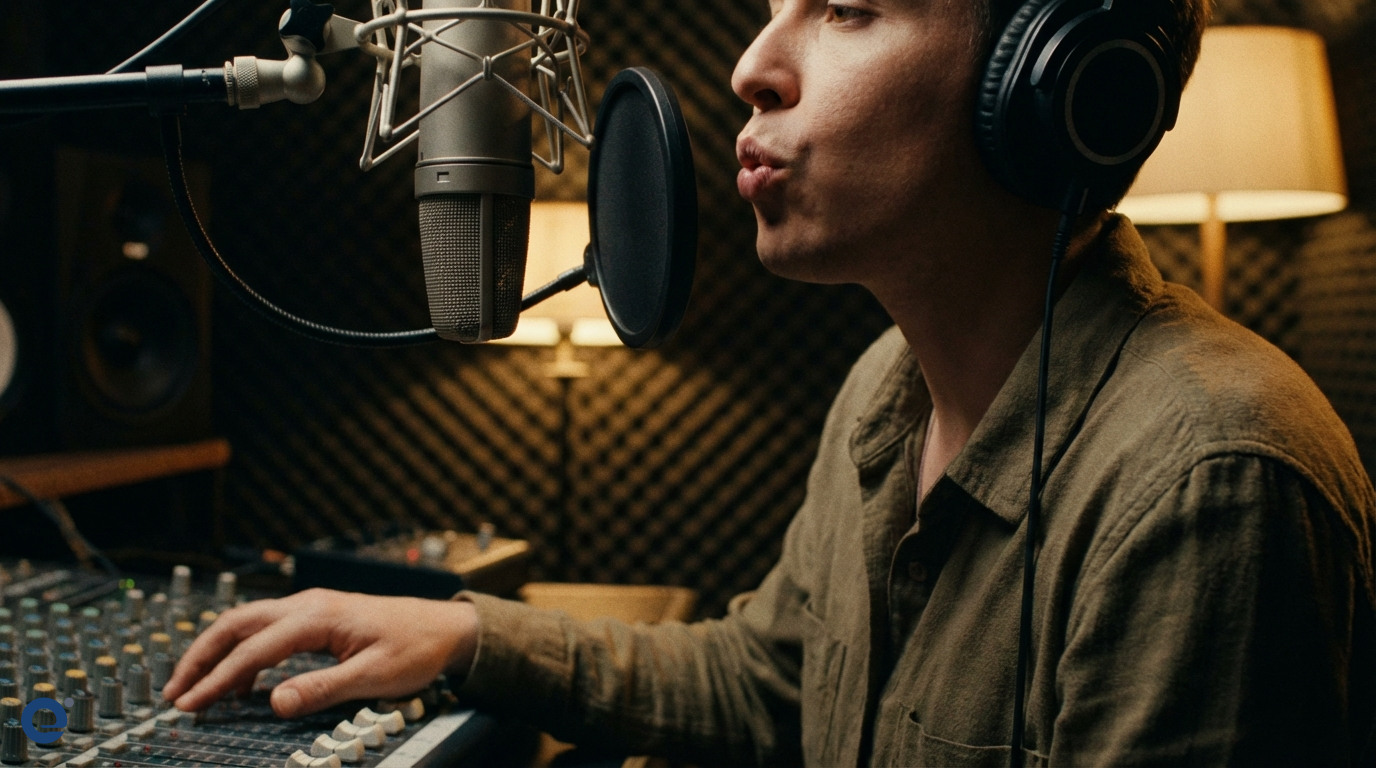
Welcome, voice actors, to the detailed world of lip sync! Consequently, making characters believable often hinges on how well their mouth movements match the audio. This guide explores accurate lip sync techniques.
Therefore, understanding this is vital for your craft. It helps bridge the gap between your voice and the animated character. As a result, the audience connects more deeply.
Why is accurate lip sync so important?
Accurate lip sync is absolutely crucial. Firstly, it enhances the illusion of life in animated characters or dubbed live-action. When the mouth movements align perfectly with the sound, the audience is more likely to believe the character is genuinely speaking.
Moreover, poor lip sync can be very distracting. It pulls the viewer out of the story. In contrast, seamless lip sync keeps them immersed.
The impact on performance
Your vocal performance is key. However, its impact is magnified when paired with precise lip movements. It ensures the emotional nuances you convey are visually supported. Therefore, the character feels more complete.
Good lip sync respects the timing and delivery of your lines. It shows a synergy between the voice actor and the animator. Consequently, the final product is much stronger.
Understanding phonemes and visemes
To master lip sync, we first need to understand the building blocks. These are phonemes and visemes[1]. Phonemes are the smallest units of sound in a language.
However, visemes are the visual representations of those sounds. They are the mouth shapes we see when someone speaks. Many phonemes can map to a single viseme. For example, the sounds /p/, /b/, and /m/ look very similar on the lips when spoken, often sharing the "closed lips" viseme.
The basic viseme set
Animators often work with a set of basic mouth shapes. These typically include shapes for:
- Closed lips (M, B, P)
- Open mouth (Ah, Aa)
- Wide mouth (Ee, I)
- Rounded lips (Oo, U, W, Q)
- Teeth together (S, Z, Ch, J)
- Upper teeth on lower lip (F, V)
- Tongue to teeth (Th, L, D, T, N)
Techniques for achieving accurate lip sync
Several techniques contribute to precise lip sync. It often starts long before the animation process. It even involves how you, the voice actor, deliver your lines.
Analyzing the audio track
The first step is always a thorough analysis of the voice track. Animators, and sometimes even voice actors using certain software, will break down the audio. They identify when each sound (phoneme) occurs.
This process is called "track reading" or "audio scrubbing." It involves listening carefully, frame by frame if necessary, to map sounds to specific moments in time. Consequently, this map guides the animation.
Breaking down dialogue: The exposure sheet
Traditionally, animators use an exposure sheet (or X-sheet)[2]. This sheet breaks down the animation frame by frame. For dialogue, it shows which mouth shape (viseme) should be used on which frame, based on the audio track.
Even if you don't use an X-sheet directly, understanding its purpose helps. It highlights the meticulous planning involved. Every sound you make is charted and timed.
Using lip sync software
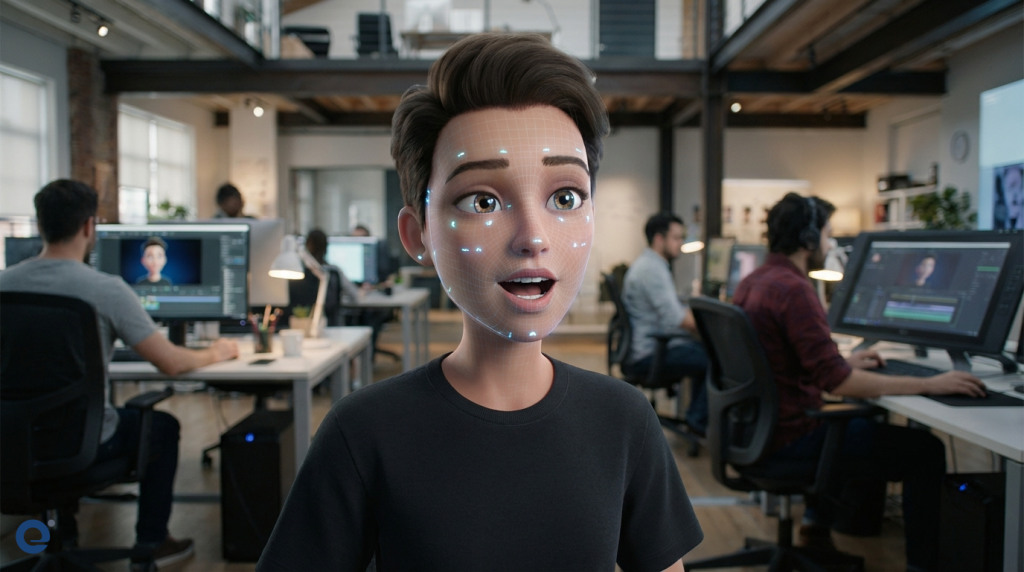
Modern animation heavily relies on software. Many programs can automatically generate a base layer of lip sync. They analyze the audio and map phonemes to visemes.
However, this automated output usually needs refinement. An animator will then go in and adjust the timing and shapes. They ensure the performance looks natural and expressive, not just technically correct.
The value of reference footage
Sometimes, animators use video reference of the voice actor. Seeing your mouth movements as you record can be invaluable. It helps them capture more natural and specific mouth shapes.
Therefore, if you are recorded on video during sessions, be aware of your mouth movements. Clear articulation can provide better reference. It aids the animators significantly.
Exaggeration and timing in animation
Animation often uses exaggeration. Mouth shapes might be held longer or be more pronounced than in real life. This helps them read clearly, especially in fast-paced dialogue or for stylized characters.
Timing is also crucial. The mouth shape should often anticipate the sound slightly. This mimics how we speak naturally. The brain processes the visual slightly faster.
Common challenges and solutions
Achieving perfect lip sync isn't always easy. Several challenges can arise. However, there are solutions.
Fast dialogue
Rapid speech is difficult. There isn't much time for each mouth shape. In these cases, animators might simplify, hitting only the key visemes. As a voice actor, clear articulation, even at speed, is very helpful.
Mumbling or unclear speech
If the audio is mumbled, it's hard to identify phonemes. Consequently, lip syncing becomes guesswork. Always strive for clear delivery, unless the character is meant to mumble.
Accents and dialects
Different accents produce sounds differently. This can affect mouth shapes. Animators need to be aware of this, or the lip sync might not match the accent.
The voice actor's role in lip sync
You might think lip sync is purely the animator's job. However, your performance directly impacts it. Your clarity, pacing, and energy all play a part.
Clarity and articulation
Clear articulation is paramount. The more distinct your phonemes, the easier it is for animators or software to map them. This doesn't mean over-enunciating unnaturally, but being clear.
Pacing and rhythm
The rhythm of your speech creates a template. Animators work within this rhythm. A consistent and deliberate pace (when appropriate for the character) is easier to sync than erratic delivery.
Providing 'handles'
Sometimes, emphasizing certain consonants can give animators clearer "handles" or anchor points for visemes. Think about the 'B', 'M', 'P', 'F', 'V' sounds, which have very distinct visual cues.
Working with animators
Collaboration is key. If you have the chance to interact with the animation team, it can be very beneficial. They might have specific notes or requests regarding your delivery to aid the lip sync process.
Understanding their needs can make you a more valuable and easier-to-work-with voice actor. For instance, they might ask for slightly longer pauses or clearer plosives[3].
Software and tools for voice actors
While lip sync is primarily done by animators, some tools can be useful for voice actors too. Software like Audacity allows you to see the waveform of your audio. This can help you visualize the timing of your words and sounds.
Some plugins and standalone software are also emerging that can provide basic lip sync animation previews based on your audio. This can give you a rough idea of how your voice might be animated, although the final animation will be much more refined. For those interested in the technical side, understanding the character rigging process can also provide insight into how characters are prepared for animation, including facial animation.
Practice and improvement
How can you improve your contribution to lip sync? Practice clear and controlled delivery. Record yourself and listen back, paying attention to the distinctness of each sound.
Watch animation critically. Observe how the mouths move. Try to see the visemes and how they match the audio. This can make you more aware of the visual aspect of speech.
Exercises for clarity
Tongue twisters and vocal warm-ups aren't just for your voice; they improve articulation. Clearer articulation means clearer viseme cues for animators. Practice enunciating every phoneme distinctly.
Reading scripts aloud with an emphasis on mouth movement (even if you look silly doing it in private) can build muscle memory and awareness.
The future of lip sync
Technology is constantly evolving. AI[4] and machine learning are becoming increasingly sophisticated at generating automated lip sync. However, the human touch of an animator remains crucial for high-quality, expressive results.
Real-time lip sync for virtual avatars and live performances is also advancing rapidly. This requires very low latency[5] audio processing and animation rendering. Your clear voice input will be even more vital here.
AI-driven animation
AI tools can now produce surprisingly good initial lip sync passes. They learn from vast datasets of audio and corresponding video. This speeds up the workflow, allowing animators to focus more on the performance aspect.
However, AI still struggles with nuance and the subtle interplay between voice and expression. That's where skilled animators, working with your great voice performance, make the difference. The goal is always crafting believable expressions, not just moving the mouth.
Conclusion: Your voice, visualized
Accurate lip sync is a beautiful blend of your vocal performance and the animator's skill. By understanding the process and delivering clear, well-paced audio, you play a vital role in bringing characters to life convincingly.
Therefore, embrace your part in the visual performance. Your voice is the starting point for those believable mouth movements. The result is a more engaging and immersive experience for the audience.
More Information
- Visemes: These are the visual mouth shapes that correspond to spoken sounds (phonemes). Multiple phonemes can map to a single viseme, representing how sounds look on the lips.
- Exposure Sheet (X-sheet): A traditional animation tool, it's a chart used by animators to time and plan the action, dialogue, and mouth shapes frame by frame for an animation sequence.
- Plosives: Consonant sounds (like /p/, /t/, /k/, /b/, /d/, /g/) produced by completely stopping the airflow and then releasing it suddenly, creating a burst of sound.
- AI (Artificial Intelligence): The simulation of human intelligence processes by computer systems, used here for tasks like analyzing audio and generating corresponding mouth movements automatically.
- Latency: The delay between an input (like spoken sound) and the corresponding output (like the animated mouth movement on screen) in a system. Low latency is crucial for real-time applications.