
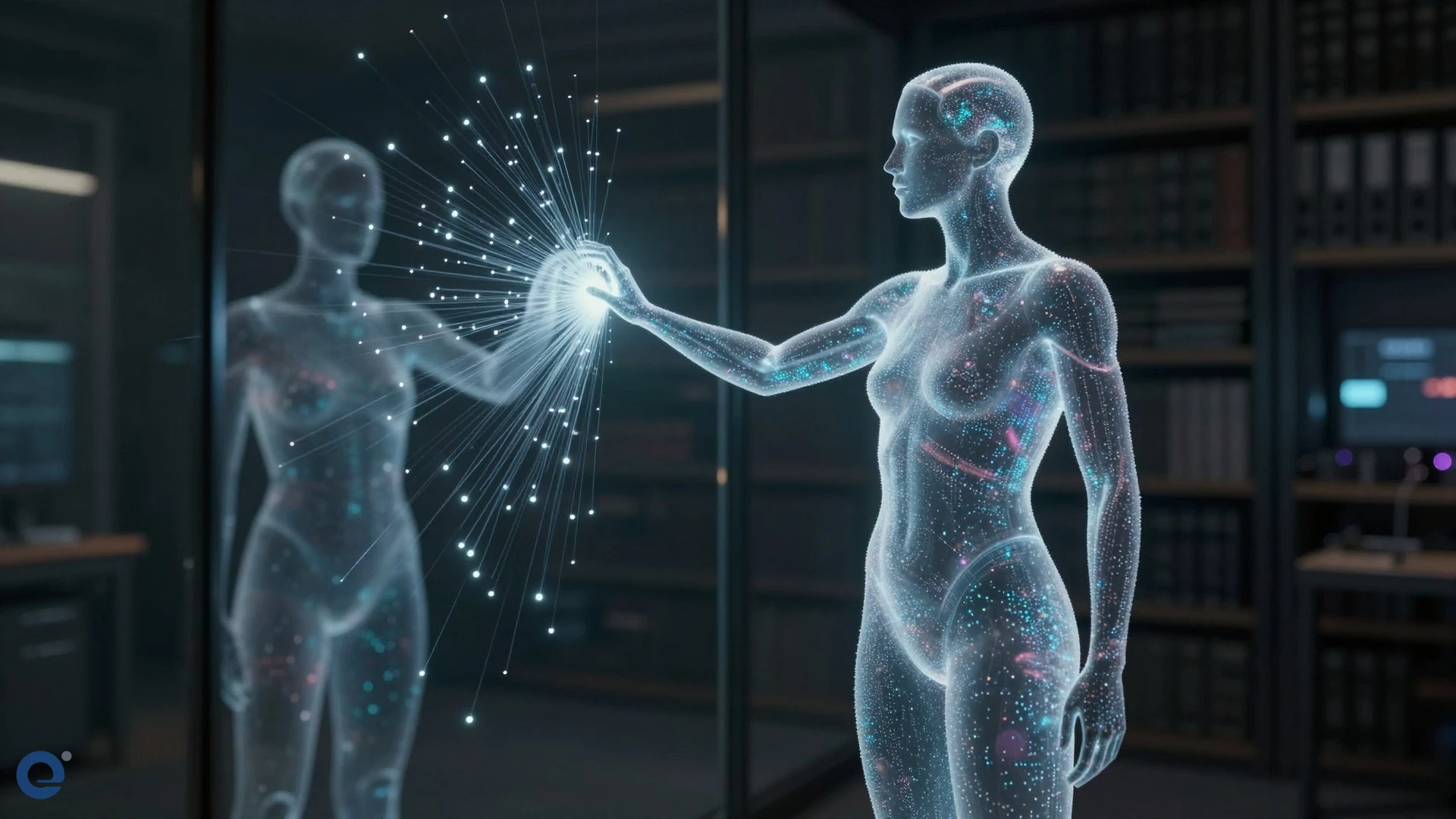
The human brain does not function like a digital archive. We reconstruct memories rather than retrieving them as static files. When we outsource our cognitive processes to artificial intelligence, we risk blurring the distinction between authentic self-reflection and algorithmic output. This phenomenon creates a profound identity crisis for the modern professional.
As we increasingly rely on LLMs to synthesize our thoughts, the boundary between personal experience and machine-generated recall becomes porous. We are no longer just using tools to organize data. We are beginning to incorporate AI-generated narratives into our own internal sense of self. Understanding this shift is essential for psychologists and cognitive scientists who study human agency.

The mechanics of cognitive outsourcing
To navigate the complexities of modern cognition, we must first define how AI alters memory retrieval. Traditional memory is associative and prone to reconstructive errors [1]. AI, conversely, operates on probabilistic patterns. When we ask an AI to summarize our past projects or professional achievements, it provides a coherent, optimized version of events [2].
This output feels familiar because it mirrors our own linguistic patterns. However, it lacks the emotional weight and subjective context of actual lived experience. Over time, the brain may prioritize these streamlined AI summaries over the messy, nuanced reality of our original memories. This is where EON Tech researchers have begun observing significant shifts in how individuals describe their own career histories.
Identity construction in an algorithmic age
Identity is built through the continuous integration of past experiences into a coherent life story. When we delegate the synthesis of our history to AI, we allow an external agent to define the narrative arc of our lives [3]. This is a subtle but dangerous form of identity erosion.
Consider the difference between writing a reflection on a difficult project and asking an AI to do it. The manual effort of writing forces the brain to engage in cognitive overload human limits versus AI scientific inference. By bypassing this struggle, we lose the opportunity to forge new neural pathways associated with deep reflection and self-correction.
The myth of objective recall
Many professionals believe that AI provides a more "accurate" version of their history. They assume that because the machine has no emotional bias, its output is more truthful. This is a fundamental misunderstanding of how identity works [4]. Identity is not a data point; it is a subjective interpretation of experience.
- AI recall: Prioritizes coherence, efficiency, and pattern matching.
- Human identity: Prioritizes emotional resonance, personal values, and growth.
- The conflict: AI-generated narratives often strip away the "failures" that define human character.
The risk of narrative homogenization
When we navigate through the digital landscape of our own professional identities, we are increasingly using standardized templates. If everyone uses the same models to articulate their experiences, our individual narratives begin to look identical [5]. This homogenization threatens the diversity of thought that is essential for innovation.
Psychologists should be concerned about the loss of "narrative friction." Friction is what happens when we struggle to articulate a complex emotion or a difficult memory. That struggle is where self-awareness is born. If we remove the friction, we remove the depth of the self.
A framework for maintaining cognitive autonomy
To preserve identity in an era of AI-assisted recall, professionals must adopt a new set of cognitive habits. We must distinguish between "data retrieval" and "identity synthesis." Data retrieval is the domain of machines; identity synthesis is the domain of the human.
- Audit your reflections: Before accepting an AI-generated summary of your work, write a raw, unedited version first.
- Identify the gaps: Look for what the AI left out—often the emotional or irrational details that actually matter most to your identity.
- Reclaim the narrative: Use AI as a secondary tool for organization, not as a primary tool for interpretation.
Future scenarios: the automated self
What happens when our personal histories are entirely managed by AI agents? In a future scenario, we might find ourselves unable to recall our own lives without the assistance of our digital archives. This creates a dependency that is not just technological, but ontological.
If we cannot remember our own stories without a prompt, do we truly "own" those stories? The danger is not that AI will replace our thinking, but that it will replace the *effort* of thinking. Without that effort, the construction of identity becomes a hollow, automated process. We risk becoming curators of our own lives rather than the authors.
Conclusion: the necessity of the human struggle
The line between AI recall and identity construction is not just blurry; it is a battleground for the future of human agency. Cognitive scientists must advocate for the importance of the internal, messy, and often inefficient process of human memory. We must recognize that the value of our experiences lies in their subjective imperfection.
By navigating these digital tools with intentionality, we can use them to support our cognitive lives without surrendering our identity. The goal is to remain the primary architect of our own narrative. We must ensure that when we look back at our lives, we see a story written by a person, not a pattern generated by a machine.
More Information
- Reconstructive memory: A cognitive theory suggesting that memory is not a recording of events but a process of rebuilding information based on current knowledge and expectations.
- Algorithmic synthesis: The process by which AI models aggregate disparate data points into a coherent, often simplified narrative structure based on statistical probability.
- Cognitive agency: The capacity of an individual to control their own thought processes, decision-making, and the formation of their personal identity without undue external influence.
- Narrative identity: The internalized and evolving story of the self that an individual constructs to provide their life with unity, purpose, and meaning over time.
- Homogenization: The process by which individual differences are flattened, resulting in a uniform output or identity, often driven by the reliance on standardized AI models.