Storyboarding is a vital pre-production process. It visually translates scripts into a sequence of images. Therefore, it acts as a blueprint for films, animations, games, and advertisements. For concept artists, mastering professional storyboard techniques is invaluable. It bridges the gap between initial ideas and the final visual product. This article explores the world of professional storyboarding.
What is a storyboard?
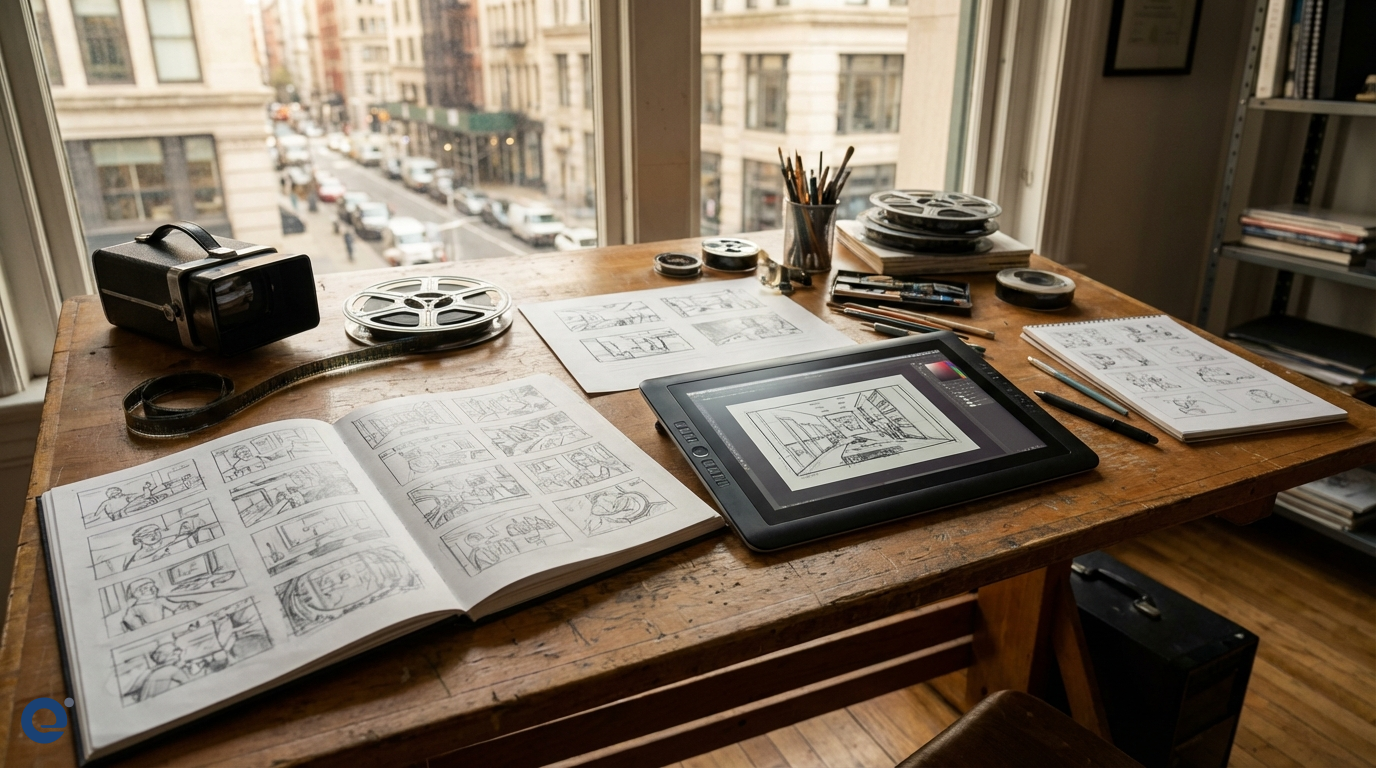
A storyboard is essentially a series of drawings, ordered sequentially. It visualizes the narrative of a project. Think of it as "hand-drawn editing," as described in one source. Each frame depicts a specific moment or action. Moreover, it includes details about camera angles, movement, lighting, and character expressions. It's more than just sketches; it's the first visual representation of the story's flow.
These frames often include notes about dialogue, sound effects, and timing. Consequently, the entire production team can understand the director's vision. Storyboards clarify how scenes will look and feel before shooting or animation begins.
The role of a storyboard artist
A Storyboard Artist is a visual storyteller. They interpret the script or concept and translate it into compelling visual sequences. They need a deep understanding of cinematic language[1]. This includes knowing when to use a wide shot, a close-up, or a panning shot to convey the right emotion or action. The artist ensures each frame contains the necessary visual information for the production team.
They are silent storytellers, using images instead of words. Every line, arrow indicating movement, and character expression must be precise and intentional. The goal isn't necessarily beautiful drawing, but clear, communicative drawing that everyone can understand.
Essential skills for storyboard artists
To excel, a storyboard artist needs a blend of skills. Firstly, strong drawing abilities, whether traditional or digital, are fundamental. They must quickly sketch characters, environments, and actions. Secondly, visual storytelling is key. They need to think like a director and editor, understanding pacing and shot composition[2].
Knowledge of filmmaking, including camera work, lighting, and composition, is also crucial. Furthermore, artists use software like Photoshop, Storyboard Pro, or Toon Boom. Finally, collaboration and communication skills are vital, as they work closely with directors, writers, and other artists.
Why is storyboarding crucial in production?
Storyboarding is an indispensable part of the pre-production[3] phase. It saves significant time, money, and effort during production. Without storyboards, filming or animation can become unfocused, leading to visual inconsistencies and wasted resources. A good storyboard provides clear direction for camera movements, props, acting, and editing.
It allows the team to identify potential problems early on. For instance, a sequence might be too complex or not work visually. Addressing these issues during storyboarding is much easier and cheaper than during live-action shooting or final animation. It ensures everyone is on the same page.
The professional storyboard creation process
Creating a professional storyboard follows a structured process. It typically begins with thorough preparation.
Step 1: Preparation
The artist first studies the script, brief, or concept. They discuss the vision with the director or client. Understanding the story, characters, and desired mood is essential. They also gather references for characters, locations, and style.
Step 2: Outlining and Thumbnails
Next, the artist often creates rough thumbnail sketches. These are very small, quick drawings to explore different compositions and sequences for each scene. This stage focuses on the flow and key moments before committing to more detailed drawings.
Step 3: Drawing the Storyboard
Once the thumbnails are approved, the artist creates the actual storyboard panels. These are cleaner, more detailed drawings. They incorporate camera angles, character positions, and actions. The artist also considers the aspect ratio[4] of the final output. Each panel might include numbers, arrows indicating movement, and brief descriptions.
Step 4: Adding Details and Notes
Beneath or alongside each panel, the artist adds important information. This includes dialogue snippets, sound effect cues, descriptions of actions or camera movements, and estimated timing for the shot. This context is crucial for the rest of the team.
Step 5: Review and Revisions
The completed storyboard is presented to the director and other stakeholders. Feedback is gathered, and revisions are made. This iterative process continues until the storyboard accurately reflects the intended vision. Sometimes, an animatic[5] is created from the storyboard panels to get a better sense of timing and flow.

Key information in a storyboard
A comprehensive storyboard contains several key pieces of information beyond the drawings themselves.
1. General Information
This includes the project title, scene number, panel number, and sometimes the page number. It helps keep everything organized, especially in large projects.
2. Visuals
The core of the storyboard is the sequence of images depicting the action, characters, and environment for each shot. Arrows and other visual cues indicate camera or character movement.
3. Notes and Descriptions
Each panel usually has space for notes. This can include:
- Dialogue: Lines spoken by characters during that shot.
- Action: Description of what is happening, including character movements or events.
- Camera Directions: Instructions like "pan right," "zoom in," or "dolly forward."
- Sound Effects (SFX): Cues for sounds other than dialogue.
- Timing: Estimated duration of the shot.
Tools and software for storyboarding
While some artists still prefer traditional pen and paper, digital tools are now industry standard. Software like Toon Boom Storyboard Pro is specifically designed for storyboarding, offering features for drawing, timing, and animatics. Adobe Photoshop is also widely used due to its powerful drawing and editing capabilities.
Other tools include Clip Studio Paint, Boords, and even presentation software for simple sequences. Many artists use drawing tablets (like Wacom) for digital sketching. The choice of tool often depends on the artist's preference and the project's requirements.
Career opportunities and outlook
The demand for storyboard artists is growing. This is fueled by the expansion of the animation, film, game development, and advertising industries. In Vietnam, studios like DeeDee Animation, Red Cat Motion, and Sparx* are continuously producing content and collaborating internationally, as noted by Van Lang University's news. Production houses for commercials, music videos, and TV series also require storyboard artists.
Game companies in major Vietnamese cities also hire storyboard artists for 2D games, mobile games, and VR/AR experiences. With good drawing skills, cinematic understanding, and software proficiency, even fresh graduates can find entry-level positions with competitive salaries. Experienced artists can command higher pay and take on more significant projects.
Understanding classic and modern 2D animation can also be beneficial for aspiring storyboard artists, as many principles overlap. Moreover, the rise of digital content and AI in animation production is creating new avenues, although foundational skills remain crucial.
Conclusion
Professional storyboard techniques are fundamental for visual storytelling in many creative industries. For concept artists, these skills enhance their ability to communicate ideas and contribute effectively to the pre-production pipeline. By mastering the art of storyboarding, artists can transform scripts and concepts into clear visual guides, paving the way for successful and efficient production.
More Information
- Cinematic Language: The conventions, techniques, and structures used in filmmaking and visual media to communicate meaning and evoke emotion, including camera angles, lighting, editing, and sound.
- Shot Composition: The arrangement of elements within a single frame of a film or image, including the placement of characters, objects, and the background, to guide the viewer's eye and convey information.
- Pre-production: The planning and preparation phase of a project (film, animation, game) that occurs before principal photography or main production begins, including scripting, storyboarding, casting, and location scouting.
- Aspect Ratio: The ratio of the width to the height of an image or screen. Common aspect ratios include 16:9 (widescreen) and 4:3 (standard).
- Animatic: A preliminary version of a film or animated sequence, produced by shooting successive sections of a storyboard and adding a soundtrack, used to check timing and flow.