

Enterprise AI deployments often hit a wall when hardware constraints clash with performance requirements. Engineering teams frequently assume that quantisation is the universal fix for deploying massive models on limited infrastructure. However, this assumption often ignores the hidden degradation in reasoning quality that occurs when precision is stripped away.
Choosing between a compressed larger model and a native smaller model is not merely a technical trade-off. It is a strategic decision that mirrors the high-stakes risk management seen in financial market trading, where selective information processing is vital for success. Like the disciplined execution required at firms such as Point72 Asset Management, your AI configuration must balance speed against the risk of costly errors [1].
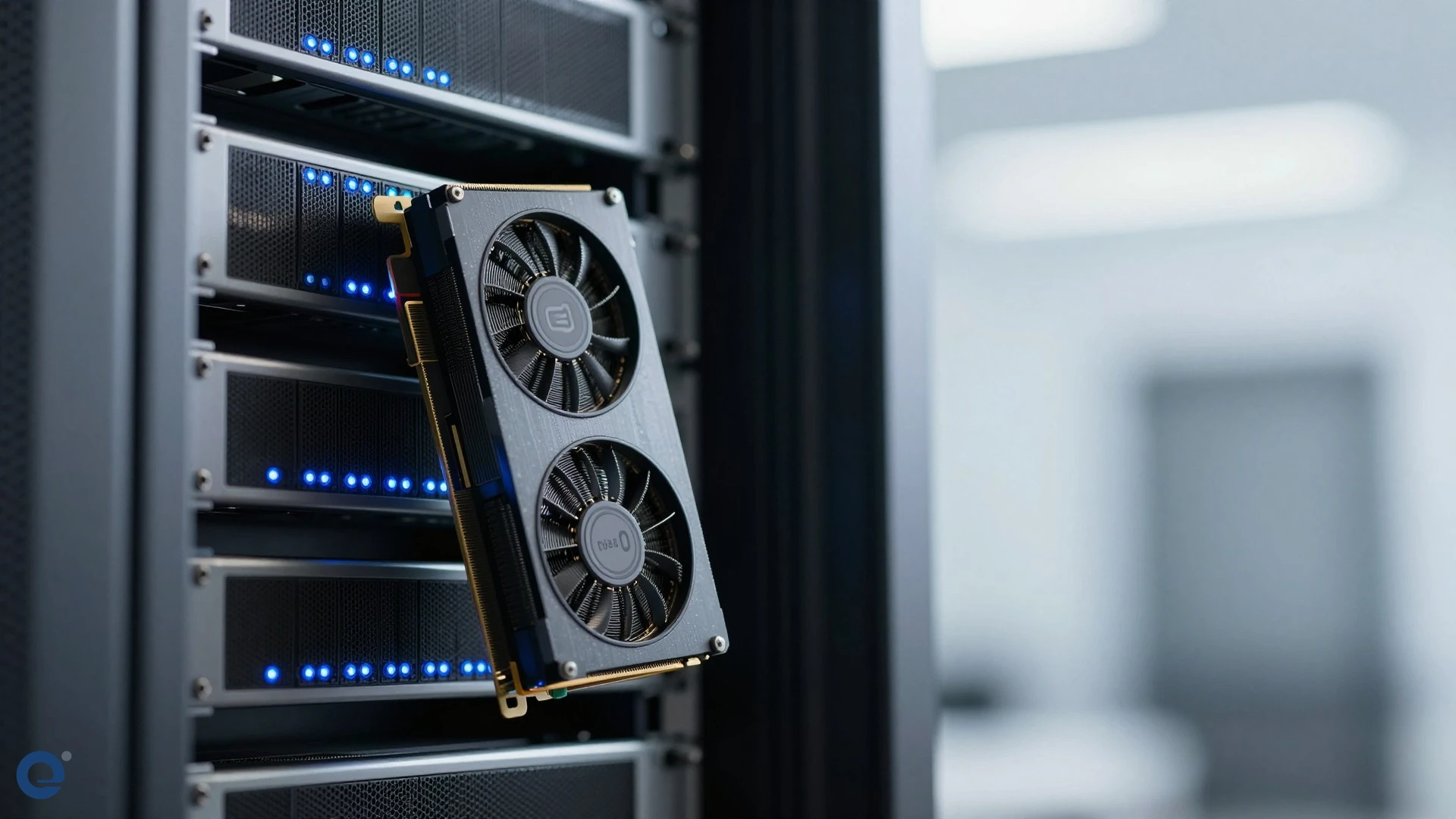
The myth of the universal compressed model
Many developers treat quantisation as a free lunch. They take a large, high-performing model and reduce its precision to fit into smaller memory footprints. While this saves on VRAM, it often introduces "hallucination drift" or subtle logic failures [2]. A model that is natively smaller is often trained with a more optimized architecture, allowing it to maintain coherence better than a 4-bit version of a much larger parameter set.
Before choosing, you must verify the available checkpoints and license compatibility. Open-weights models often come in various formats like GGUF or EXL2. Ensure your inference engine—such as vLLM or llama.cpp—supports the specific quantization method you intend to use. EON Tech engineers often find that native architecture efficiency beats brute-force compression in high-throughput environments.
A scorecard for model evaluation
Generic benchmarks rarely reflect real-world business outcomes. Instead, use representative business examples to test your candidates. Create a scorecard to track performance across these specific metrics:
- Memory usage: Peak VRAM consumption during concurrent requests.
- Latency: Time to first token and total generation speed.
- Throughput: Requests handled per second under load.
- Quality score: Accuracy on domain-specific tasks, not general chat.
This approach mirrors the rigorous compliance and training standards that define modern, successful investment firms [3]. If a model cannot handle your specific business logic, its parameter count is irrelevant [4].
Decision framework: when to choose which path
Use the following framework to decide between quantisation and a native smaller model for your next deployment. This logic helps you avoid the common mistake of over-provisioning hardware for tasks that do not require high-parameter complexity.
- Task complexity: If the task requires deep reasoning or complex multi-step logic, prioritize a larger model, even if it requires aggressive quantisation to fit.
- Latency sensitivity: If your application requires sub-100ms response times, a smaller, non-quantised model is almost always the superior choice.
- Hardware budget: For constrained environments, self-hosting Chinese AI models vs using an API: what should enterprises compare? can offer a path toward higher efficiency.
- Consistency requirements: If your output must be deterministic, native smaller models often show less variance than heavily quantised larger ones.
The hidden costs of model selection
The most dangerous trap is ignoring the "long tail" of performance. A model might perform well on 90% of your test cases but fail catastrophically on edge cases. This is where aggressive trading strategies and AI deployment share a common risk: the failure to account for outlier events [5].
Document where each configuration falls short. If your quantised model struggles with specific syntax or domain-specific terminology, you must define an acceptance threshold. If the model fails this threshold, do not force it into production. Revert to a smaller model or increase your hardware budget.
Moving beyond the parameter count
The obsession with parameter counts is a legacy of early LLM development. Today, the focus must shift toward architectural efficiency. A 7-billion-parameter model trained on high-quality, curated data often outperforms a 70-billion-parameter model that has been heavily compressed.
Your goal is to match the model to the task. If you are building a classification agent, you do not need a model capable of writing poetry. Select the smallest model that meets your quality criteria. This minimizes your infrastructure footprint and simplifies your maintenance pipeline. By focusing on output quality rather than model size, you ensure your enterprise AI remains both performant and sustainable.
More Information
- Quantisation: The process of reducing the precision of a model's weights, typically from 16-bit to 8-bit or 4-bit, to decrease memory usage and improve inference speed.
- Inference engine: A software framework designed to execute trained machine learning models, managing memory allocation, batching, and hardware acceleration for real-time performance.
- VRAM: Video Random Access Memory, the dedicated memory used by GPUs to store model parameters and temporary computation data during the inference process.
- Throughput: A measure of how many requests or tokens an AI system can process within a specific timeframe, critical for scaling enterprise applications.
- Parameter count: The number of internal variables within a neural network that are adjusted during training, often used as a rough proxy for model capacity and intelligence.


