
Quantum computing promises to revolutionize various fields. However, it faces significant engineering hurdles. Among these, managing thermal dynamics within quantum chips is paramount. Quantum hardware engineers must tackle extreme cooling requirements. This ensures the stability and performance of delicate quantum systems.
The delicate nature of qubits
Qubits[1] are the fundamental building blocks of quantum computers. They differ greatly from classical bits. A qubit can exist in multiple states simultaneously. This property is known as superposition[2]. Furthermore, qubits can be entangled[3]. This means their states are linked, regardless of physical distance. These unique characteristics enable quantum computers to solve complex problems. They can do this much faster than even the most powerful classical supercomputers.
However, qubits are incredibly sensitive. They are highly susceptible to environmental noise. This noise includes background radiation and electromagnetic signals. Most importantly, even the slightest amount of heat energy can cause errors. Therefore, maintaining an ultra-cold environment is essential. This minimizes thermal vibrations. It allows qubits to maintain their quantum states. Without proper thermal management, quantum computations become unreliable.
The imperative for cryogenic cooling
Quantum chips require extremely low temperatures. These temperatures are near absolute zero. Absolute zero is 0 Kelvin (-273.15°C or -459.67°F). At this temperature, atomic motion and heat are theoretically absent. For comparison, the average temperature of outer space is a relatively warm 2.7 Kelvin. This highlights the extreme cooling challenge. Conventional electronics use liquid or air cooling systems. However, quantum chips demand cryogenic-level cooling. This is a specialized field known as cryogenics[5].
Even a tiny temperature increase can render a quantum system unworkable. Much engineering effort goes into achieving these ultra-low temperatures. Dilution refrigerators[4] are commonly used. These complex systems feature intricate "chandelier-like" structures. The quantum chips are typically installed at the very bottom. Nearby tanks, electronics, and numerous connections feed these cooling systems. They ensure continuous operation. Cooling quantum computer chips is a major area of innovation.
Thermal dynamics and qubit stability
Thermal dynamics directly impact qubit stability. Heat introduces vibrations. These vibrations can disrupt the delicate quantum states. For instance, they can cause a qubit to decohere. Decoherence means losing its superposition or entanglement. This leads to computational errors. Therefore, precise temperature control is not just about cooling. It is about creating a stable, noise-free thermal environment. This is a continuous battle against thermal energy.
Engineers must consider every component. Each wire, connection, and support structure can conduct heat. Even the power consumption of the quantum chip itself, though low, generates some heat. This heat must be efficiently removed. Otherwise, it will quickly raise the chip's temperature. This makes the system unstable. The design of the entire cryogenic setup is crucial. It must minimize heat leaks and maximize cooling efficiency.
Characterization, imaging, and modeling
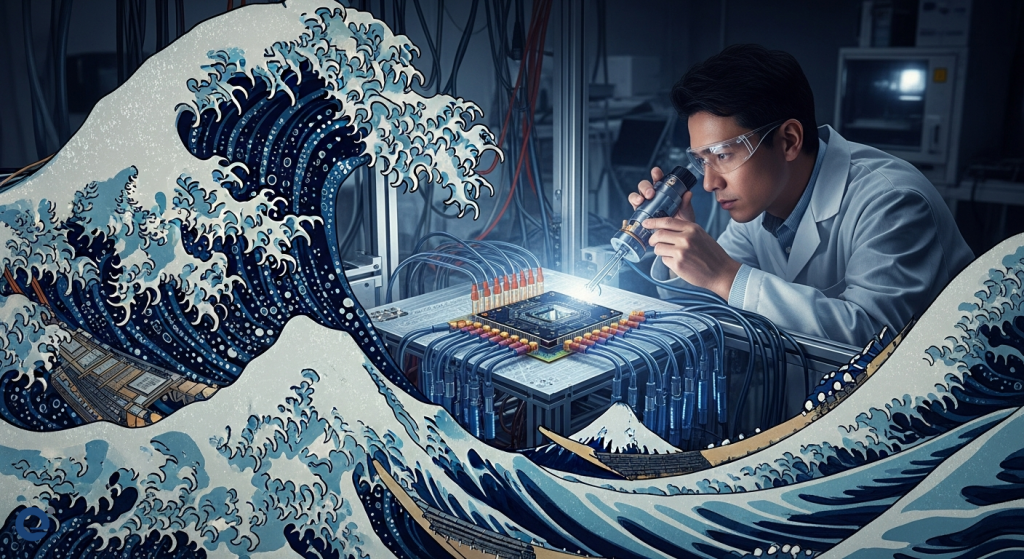
Understanding thermal dynamics requires advanced tools. Characterization involves measuring temperature profiles. It also includes heat flow within the quantum chip. Imaging techniques can visualize thermal distributions. This helps identify hot spots. Furthermore, modeling plays a vital role. Engineers use simulations to predict thermal behavior. This helps optimize cooling designs. For example, characterization and modeling of thermal dynamics are crucial for device performance.
These methods help engineers design better systems. They can choose appropriate materials. They can also optimize the geometry of cooling components. This ensures uniform cooling across the chip. Moreover, it helps prevent localized heating. Such heating can severely degrade qubit performance. Accurate thermal models are therefore indispensable. They guide the development of next-generation quantum hardware.
Innovations in thermal management
The field of quantum computing is rapidly evolving. Consequently, thermal management techniques are also advancing. Researchers are exploring new materials. These materials offer better thermal conductivity at ultra-low temperatures. They are also investigating novel cooling architectures. The goal is to scale up quantum processors. This requires more efficient and compact cooling solutions. For instance, advanced thermal management strategies are being developed.
Some research even explores "thermodynamic computing chips." These chips integrate thermal processes directly into computation. This is a different approach. However, it still highlights the fundamental link between heat and computation. The world's first thermodynamic computing chip represents a new frontier. It shows how thermal considerations are becoming central to chip design. This is true even beyond traditional cooling. Therefore, quantum hardware engineers must remain at the forefront of thermal science.
Conclusion
Thermal dynamics are a foundational challenge in quantum computing. Achieving and maintaining ultra-low temperatures is critical. It ensures qubit stability and computational accuracy. Quantum hardware engineers must employ sophisticated cryogenic systems. They also need advanced thermal modeling and characterization. As quantum technology progresses, innovative thermal solutions will be vital. These solutions will unlock the full potential of quantum computers. The ongoing research in this area is therefore essential. It paves the way for future quantum breakthroughs.
More Information
- Qubits: Quantum bits, the basic unit of quantum information. Unlike classical bits, qubits can exist in a superposition of 0 and 1, enabling complex computations.
- Superposition: A fundamental principle of quantum mechanics where a quantum system, such as a qubit, can exist in multiple states simultaneously until measured.
- Entanglement: A quantum phenomenon where two or more qubits become linked, such that the state of one instantaneously influences the state of the others, regardless of distance.
- Dilution refrigerator: A specialized cryogenic device used to achieve extremely low temperatures, often down to a few millikelvin, essential for cooling quantum chips.
- Cryogenics: The branch of physics and engineering that deals with the production and effects of very low temperatures, typically below -150°C (123 K).