Lighting in 3D animation is much more than just illuminating a scene. It is a powerful tool. Indeed, it breathes life into digital worlds, shapes emotions, and guides the viewer's eye. For lighting artists, understanding its nuances is crucial. Consequently, mastering light transforms good animation into something truly captivating.
The fundamental role of light
Light plays a pivotal role in 3D animation. It defines form, creates depth, and establishes mood. Without effective lighting, 3D models can appear flat and lifeless. Therefore, artists use light to sculpt the visual landscape. Moreover, it helps to highlight important elements and convey the story's tone.
Think of light as a paintbrush. With it, you can paint shadows and highlights. These, in turn, reveal texture and volume. Furthermore, the color and intensity of light can dramatically alter the feel of a scene, from warm and inviting to cold and ominous.
Understanding the basics
Before diving into complex techniques, it's vital to grasp the basics. Light interacts with surfaces in various ways. It can be absorbed, reflected, or refracted. Understanding these interactions is key. Consequently, you can create believable and visually appealing scenes.
The properties of light, such as intensity, color, and direction, are your primary controls. Intensity determines brightness. Color sets the mood. Direction influences shadows and highlights. Therefore, careful manipulation of these properties is essential.
Types of lights in 3D environments
3D software offers various light types. Each mimics real-world light sources. Understanding their differences is crucial for effective lighting. Let's explore the most common ones.
Point lights
Point lights, or omni lights, emit light uniformly in all directions from a single point. Imagine a bare light bulb. They are useful for creating localized illumination. However, their falloff (how light intensity decreases with distance) needs careful adjustment.
Directional lights
Directional lights simulate light from a very distant source, like the sun. The rays are parallel and have no falloff with distance. Consequently, they are ideal for outdoor scenes or creating strong, parallel shadows.
Spotlights
Spotlights emit light in a cone shape, like a real-world spotlight or flashlight. They offer precise control over the light's direction and spread. Therefore, they are excellent for highlighting specific objects or characters.
Area lights
Area lights simulate light emitting from a surface, like a window or a fluorescent panel. They produce softer shadows than point lights or spotlights. As a result, they are great for more realistic and diffused lighting.
Volume lights and ambient light
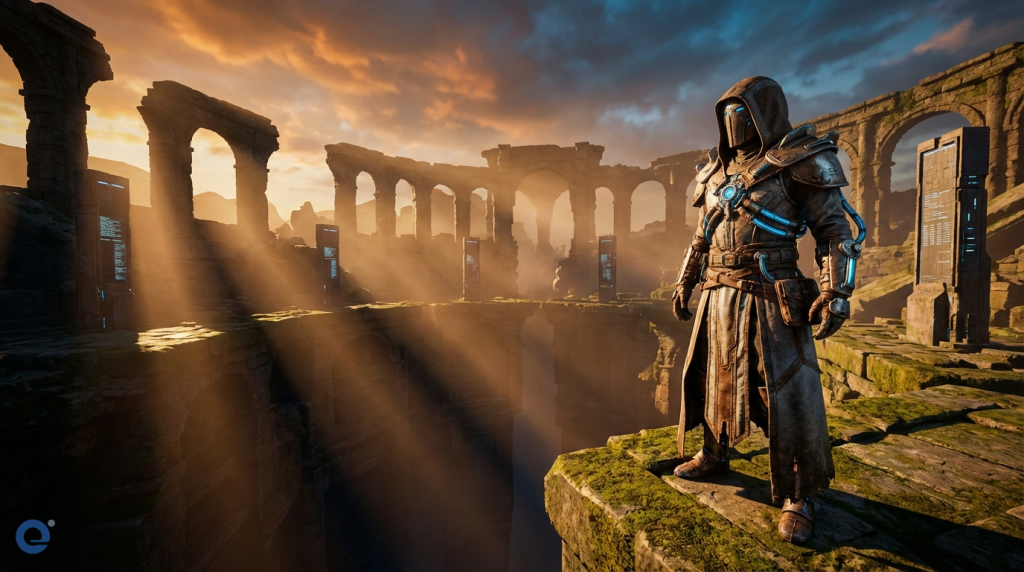
Volume lights (or lights with volumetric properties) allow you to see light rays, like god rays through trees. Ambient light provides a base level of illumination to the entire scene, preventing shadows from being completely black. However, overuse of ambient light can flatten a scene.
Key lighting techniques
Several established lighting techniques help artists create compelling visuals. These techniques often work together.
Three-point lighting
This classic setup involves three main lights: the Key Light[1], Fill Light[2], and Rim Light[3]. The key light is the primary light source, providing the main illumination. The fill light softens shadows created by the key light. The rim light (or back light) separates the subject from the background, creating a subtle outline.
This setup provides good definition and control. However, it's a starting point, not a rigid rule.
High-key and low-key lighting
High-key lighting is bright and even, with minimal shadows. It creates a cheerful or optimistic mood. Conversely, low-key lighting uses strong contrasts and deep shadows, often creating drama, mystery, or tension.
Global Illumination (GI)
Global Illumination[4] is a more advanced technique. It simulates how light bounces off surfaces and illuminates other objects in the scene (indirect lighting). This results in more realistic and natural-looking lighting. However, GI can be computationally expensive.
Ambient Occlusion (AO)
Ambient Occlusion[5] is a shading method. It calculates how exposed each point in a scene is to ambient lighting. Areas where objects are close together, like crevices or corners, receive less ambient light and appear darker. This adds contact shadows and enhances detail.
Lighting for storytelling and mood
Lighting is a powerful storytelling tool. It can guide the audience's attention and evoke specific emotions. For instance, warm, soft lighting can create a sense of comfort. Conversely, harsh, cool lighting can induce unease.
The direction of light also matters. Light from below can make a character look sinister. Backlighting can create a sense of mystery or an angelic glow. Therefore, lighting choices should always support the narrative. The lighting in films like Zootopia, for example, masterfully enhances the story and environment, as detailed in analyses of its lighting design.
Color and light
Color plays a huge role in lighting. The color of the light source and the color of the surfaces it hits interact. Warm colors (reds, oranges, yellows) can feel energetic or cozy. Cool colors (blues, greens) can feel calm or somber.
Lighting artists often use color to enhance the mood or indicate time of day. For example, the golden hour before sunset has warm, soft light. Night scenes often use cool blues and cyans.
Software and tools
Many 3D animation software packages have robust lighting tools. Autodesk Maya, Blender, Cinema 4D, and Houdini are popular choices. Each offers a range of light types and rendering engines.
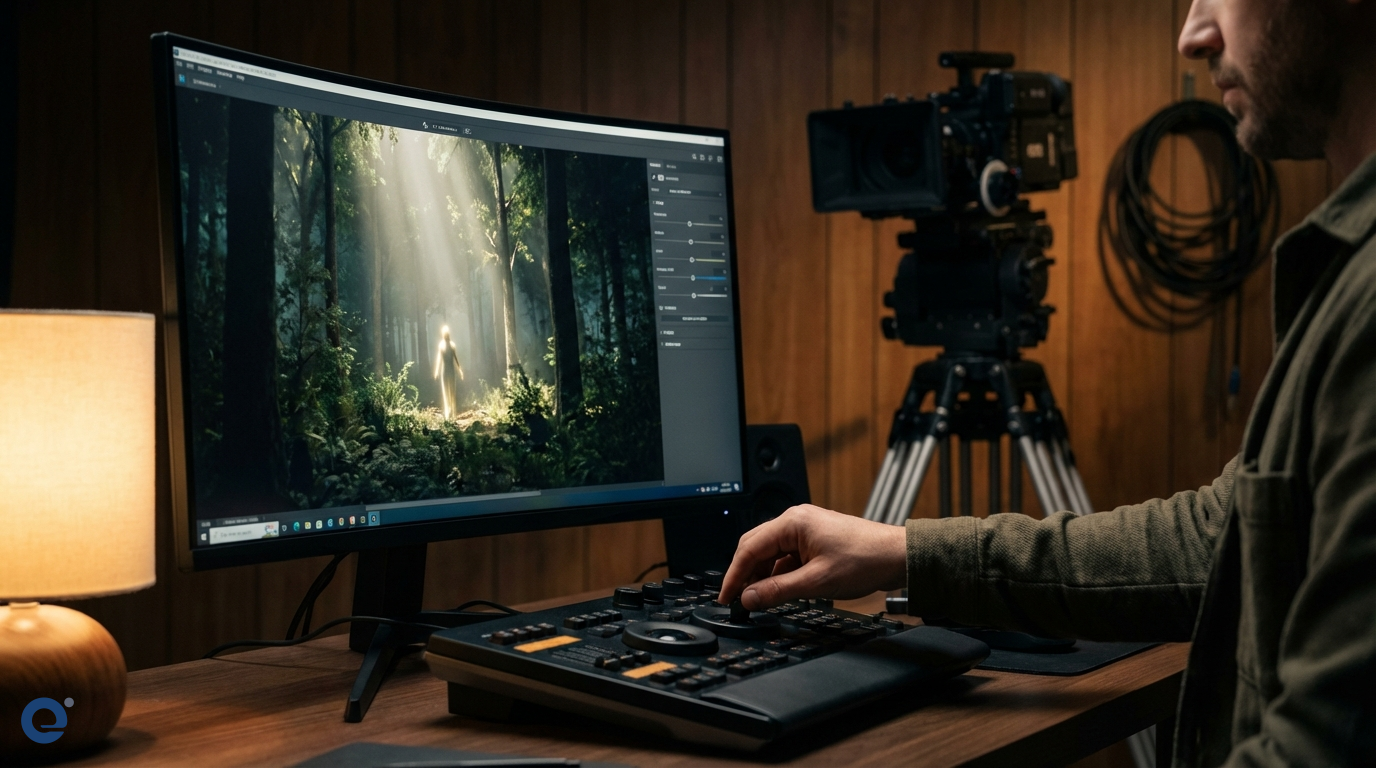
Renderers like Arnold, V-Ray, Redshift, and Cycles are crucial. They calculate how light interacts with the scene to produce the final image. Some renderers specialize in photorealism, while others offer more stylized results. Moreover, the choice of a good graphics monitor is vital for accurately perceiving light and color.
The lighting artist's workflow
A lighting artist typically receives animated scenes with models and textures. Their job is to add and adjust lights to achieve the desired look and feel. This involves setting up light rigs, adjusting parameters, and working closely with the director and art director.
Test renders are crucial. Artists render frames or short sequences to check the lighting. They then make adjustments based on feedback. This iterative process continues until the lighting is approved.
Challenges in 3D lighting
Lighting 3D scenes can be challenging. Achieving realism requires understanding physics and observation. However, artistic license is also important. Balancing realism with artistic intent is key.
Render times can be a major hurdle, especially with complex lighting like GI. Optimizing scenes for efficient rendering without sacrificing quality is a constant challenge. Furthermore, maintaining consistent lighting across different shots and sequences requires careful planning.
The impact of shadows
Shadows are just as important as light. They define form, indicate the position of light sources, and add depth. Without shadows, scenes look flat and unrealistic.
The hardness or softness of shadows depends on the light source. Hard shadows come from small or distant lights. Soft shadows come from larger or closer lights. Controlling shadow properties is crucial for the final look.
Lighting for different styles
Lighting techniques vary depending on the animation style. Photorealistic animation aims to mimic real-world lighting. Stylized animation, like cartoons, might use more exaggerated or simplified lighting.
For example, some styles use non-photorealistic rendering (NPR) techniques. These can mimic hand-drawn or painterly looks, and the lighting approach is adapted accordingly. The role of light in animation production is diverse and adapts to the project's needs.
The future of lighting in 3D
Real-time rendering and ray tracing are becoming more prevalent. Game engines like Unreal Engine and Unity are increasingly used for animation production, offering instant feedback on lighting changes. This allows for more interactive and efficient workflows.
AI and machine learning may also play a bigger role. They could assist with light placement or optimization. However, the artistic eye of the lighting artist will remain essential. The trends in 3D graphics for 2024 suggest further integration of real-time technologies.
Conclusion
Lighting in 3D animation is a complex yet rewarding discipline. It blends technical knowledge with artistic vision. By understanding the tools and techniques, and by carefully observing the world around them, lighting artists can create stunning and emotionally resonant imagery. Therefore, continuous learning and practice are vital for any aspiring or established lighting artist.
More Information
- Key Light: The primary and brightest light source in a lighting setup. It defines the main illumination and casts the strongest shadows, establishing the form and dimension of the subject.
- Fill Light: A secondary light used to reduce the contrast of a scene and soften the dark shadows created by the key light. It's typically less intense and placed opposite the key light.
- Rim Light: Also known as a backlight, this light is placed behind the subject, facing the camera. It creates a bright outline around the subject, separating it from the background and adding depth.
- Global Illumination (GI): An advanced rendering technique that simulates how light bounces off surfaces and illuminates other objects indirectly. It creates more realistic lighting by accounting for reflected light.
- Ambient Occlusion (AO): A shading method that calculates how much ambient light is blocked by nearby objects. It adds soft, contact shadows in crevices and corners, enhancing detail and realism.