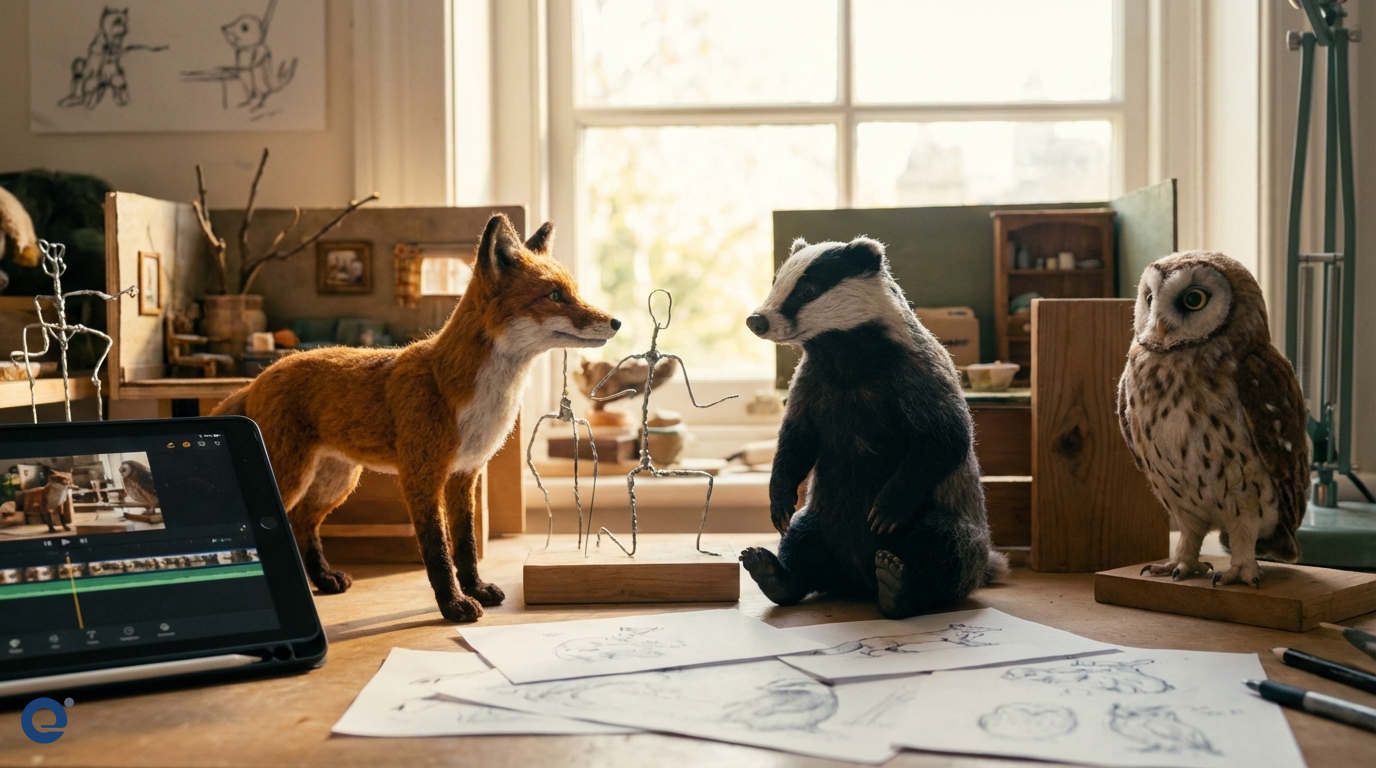
Animal character animation breathes life into creatures great and small on our screens. It is a specialized field within animation. It focuses on creating believable and engaging animal characters. These characters can be realistic or highly stylized. However, they always aim to connect with the audience.
From the earliest cartoons to modern CGI blockbusters, animated animals have been central figures. They entertain, tell stories, and even educate. Therefore, mastering animal animation is a key skill for many animators.
Understanding the essence of animal movement
To animate an animal convincingly, one must first understand it. This goes beyond just knowing what the animal looks like. It involves a deep study of its anatomy and biomechanics[1].
Animators need to understand how an animal's skeleton and muscles work together. This knowledge informs how the animal moves, balances, and interacts with its environment. For instance, the way a cat stalks is very different from how a dog runs. These differences stem from their unique physical structures.
The importance of observation
Direct observation is invaluable. Animators often spend hours studying real animals. They might visit zoos, farms, or watch wildlife documentaries. Observing animals at places like zoos provides firsthand reference for movement, behavior, and subtle nuances. This observation helps animators capture the essence of the animal.
They look at how animals walk, run, jump, and rest. They also observe their expressions and social interactions. Consequently, these observations translate into more authentic and believable animation.
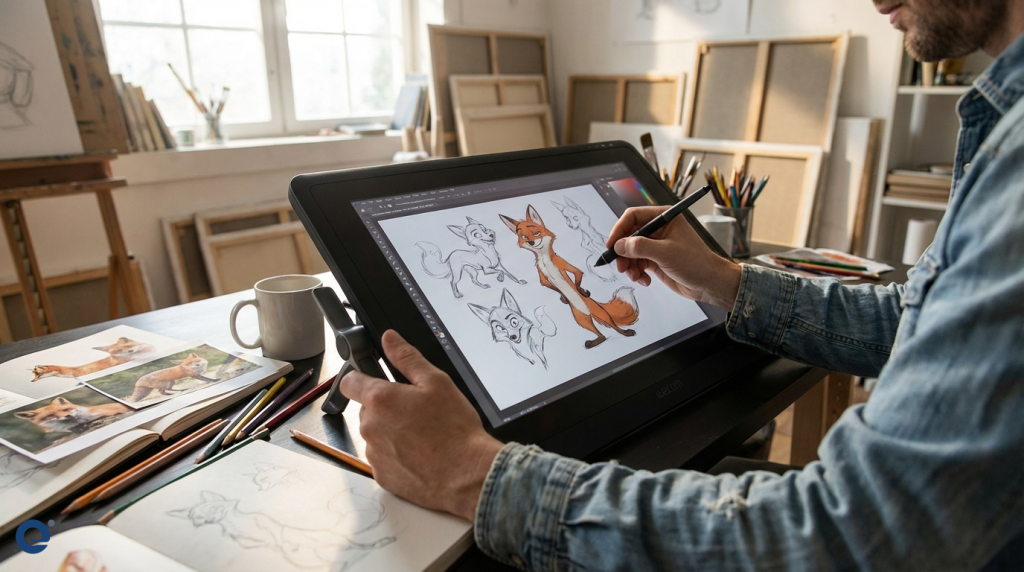
Exaggeration and personification
While realism is important, animal animation often involves exaggeration. Animators might amplify certain movements or features to enhance personality or emotion. This is especially true for cartoon characters.
Personification is another key element. We often give animal characters human-like thoughts, emotions, and behaviors. This helps the audience relate to them. However, good animators balance this with the animal's natural instincts and movements. The character should still feel like the animal it represents, even if it talks or wears clothes.
Core techniques in animating animals
Several fundamental animation techniques are crucial for bringing animal characters to life. These techniques form the building blocks of fluid and expressive movement.
Key poses and in-betweens
Animation is built around key poses[2]. These are the most important frames that define a movement's start, end, and critical points. For an animal pouncing, key poses would include the crouch, the leap, and the landing.
Once the key poses are set, the animator or software fills in the in-betweens[3]. These are the frames that transition smoothly between the keys. The spacing and timing of these in-betweens determine the speed and feel of the motion.
Walk cycles and run cycles
A walk cycle[4] is a series of frames that loop to create the illusion of continuous walking. Animating a believable walk cycle is fundamental. It requires understanding the animal's gait and weight distribution.
Different animals have very different gaits. A four-legged animal's walk is more complex than a human's. Animators must consider the sequence of footfalls and the body's corresponding movements. Run cycles follow the same principle but with more speed and energy. Some courses, like the one mentioned in Source 2, teach various styles for walk cycles, even using tools like line paths, transform properties, or the Puppet Pin tool in After Effects.
Facial animation and expressions
Conveying emotion is vital, and much of this is done through facial expressions. Even though animal faces differ greatly from human faces, animators find ways to show joy, sadness, anger, and surprise.
This might involve exaggerating eye movements, brow ridges, or mouth shapes. Sometimes, human-like expressions are mapped onto the animal's face. However, it's often more effective to use the animal's natural expressive features, like ear position or tail wags, in combination with facial changes.
Animating fur, feathers, and scales
The surface of an animal also requires attention. Fur, feathers, and scales move and react to the animal's actions and the environment. Animating these elements adds another layer of realism.
Software can simulate the movement of fur in the wind or the ruffling of feathers. However, animators still need to guide these simulations to get the desired effect. The texture and movement of the animal's covering can also help convey its mood or condition.
Tools and software for animal animation
Modern animators have a range of digital tools at their disposal. Software like Autodesk Maya, Blender, and Adobe After Effects are commonly used. These programs offer tools for modeling, rigging, and animating characters.
The role of rigging
Before an animal model can be animated, it needs to be rigged. Rigging[5] is the process of creating a digital skeleton and controls for the character model. This skeleton allows the animator to manipulate the character's body and pose it.
A good rig is essential for efficient animation. For animals, rigs need to accommodate their specific anatomy, whether it's wings, tails, or multiple legs. The rigger sets up controls that make it easier for the animator to create complex movements. Understanding character animation secrets often involves mastering the rigging process.
2D and 3D animation
Animal animation can be done in 2D or 3D. 2D animation, whether hand-drawn or digital, focuses on creating movement frame by frame or using rigs. 3D animation uses digital models that are manipulated in a virtual space.
Both approaches have their strengths. 2D can offer a distinct stylistic charm. 3D excels at creating depth, realism, and complex interactions with light and environment. The choice often depends on the project's aesthetic goals and budget. For instance, classic and modern 2D animation techniques continue to be popular for certain styles.
Challenges in animating animals
Animating animals presents unique challenges. Achieving a balance between realism and stylization is often difficult. The audience needs to believe in the animal as a living creature, even if it's a cartoon.
Animating non-humanoid forms also requires extra effort. Animators are naturally more familiar with human movement. Therefore, they must work harder to understand and replicate the motion of creatures with different body structures.
Conveying emotion without relying solely on human-like facial expressions is another hurdle. Animators must use body language, posture, and subtle cues to communicate the animal character's inner state effectively.
The impact of animal animation
Animal characters in animation have a profound impact. They are central to many beloved stories and films, captivating audiences of all ages. They can make us laugh, cry, and think.
Beyond entertainment, animated animals can also play a role in education and conservation. They can help teach children about the natural world and foster empathy for other living beings. Animations can simplify complex biological concepts or highlight the plight of endangered species.
The connection we feel to animated animals is powerful. It stems from our innate fascination with the animal kingdom and the animator's skill in bringing these creatures to life with personality and emotion. Learning the comprehensive character rigging process is key to creating these believable digital actors.
The future of animal animation
Technology continues to advance. This offers new tools and possibilities for animal animation. We see increasingly realistic fur, feathers, and skin in CGI films. Moreover, motion capture technology is sometimes adapted for animal movements.
However, technology is just a tool. The heart of animal animation remains the animator's understanding of movement, behavior, and emotion. The ability to observe, interpret, and then recreate life in motion is what truly makes animal characters compelling.
As long as there are stories to tell, animated animals will continue to grace our screens. They will evolve with new styles and technologies. But their fundamental appeal—the magic of seeing animals move, think, and feel—will remain.
More Information
- Biomechanics: The study of the mechanical laws relating to the movement or structure of living organisms. In animation, it helps create realistic motion by understanding forces and body mechanics.
- Key Poses: The most important drawings or positions in an animation sequence that define the beginning, end, and extreme points of an action. They establish the main storytelling poses.
- In-betweens: The drawings or frames created between the key poses to complete the illusion of smooth motion. These can be drawn by assistants or generated by computer software.
- Walk Cycle: A short sequence of animation frames that loop seamlessly to depict a character walking. It captures the repeating pattern of leg and body movements during a walk.
- Rigging: In 3D animation, the process of creating a hierarchical structure of digital bones (a skeleton) and control systems within a character model, allowing animators to manipulate and pose it.