
Virtual Reality (VR) is no longer a futuristic dream. It is rapidly transforming how we interact with digital content. Animation within VR, in particular, stands at the cusp of a revolution. This technology promises to take storytelling and user experience to unprecedented levels. Therefore, understanding its trajectory is crucial for developers.
The blend of animation and VR creates deeply immersive and interactive experiences. Users are no longer passive viewers. Instead, they become participants within the animated world. This shift opens up vast possibilities across various sectors. We will explore the future of VR animation here.
The current landscape of VR animation
Currently, VR animation is most prominent in the gaming and entertainment industries. We see animated VR films and interactive games gaining traction. Tools and software are evolving. However, creating high-quality VR animation remains complex and resource-intensive. Developers often face challenges with hardware limitations and the need for new skill sets.
Despite these hurdles, the progress is undeniable. Platforms like Oculus Rift, HTC Vive, and PlayStation VR have brought VR to more consumers. Consequently, the demand for compelling animated VR content is growing. Early adopters are experiencing unique narratives and interactive environments. However, the full potential is yet to be unlocked.
Tools and techniques
Developers use various tools like Unity, Unreal Engine, and specialized animation software. These platforms are increasingly incorporating VR-specific features. Techniques such as real-time rendering[1] are becoming standard. This allows for more dynamic and responsive animated environments. Motion capture technology is also playing a significant role in creating realistic character movements within VR.
Moreover, artists are experimenting with VR-native creation tools. These tools allow them to sculpt and animate directly within a 3D VR space. This intuitive approach can speed up the workflow. It also offers new creative freedoms.
Technological advancements fueling the future
Several technological advancements are set to redefine VR animation. Artificial intelligence (AI) is one of the most significant. AI can automate parts of the animation process. It can also help create more believable and responsive characters. Consider AI in animation production; it's streamlining workflows.
Haptic feedback[2] technologies are also evolving. Integrating realistic touch sensations will make VR animations more immersive. Imagine feeling the texture of an animated object or the impact of an action. This adds another layer of realism.
Real-time rendering and graphics
Improvements in real-time rendering and graphics processing units (GPUs) are crucial. They enable more complex and visually stunning VR environments. Ray tracing, for instance, is bringing realistic lighting and shadows to VR. This enhances the sense of presence significantly.
As GPUs become more powerful, developers can create richer and more detailed animated worlds. This visual fidelity is vital for user immersion. It helps suspend disbelief effectively.
5G and cloud streaming
The rollout of 5G networks will also be a game-changer. High-speed, low-latency 5G will enable cloud-based VR streaming. This means complex VR animations could be rendered in the cloud. Users could then stream them to lighter, more affordable headsets. This could greatly expand the accessibility of high-end VR experiences, including those using advanced VR technology.
Cloud streaming reduces the need for powerful local hardware. It democratizes access to immersive content. It also allows for more complex simulations and animations than local hardware might support.
Volumetric capture and digital humans
Volumetric capture[3] is another exciting area. It allows for the recording of real people and environments in 3D. These captures can then be integrated into VR animations. This blurs the line between the real and the animated. It can lead to incredibly lifelike characters and scenes.
The creation of believable digital humans is a key focus. Advances in facial animation and AI-driven behaviors are making these digital counterparts more realistic. They can interact with users in natural ways within the VR space.
New frontiers in VR animation storytelling
VR animation is not just about better graphics. It is about new ways of telling stories. Interactive narratives are becoming more sophisticated. Users can make choices that genuinely affect the story's direction. This creates a deeply personal experience.
We are moving beyond linear storytelling. Branching narratives and user agency are becoming central. This requires new approaches to scriptwriting and animation design. Developers must think about multiple story paths.
Immersive experiences beyond gaming
While gaming is a major driver, VR animation's future extends far beyond it. Imagine virtual field trips for students. Or immersive historical reconstructions. The possibilities for education and exploration are vast. Training is another key area, as seen in VR training solutions by akaVerse for companies like Schaeffler.
These experiences can provide safe and engaging learning environments. They can simulate complex scenarios effectively. This is valuable in fields like medicine, engineering, and emergency response.
Social VR and collaborative animation
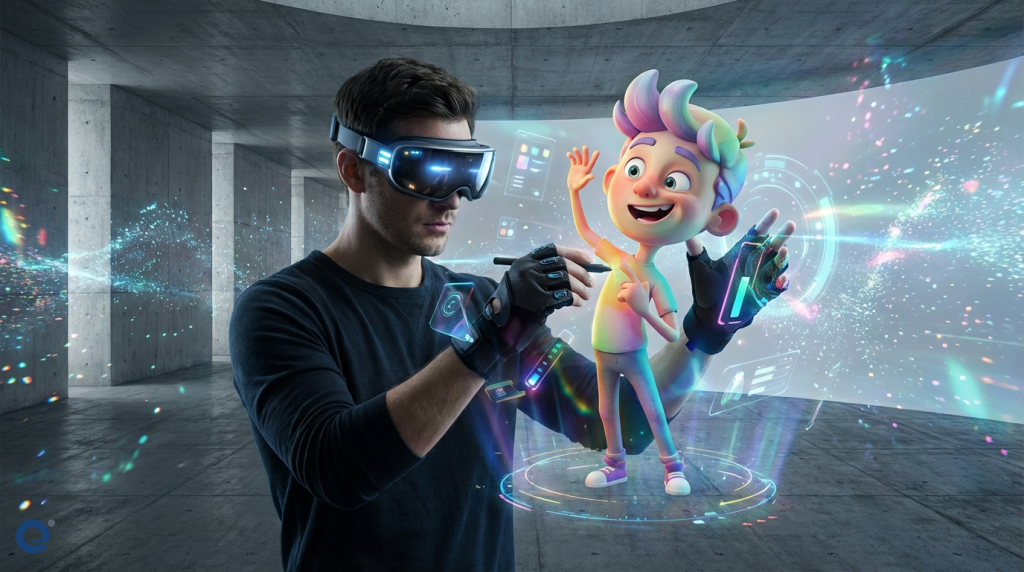
Social VR platforms allow users to interact in shared virtual spaces as avatars. Animated environments and characters enhance these social experiences. Users could attend virtual concerts or explore animated worlds together. Collaborative animation creation within VR is also emerging. Teams of artists could work together in a shared virtual studio.
VR animation across industries
The impact of VR animation will be felt across many sectors. The entertainment industry will continue to be a major player. We can expect more animated VR films, series, and theme park attractions.
Education and training
In education, VR animation can make learning more engaging. Complex subjects can be visualized in 3D. Students can interact with animated models and simulations. In corporate training, it can provide realistic simulations for various skills. This is especially true for hands-on tasks or dangerous scenarios.
Marketing and advertising
Marketers are exploring VR animation for immersive brand experiences. Customers could virtually try products or explore animated brand worlds. This creates memorable interactions. The evolution of media, as discussed in discussions about media's future, includes such immersive formats.
Healthcare and therapy
VR animation is being used in healthcare for patient education and therapy. It can help reduce pain and anxiety during medical procedures. It is also used in rehabilitation and for treating phobias. Animated scenarios can provide controlled and safe exposure.
Challenges and considerations
Despite the bright future, challenges remain. The cost of high-end VR hardware is still a barrier for many. Content creation remains complex and expensive. There is a need for more user-friendly and efficient tools.
User comfort is also a concern. Motion sickness and eye strain can be issues. Developers must design experiences with user comfort in mind. Accessibility for people with disabilities is another important consideration.
Ethical considerations around immersive experiences also need attention. The line between virtual and real can blur. The impact of highly realistic or intense VR experiences needs careful study.
The role of VR developers
VR developers are at the forefront of this transformation. They need a blend of skills: 3D modeling, animation, programming, and user experience design. Understanding the nuances of VR interaction is crucial. They must create comfortable and engaging experiences.
The demand for skilled VR developers is growing. Those who can master the tools and techniques of VR animation will find many opportunities. Continuous learning is essential as the technology evolves rapidly. Understanding concepts like 5G network slicing[4] and its impact on VR streaming will be beneficial.
Conclusion: An immersive animated future
The future of virtual reality animation is incredibly exciting. Technological advancements are paving the way for more realistic, interactive, and accessible experiences. From entertainment to education, VR animation will reshape how we consume and interact with digital content. While challenges exist, the potential for innovation is immense. Developers are key to unlocking this potential, creating the immersive animated worlds of tomorrow, possibly even digital twin[5] factories or cities.
More Information
- Real-time rendering: The process of generating images from 3D models so rapidly that they appear to be happening in real time, crucial for interactive VR experiences where the view changes based on user movement.
- Haptic feedback: Technology that recreates the sense of touch by applying forces, vibrations, or motions to the user, enhancing immersion in VR by allowing users to "feel" virtual objects.
- Volumetric capture: A technique that records a three-dimensional space, including people and objects within it, allowing for the creation of 3D models that can be viewed from any angle in VR.
- 5G network slicing: A feature of 5G networks that allows for the creation of multiple virtual networks on top of a common physical infrastructure, each optimized for specific service requirements like low latency for VR.
- Digital twin: A virtual representation of a physical object, system, or process, updated with real-time data, which can be used for simulation, monitoring, and analysis, often visualized in VR.