
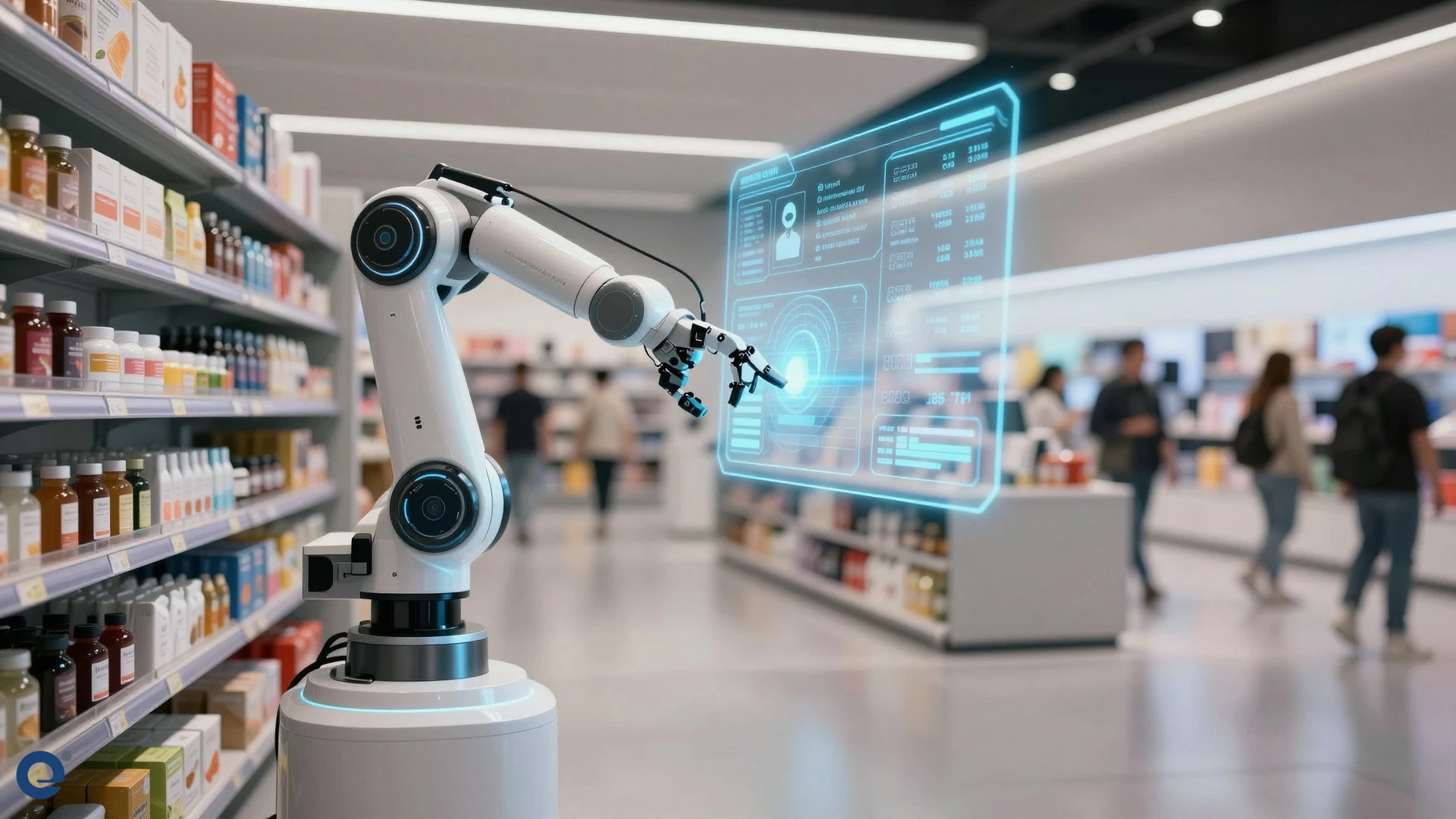
Retail managers often treat artificial intelligence as a magic wand that cures fragmented data overnight. They assume that simply purchasing a sophisticated platform will instantly unify point-of-sale systems with digital customer profiles. This belief is a dangerous misconception that leads to wasted capital and failed digital transformations.
In reality, the power of AI in retail lies not in the software itself, but in the rigorous governance of the underlying data. Without a unified, AI-ready foundation, predictive models merely amplify existing errors at scale [1]. Retailers must stop viewing AI as a plug-and-play solution and start treating it as a structural integration challenge.

Why more automation can create slower decisions
There is a persistent myth that more data equals better insights. However, retail businesses often suffer from "insight paralysis" when they collect vast amounts of fragmented information without a single source of truth [1]. When systems are disconnected, marketing teams and supply chain managers work from conflicting datasets.
This fragmentation leads to inconsistent commercial decisions. For example, a marketing team might run a promotion on an item that the inventory system has already marked for clearance due to low stock levels. This misalignment causes margin leakage and frustrates customers who encounter "out of stock" messages during peak shopping periods [5].
True efficiency requires a governed, scalable data layer. By unifying POS, loyalty programs, and digital behavior, retailers can move beyond intuition-driven choices. This is the path to achieving a reliable "customer 360" model that actually informs strategy rather than just cluttering a dashboard [1].
The reality of predictive analytics in inventory
Many managers believe that predictive analytics can eliminate human oversight entirely. They expect the system to forecast demand perfectly, regardless of external market shocks. However, AI is an accelerator of logic, not a replacement for domain expertise [5].
Consider the Vietnam AI-powered retail market, where retailers like Saigon Co.op have successfully integrated AI for demand forecasting. By applying machine learning to historical data, they reduced waste from overstocking perishable goods by 20% [4]. This success was not due to an autonomous "black box" but to the strategic application of data to specific operational pain points.
Retailers must adopt a framework for implementation that prioritizes accuracy over speed. Following the lead of modern orchestration, managers should focus on these three pillars:
- Data governance: Cleaning and centralizing inputs before training models.
- Model validation: Testing predictions against historical anomalies.
- Human-in-the-loop: Allowing managers to override automated replenishment when market trends shift rapidly.
Personalization as a double-edged sword
Personalization is frequently cited as the primary benefit of AI in e-commerce. While it is true that AI-driven recommendations increase conversion rates, the focus on "tailored experiences" often ignores the cost of data privacy and security [5]. Retailers are now under immense pressure to protect the very data they use to drive these insights.
As EON Tech discovered during recent infrastructure audits, the complexity of managing customer data increases exponentially with every new touchpoint. Retailers must balance the desire for hyper-personalization with the fundamental architecture of risk. If a brand loses consumer trust through a data breach, no amount of AI-driven product recommendation can recover the lost loyalty [5].
Strategic shifts for the modern retail manager
The transition toward data-driven decision-making is no longer optional. With over 70% of retailers in developing markets now relying on analytics for strategic planning, the competitive gap between early adopters and laggards is widening [2]. To bridge this gap, managers must move away from generic tools and toward specialized, industry-specific AI retail analytics.
The following scorecard helps managers evaluate their readiness for AI integration:
| Criteria | Low maturity | High maturity |
|---|---|---|
| Data integration | Siloed systems | Unified, governed layer |
| Decision basis | Intuition/gut feel | Predictive/prescriptive models |
| Customer view | Fragmented | Single customer truth |
The future of the omnichannel experience
The future of retail is not just online or offline; it is the seamless integration of both. AI serves as the backbone for this convergence [4]. Smart mirrors in physical stores, as seen in global retailers, and AI-powered chatbots handling thousands of daily inquiries are just the beginning [4]. These tools are effective because they solve specific friction points in the customer journey [3].
However, the EY customer intelligence approach highlights that the most successful retailers are those that use AI to align merchandising and marketing around a single customer truth [1]. This is not about technology for technology's sake. It is about creating an operational foundation that allows for agility in a volatile market.
Retailers who treat AI as a long-term strategic investment—rather than a quick fix—will be the ones to capture market share. Those who continue to chase the myth of the "magic algorithm" will likely find themselves struggling with the same fragmented data problems years from now. The choice is between building a robust, data-driven architecture or continuing to make decisions in the dark.
More Information
- Customer intelligence: A strategic framework that unifies fragmented data from POS, CRM, and digital channels into a single, governed source of truth for actionable retail insights [1].
- Predictive analytics: The use of historical data and machine learning algorithms to forecast future consumer behavior, market trends, and inventory requirements with statistical accuracy [2].
- Inventory optimization: The process of leveraging AI to balance stock levels, preventing both the waste of overstocking and the lost revenue of stockouts in real-time [3].
- Omnichannel retailing: A unified approach to commerce that uses AI to integrate online and offline customer experiences into a consistent, data-informed journey [4].
- Data governance: The system of internal policies and standards that ensures data is accurate, secure, and usable for AI-driven decision-making across an entire retail organization [5].


