Sound is more than just an accompaniment in animated movies; it is a fundamental element that breathes life into characters and worlds. While visuals capture the eye, sound captivates the mind and heart. Therefore, effective sound design is crucial for creating believable and engaging animated experiences. It guides emotions, defines spaces, and tells stories in ways visuals alone cannot.
For sound designers, animation presents a unique canvas. Unlike live-action, where sound is often captured during filming, animation starts with silence. Consequently, every footstep, every rustle of leaves, every character's voice, and every atmospheric hum must be meticulously created and placed. This process transforms a silent visual into a vibrant, immersive world.
The building blocks of animation sound: Voice, music, and effects
The soundtrack of an animated film is a complex tapestry woven from three main threads: voice, music, and sound effects. Each element plays a distinct yet interconnected role. Voice acting gives characters personality and allows them to communicate. Music underscores emotion and drives the narrative forward. Sound effects, including Foley, build the reality of the animated environment. Together, they create a cohesive auditory experience.
The initial stages involve close collaboration between the director, animators, and the sound team. Sound designers often receive animatics or storyboards to begin conceptualizing the sonic landscape. This early involvement ensures that sound becomes an integral part of the storytelling, not just an afterthought. Moreover, understanding the director's vision is paramount.
Voice: The soul of the character
Voice acting is often the first sound element to be recorded. Actors bring characters to life with their vocal performances, conveying personality, emotion, and intent. The sound designer's role here is to ensure clean, high-quality recordings. They also work with editors to select the best takes and integrate them seamlessly with the animation, which is often timed to the voice recordings.
Sometimes, dialogue needs to be re-recorded after animation is complete, a process known as Automated Dialogue Replacement (ADR)[1]. This requires the actor to match their performance to the existing animation, a challenging but essential task.
Music: The emotional heartbeat
Music in animation can range from subtle background scores to grand orchestral pieces or catchy songs. It sets the mood, enhances dramatic moments, and can even become a character in itself. The composer and sound designer work to ensure the music complements the visuals and other sound elements without overpowering them. The placement and volume of music are critical.
Sound effects: Crafting the world
Sound effects (SFX) encompass all sounds other than voice and music. They include everything from a door creaking to a spaceship exploding. In animation, many of these sounds must be created from scratch or sourced from libraries and then manipulated. These effects help to ground the animated world in a sense of reality, even if the world itself is fantastical. We can find interesting discussions on sound effects like western bullet ricochets online.
The art of Foley in animation
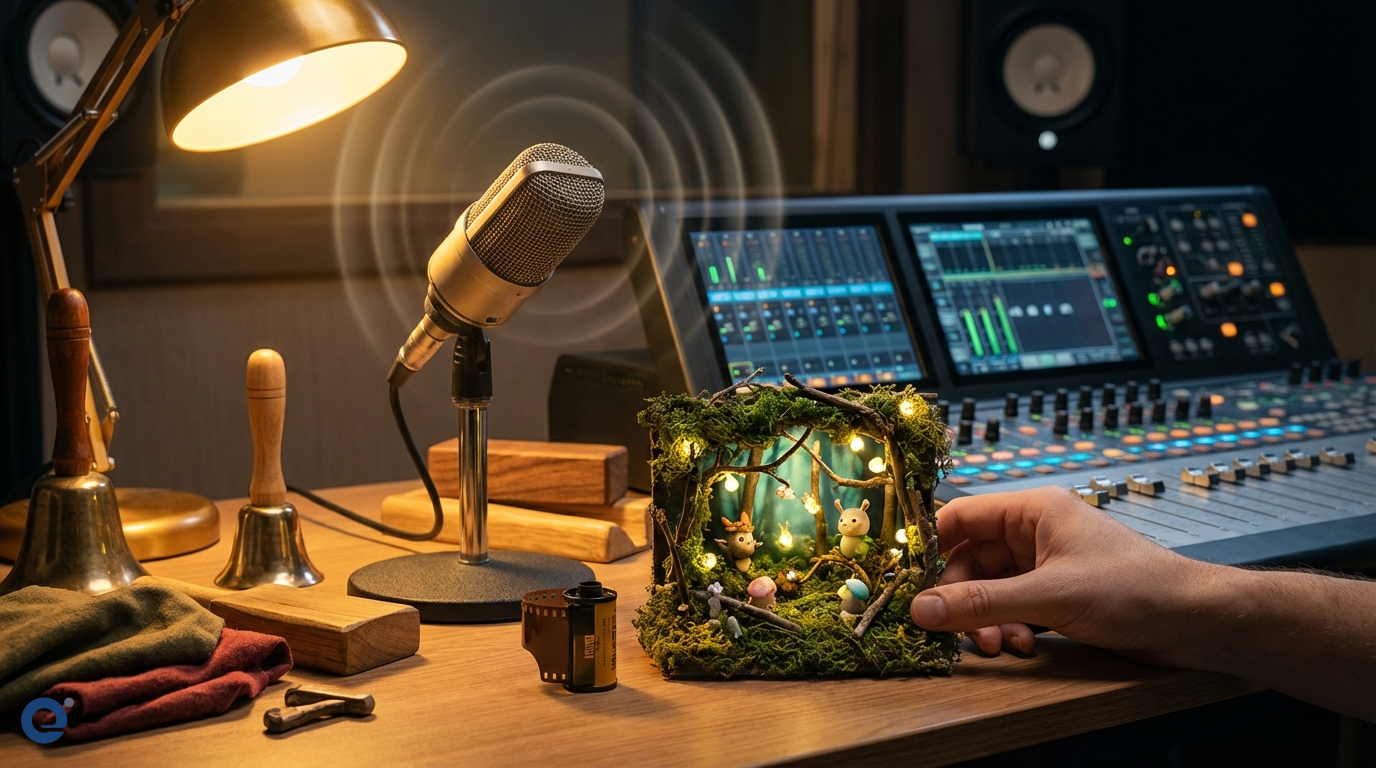
Foley[2] is a specialized area of sound effects where sounds are created and recorded in synchronization with the picture. Foley artists use a vast array of props and techniques to mimic sounds like footsteps, cloth movement, and object interactions. In animation, where no sounds are captured during "filming," Foley is essential for adding a layer of realism and detail.
Imagine a character walking across a wooden floor. A Foley artist will watch the scene and perform the footsteps in real-time, using different shoes and surfaces to match the character and environment. This performance aspect of Foley adds a human touch and subtlety that library sound effects might lack. It makes the character's interaction with their world feel more tangible.
The sounds are recorded on a Foley stage, a room filled with various props and surfaces. The creativity of the Foley artist is key, as they often have to invent ways to produce sounds that don't exist in the real world, especially in fantasy or sci-fi animations.
Voice acting: Bringing characters to life
The voice is the most direct way an animated character expresses itself. The casting of voice actors is crucial, as their vocal qualities and performance will define the character. Sound designers work closely with voice actors and directors during recording sessions to capture the desired performance. They ensure the technical quality of the recordings and manage the workflow.
Processing voice recordings is also a significant part of the sound designer's job. This can involve cleaning up noise, equalizing the voice to fit the character, or adding effects to create non-human voices or alter vocal characteristics. The goal is to make the voice clear, expressive, and perfectly integrated with the animation.
Music: Setting the emotional tone
Music is the emotional compass of an animated film. It guides the audience's feelings, builds tension, and enhances the narrative arc. The composer creates the score, often working from early cuts of the film, and the sound designer is responsible for integrating this music into the final mix.
The interplay between music, dialogue, and sound effects is delicate. The sound designer must ensure that the music supports the scene without overwhelming other important audio elements. This involves careful balancing and sometimes "ducking" the music volume during dialogue.
Sound effects: Creating immersive worlds
Sound effects are the building blocks of the animated world's auditory environment. They can be broadly categorized into diegetic sound[3] (sounds originating from within the film's world, like a character's footsteps) and non-diegetic sound[4] (sounds added for effect, like a musical sting). Both are vital.
Creating unique sound effects for fantastical creatures, futuristic technology, or magical events is where sound designers truly get to be creative. This often involves layering multiple sounds, processing them with effects, and experimenting until the perfect sound is achieved. The soundscape[5] of a film, the overall auditory environment, is built from these carefully crafted effects.
For instance, the roar of a dragon might be a combination of a lion's roar, a walrus's bellow, and the screech of metal, all processed and blended. This creation of new sounds is a hallmark of sound design for animation.
The mixing process: Weaving it all together
The final stage of sound design is the mix. This is where all the individual audio elements – dialogue, music, Foley, and sound effects – are brought together and balanced against each other and the picture. The mixing engineer, often overseen by the sound designer or director, adjusts the levels, panning, and equalization of each sound to create a clear, dynamic, and immersive final soundtrack.
Mixing is both a technical and artistic process. The mixer needs to ensure that dialogue is intelligible, music is emotionally effective, and sound effects are impactful without being distracting. They also create different versions of the mix for various playback environments, such as cinemas, home theaters, and mobile devices, as detailed in guides like the one for Google Meet audio settings.
The final mix is what the audience hears, and it's the culmination of all the sound team's efforts. A good mix can elevate an animated film from good to great.
Technology and tools in animation sound design
Modern sound designers have a vast array of digital tools at their disposal. Digital Audio Workstations (DAWs) like Pro Tools, Logic Pro, and Reaper are the central hubs for recording, editing, and mixing audio. These software platforms allow for non-linear editing, complex signal processing, and multi-channel mixing.
Sound libraries are extensive collections of pre-recorded sound effects that designers can use and manipulate. However, many sounds are still custom-created. Software synthesizers and samplers are used to generate unique sounds, while a plethora of plugins offer effects like reverb, delay, equalization, and dynamic compression. Understanding these tools is essential for any sound designer, much like understanding the art and science of lighting is for animators.
Challenges and innovations
One of the biggest challenges in animation sound design is the sheer volume of work. Every sound must be created or sourced. However, this also presents an opportunity for immense creativity. Sound designers can build worlds from the ground up.
Innovations in audio technology, such as immersive audio formats like Dolby Atmos, are also influencing animation sound design. These formats allow for sound to be placed and moved around the listener in a three-dimensional space, creating even more engaging experiences. As animation itself evolves with techniques like AI in animation production, sound design will continue to adapt and innovate.
Conclusion
Sound design is an indispensable art form within animated movies. It is the invisible force that shapes the audience's perception, enhances the narrative, and brings animated worlds to life. From the subtle rustle of clothing to the thunderous roar of a monster, every sound is carefully crafted and placed by skilled sound designers. Their work transforms silence into a rich and immersive auditory experience, proving that what we hear is just as important as what we see.
More Information
- ADR (Automated Dialogue Replacement): The process of re-recording dialogue in a studio after filming or animation is complete, with the actor matching their performance to the visuals.
- Foley: The art of creating and recording sound effects in synchronization with the picture, typically involving human movement and interactions with props, to enhance realism.
- Diegetic Sound: Sounds that originate from within the world of the film, which the characters can hear, such as dialogue, footsteps, or a car horn.
- Non-diegetic Sound: Sounds that are added for the audience and do not originate from the film's world, such as the musical score, narration, or sound effects added for dramatic emphasis.
- Soundscape: The total auditory environment of a film, including all sound effects, ambiances, music, and dialogue, which together create the sense of place and atmosphere.