

Swarm intelligence often mirrors the chaotic efficiency of biological systems. Researchers frequently assume that classical algorithms suffice for coordinating decentralized agents. However, this assumption ignores the computational limits inherent in high-dimensional state spaces. Quantum computing provides a transformative path for solving optimization problems that currently stall classical supercomputers [2].
The true potential of swarm intelligence lies not in simple coordination, but in the rapid, global optimization of complex, multi-agent systems. While classical systems struggle with exponential growth in search spaces, quantum-enhanced algorithms offer a paradigm shift for national competitiveness [3]. We must move beyond the laboratory to integrate these tools into real-world technological ecosystems [5].
Why classical coordination hits a wall
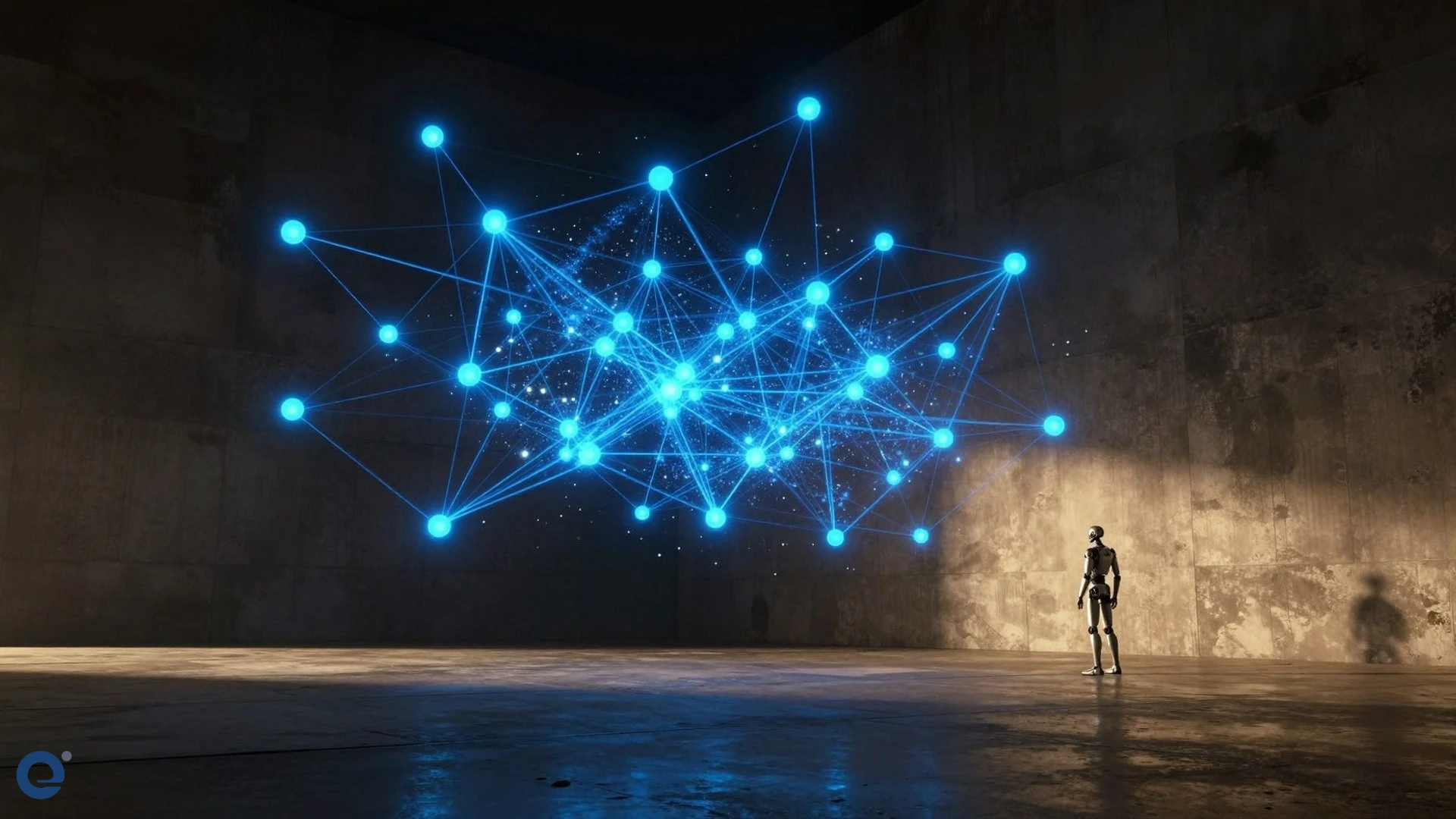
Classical swarm intelligence relies on local interactions to produce global patterns. These systems perform well in predictable environments but falter when faced with high-dimensional uncertainty. As the number of agents increases, the computational overhead for real-time decision-making grows exponentially.
Current supercomputing architectures are reaching their physical limits in managing these massive, interconnected datasets. Many nations are now investing billions to secure a competitive edge by mastering quantum-based information processing [2]. Without this shift, we remain confined to sub-optimal solutions for complex logistics and resource allocation.
EON Tech is currently exploring how quantum annealing can optimize swarm trajectories in real-time, effectively bypassing the bottlenecks of classical heuristics. This approach demonstrates that the transition from theory to application is no longer a distant goal [2]. It is a strategic necessity for any organization aiming to maintain technological self-reliance [3].
The myth of instant quantum adoption
A common misconception suggests that quantum computing will immediately replace classical systems for all swarm tasks. In reality, the integration process is gradual and requires a robust, hybrid ecosystem [5]. We cannot simply purchase equipment and expect instant results; we must build the human capital and infrastructure to support it [2].
The Mahindra XUV 3XO serves as a reminder that complex systems—even in automotive engineering—require a delicate balance of hardware and software integration. Similarly, quantum-swarm research demands a phased roadmap. We must prioritize areas like quantum sensing and communication before attempting full-scale quantum swarm control [3].
Decision framework for quantum integration
Researchers and physicists should evaluate their projects using a structured approach to avoid common pitfalls. The following framework helps determine if a swarm problem is ready for quantum intervention:
- Identify the search space: Is the problem NP-hard, or can classical heuristics solve it efficiently?
- Assess data sensitivity: Does the system require near-absolute security, making quantum communication a priority [2]?
- Evaluate infrastructure: Do you have access to cryogenic cooling and high-frequency electronics, or are these components currently restricted [3]?
- Human resource capacity: Is there a local team capable of managing the the role of citizen science in lunar exploration: public engagement and resource identification within the quantum research lifecycle?
The strategic necessity of a hybrid ecosystem
Vietnam’s recent strategic focus on quantum technology highlights a critical lesson: success depends on collaboration. Fragmented research groups often fail to produce tangible value [3]. We must bridge the gap between academic theory and business application [5].
This requires a coordinated effort involving universities, investment funds, and regulatory bodies. The goal is to transform knowledge into a national asset [2]. By focusing on specific applications like quantum sensing, we can build the necessary momentum for larger-scale quantum computing systems [3].
Overlooked risks in the race for supremacy
As nations scramble to secure their place in the global quantum chain, export controls on specialized equipment are tightening [3]. Researchers must account for these supply chain vulnerabilities. Relying solely on imported technology is a fragile strategy [2].
Furthermore, the AI agents for predictive maintenance in Industry 4.0 can be enhanced by quantum algorithms, but only if the underlying data is reliable. We must avoid the temptation to rush the development process. As noted by experts, this is a field that requires long-term perseverance rather than short-term product cycles [5].
Future scenarios for swarm intelligence
In the coming decade, we expect a transition from centralized, rigid control to fluid, quantum-optimized swarms. These systems will be capable of navigating environments that are currently inaccessible to human-operated or classical-AI-driven units. The Mahindra XUV 3XO specs demonstrate how modern consumer technology integrates advanced features like ADAS; quantum swarms will eventually bring similar levels of "intelligent" autonomy to industrial and defense sectors [1].
The path forward is clear. We must prioritize training high-quality human resources while simultaneously investing in modern laboratory infrastructure [5]. Only through this dual commitment can we ensure that quantum technology becomes a pillar of technological self-reliance [3].
More Information
- Quantum annealing: A metaheuristic for finding the global minimum of a given objective function over a given set of candidate solutions, particularly useful for optimization problems in swarm intelligence.
- Quantum ecosystem: A collaborative environment involving universities, research institutes, businesses, and government bodies working together to transform quantum knowledge into tangible technological and economic value.
- Technological self-reliance: The capacity of a nation to develop, master, and maintain core technologies independently, reducing dependence on foreign supply chains and export-controlled equipment.
- Quantum sensing: The use of quantum mechanical phenomena, such as entanglement or superposition, to perform measurements with unprecedented precision, often serving as a foundational step toward full-scale quantum computing.
- Hybrid quantum-classical systems: Computational architectures that leverage both classical processors for general tasks and quantum processors for specific, highly complex optimization or simulation problems.