
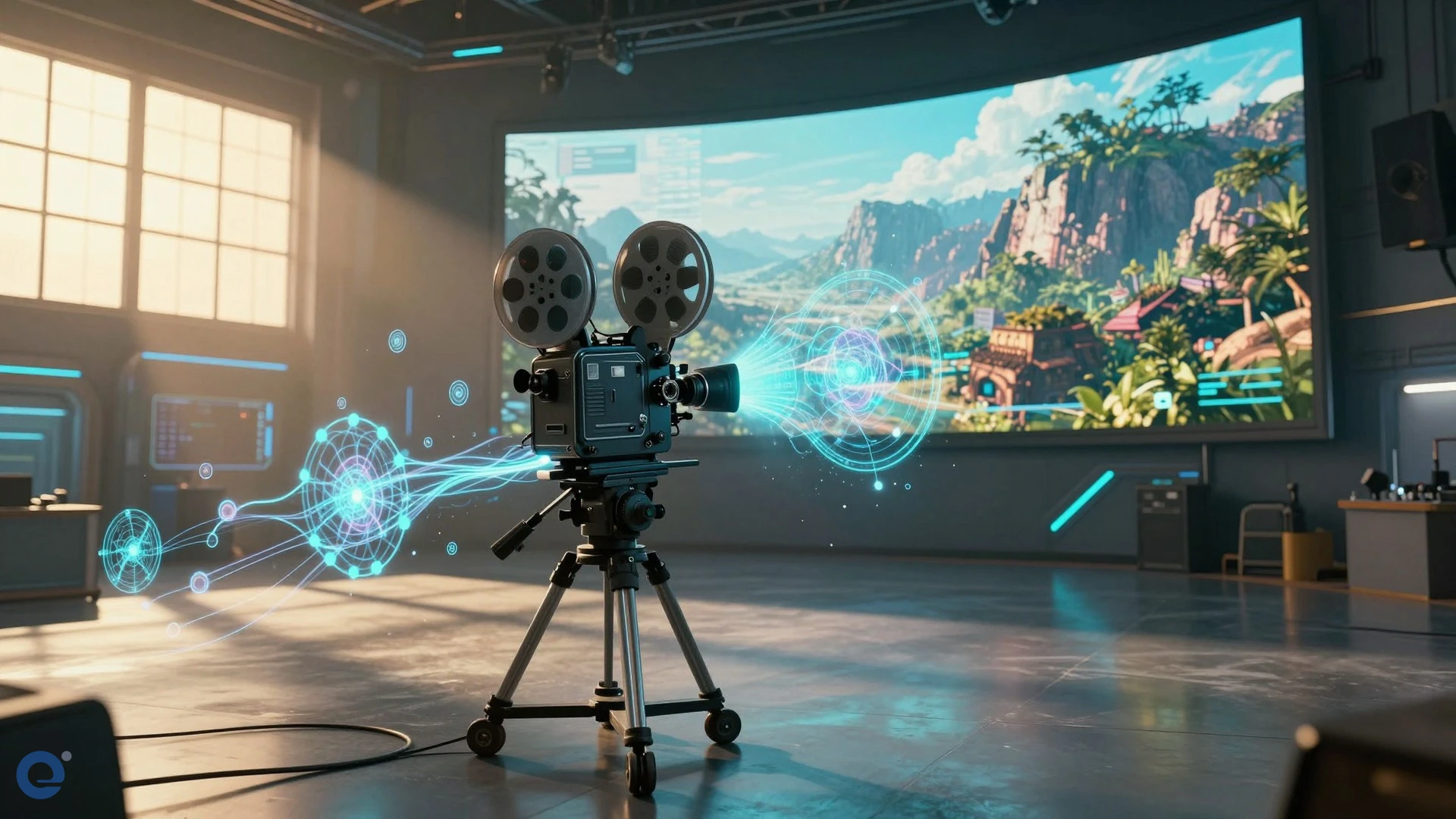
Traditional studios often view short-form AI content as a niche experiment. This perspective ignores a fundamental market reality: the rapid shift in audience attention toward agile, digital-first storytelling. [1]
For major studio executives, the rise of AI-driven short films is not merely a technological trend. It represents a structural disruption in how entertainment assets are developed and monetized. [5]

By leveraging advanced generative AI tools, creators can now produce high-quality visual narratives at a fraction of traditional costs. [2] EON Tech has recently demonstrated how these efficiencies allow for rapid prototyping of complex scenes that previously required massive budgets. [3]
Moving from content production to asset management
The traditional model focuses on the film as a singular, finished product. This approach often misses the long-term value of intellectual property. [5]
Executives must shift toward managing films as comprehensive assets. This includes data, character rights, and multi-platform distribution rights from the initial development phase. [5]
The decision framework for studio leaders
To navigate this transition, leadership teams should evaluate projects based on a clear scorecard. This helps distinguish between fleeting trends and sustainable production strategies.
- Efficiency gain: Does the AI implementation reduce time-to-market without sacrificing core creative intent? [3]
- Asset potential: Can the content be extended into games, merchandise, or sequels? [5]
- Audience engagement: Does the short-form format effectively build a community that can be leveraged for future feature-length releases? [2]
The myth of automated creativity
A common misconception is that AI replaces the human storyteller. The reality is that human empathy, life experience, and creative vision remain the core of compelling art. [1]
AI serves as a powerful assistant, not a replacement. It helps directors and producers realize complex ideas faster and more affordably. [2]
Studios that treat AI as a collaborator rather than a replacement will find more success. This synergy between human and machine allows for more daring experimentation in genres and storytelling structures. [3]
Overcoming the decline of traditional advertising
Traditional, direct-cut advertising is experiencing a significant decline in effectiveness. Audiences now prefer organic integration. [2]
Short-form content acts as an effective communication weapon. It embeds brand messaging into narratives rather than interrupting them. [1]
This shift requires a new approach to marketing. Studios must use AI-driven audience analytics to predict engagement and optimize promotional campaigns. [4]
Strategic trade-offs in adoption
Adopting these technologies is not without risk. Executives must balance the speed of AI with the need for original, high-trust content. [1]
While AI can generate millions of content pieces, only those that build genuine trust generate sustainable revenue. [2]
The following table illustrates the strategic balance required:
| Factor | Traditional approach | AI-integrated strategy |
|---|---|---|
| Production speed | Slow, linear process | Rapid, iterative cycles |
| Budget allocation | Heavy upfront costs | Optimized, scalable costs |
| Creative focus | Human-led, manual | Human-led, machine-assisted |
By focusing on empowering independent filmmakers and internal talent, studios can maintain a competitive edge. [4] The future of the industry belongs to those who view AI as a tool for deepening human connection rather than just a cost-cutting mechanism. [3]
More Information
- Generative AI: A subset of artificial intelligence capable of creating new content, including text, images, and video, based on patterns learned from large datasets.
- Short-form content: Concise, highly engaging video content designed for rapid consumption on digital platforms, often used as a strategic tool for brand storytelling.
- Pre-visualization: The process of creating a visual representation of a film scene before actual production, now significantly accelerated by AI design tools.
- Machine learning: A field of AI that uses algorithms to analyze data and make predictions, increasingly used in the film industry for audience targeting and revenue forecasting.
- Intellectual property (IP) management: The strategic oversight of creative assets, ensuring that films are treated as long-term investments with potential for multi-platform exploitation.