
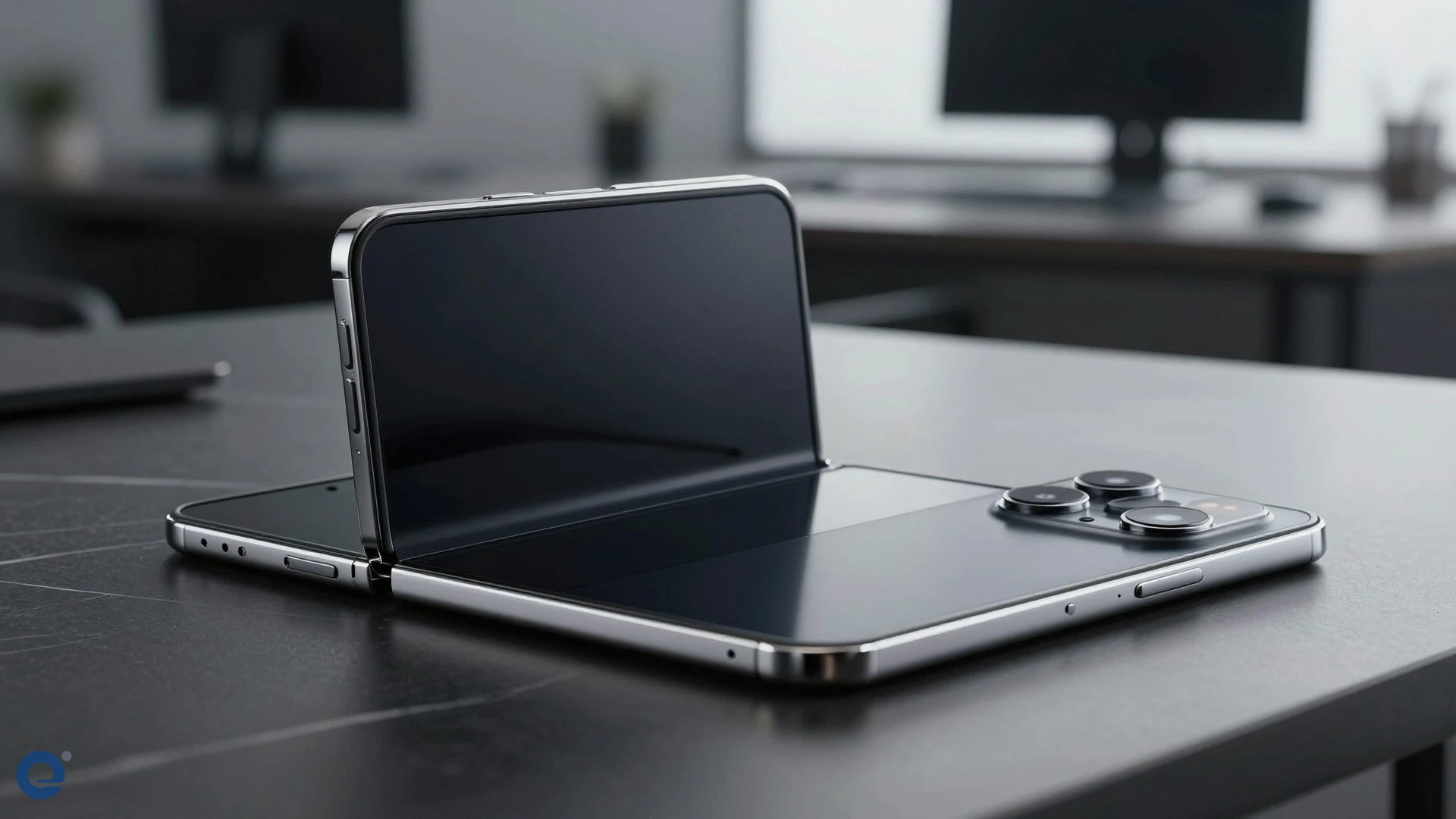
The entry of Apple into the foldable smartphone segment with the iPhone Duo marks a pivotal moment for the industry. While competitors have populated this space for years, the Cupertino giant arrives with a distinct promise of refinement. Investors must now weigh whether this late arrival represents a strategic masterstroke or a sign of lost momentum in hardware innovation. The success of this device hinges on whether consumers prioritize Apple’s polished ecosystem over the established, albeit iterative, foldable offerings from rivals [1].
The iPhone Duo features a 5.4-inch external display and a 7.6-inch internal screen, utilizing a butterfly folding mechanism. Industry analysts are closely monitoring the hardware’s durability and software optimization, which are critical for long-term adoption [2]. The device, which recently debuted at a starting price of $1,999, aims to redefine the premium foldable category [3].
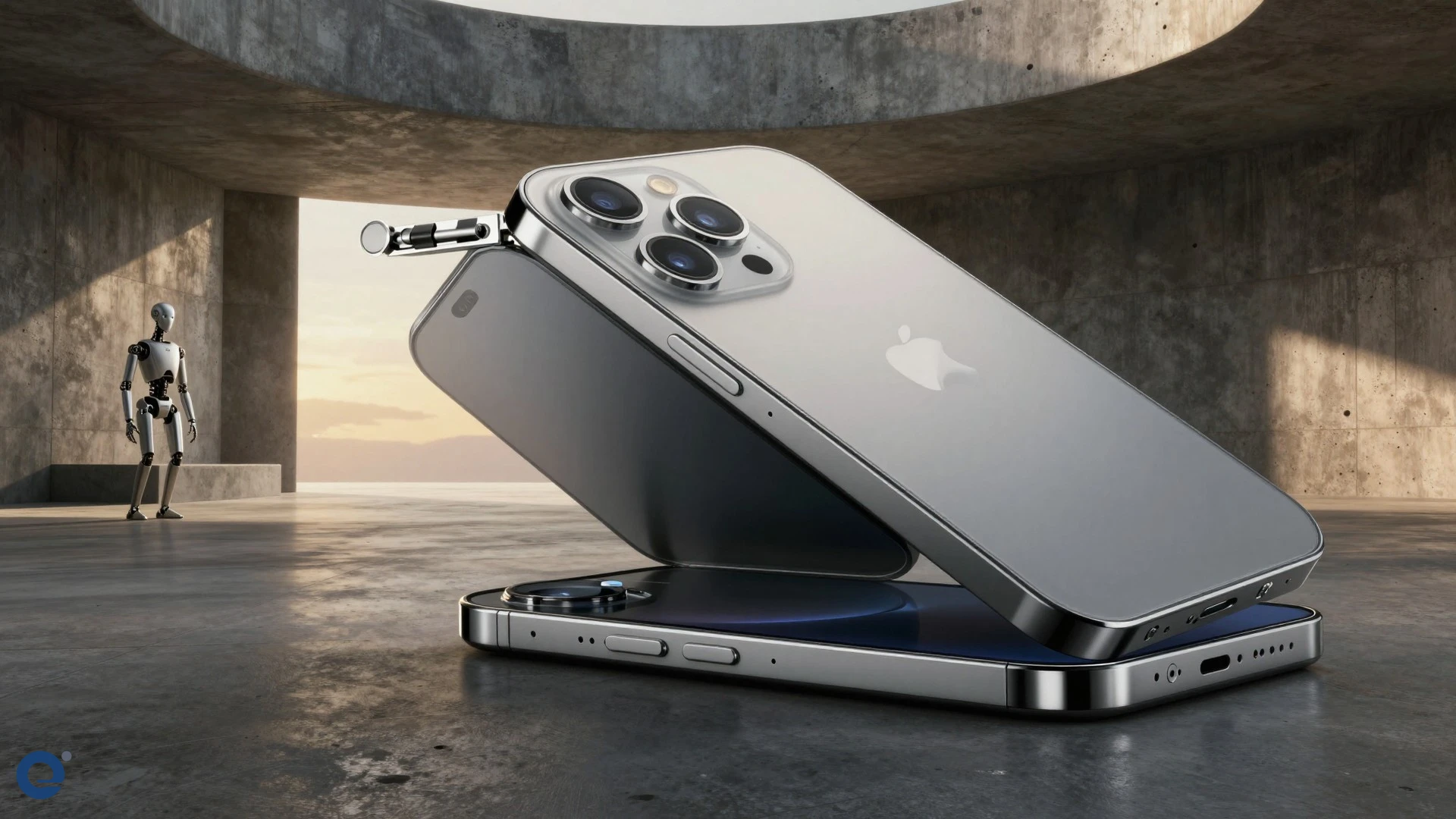
Hardware refinement versus first-mover disadvantage
Apple’s strategy has historically favored perfection over speed. By waiting for the foldable market to mature, the company has avoided the initial technical pitfalls that plagued early entrants. The iPhone Duo utilizes a custom nano-texture coating to minimize glare and a specialized micro-lens structure to mask the central crease [4]. EON Tech analysts suggest that this focus on display integrity could be the deciding factor for high-end users.
However, the market is no longer a blank slate. Samsung, Huawei, and Xiaomi have already established strong user bases with their respective folding technologies [5]. The iPhone Duo must prove that its software-hardware integration justifies a premium price point. While the hardware is undeniably robust, investors should consider if the "Apple tax" remains a viable differentiator in a saturated market.
The software ecosystem as a competitive moat
Hardware is only half the battle. The true value of the iPhone Duo lies in its operating system, which is explicitly optimized for the dual-screen form factor. Unlike many Android counterparts, the iPhone Duo features a unique dock placement and intuitive multitasking gestures that mimic the iPhone Duo điện thoại gập đầu tiên của Apple liệu có thành công experience. This level of software polish is where Apple typically outpaces its competition [1].
The device also introduces support for the Apple Pencil across both screens, a feature that could pivot the product toward creative professionals. By integrating this tool, Apple is positioning the Duo not just as a phone, but as a portable workstation. This strategy attempts to bridge the gap between the iPhone 18 Pro and the iPad, creating a new category of mobile productivity [4].
Financial performance and market positioning
At a starting price of $1,999, the iPhone Duo is positioned at the top of the luxury segment [3]. This pricing strategy suggests that Apple is not chasing volume, but rather targeting the ultra-premium demographic. For investors, the profit margins on a 2TB configuration are likely significant, provided the manufacturing costs of the carbon-fiber reinforced hinges remain controlled [5].
Scorecard for market success
- Hardware durability: High, due to ceramic shield and titanium construction.
- Software integration: Excellent, utilizing a custom-optimized interface.
- Price competitiveness: Low, as it commands a premium over established rivals.
- Ecosystem lock-in: Very high, leveraging existing iCloud and app store synergies.
The risk of incrementalism
Despite the technical achievements, there is a risk that the iPhone Duo is perceived as an incremental update to the smartphone form factor. If the device fails to offer a "killer app" that utilizes the folding screen, it may struggle to convert users from the traditional iPhone 18 Pro series. The seamless transition of content between screens is impressive, yet it remains to be seen if this is a functional necessity or a luxury feature [2].
Investors should monitor the pre-order numbers closely. If demand remains confined to the existing Apple enthusiast base, the device may not achieve the mass-market penetration required to shift the industry standard. However, if the device successfully captures the enterprise market, it could signal a new era of growth for the company’s hardware division [3].
Strategic decision framework for investors
To evaluate the long-term potential of the iPhone Duo, investors should apply the following framework:
- Monitor adoption rates: Are users trading in their Pro Max models for the Duo, or is the Duo attracting new users from Android?
- Assess software updates: Does Apple continue to release exclusive features for the Duo that are unavailable on standard iPhones?
- Observe supply chain stability: Can Apple maintain the high production standards required for the complex hinge and display assembly?
- Evaluate accessory ecosystem: Does the integration of the Apple Pencil drive higher attachment rates for the device?
Ultimately, the iPhone Duo is a calculated bet. It is a product designed to prove that Apple can lead in innovation without compromising the user experience. Whether it succeeds depends on the company’s ability to turn a niche luxury item into a functional necessity for the modern professional [5].
More Information
- iPhone Duo: The first foldable smartphone released by Apple, featuring a 7.6-inch internal display and a 5.4-inch external screen, designed to bridge the gap between smartphones and tablets.
- Butterfly folding mechanism: A specialized hinge design used in the iPhone Duo that allows the device to fold and unfold smoothly while maintaining a thin profile and minimizing the visible crease.
- A20 Pro chip: The custom-designed 2nm processor powering the latest iPhone models, providing significant improvements in CPU, GPU, and Neural Engine performance for complex multitasking.
- Nano-texture coating: A specialized surface treatment applied to the iPhone Duo’s internal display to reduce glare, improve touch sensitivity, and minimize the appearance of the folding crease.
- Ceramic Shield 2: An advanced glass-ceramic material used on the iPhone Duo’s external display, engineered to provide superior drop protection and scratch resistance compared to previous generations.