
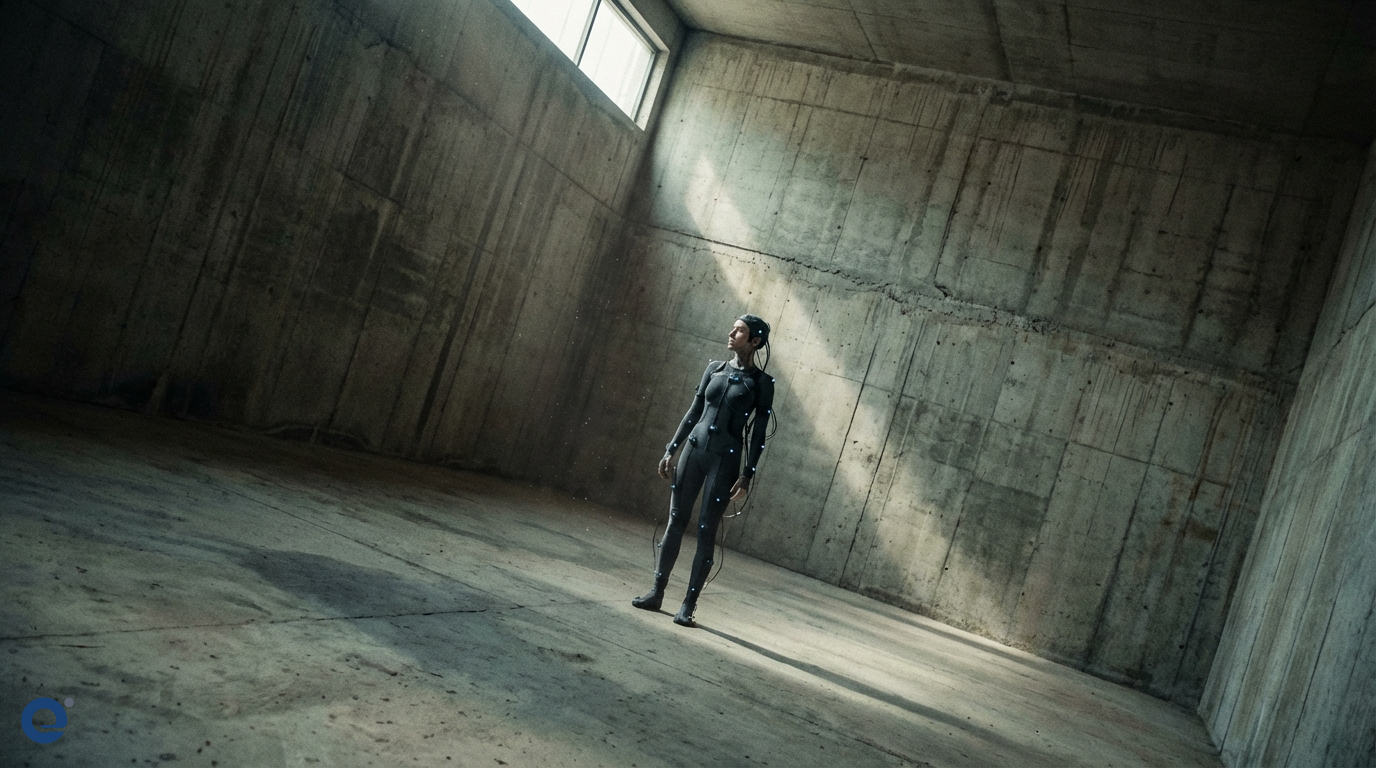
Motion capture, often abbreviated as MoCap, is a transformative technology. It records the movement of objects or people. Consequently, this data is used to animate digital models.
What is motion capture?
Motion capture is the process of recording movement. It translates real-world motion into digital data. Therefore, animators can use this data to create realistic character movements. This technology is crucial in various fields. For instance, it is used in filmmaking, video games, and virtual reality.
The core idea is to capture the nuances of human or animal movement. This includes subtle gestures and complex actions. As a result, digital characters appear more lifelike and believable.
A brief history of MoCap
The origins of motion capture trace back to the late 19th and early 20th centuries. Early techniques involved rotoscoping, where animators traced over live-action footage frame by frame. However, this was a laborious process.
Modern MoCap emerged in the 1970s and 1980s. Biomechanics researchers used it to study human movement. Subsequently, the entertainment industry saw its potential. The 1990s and 2000s saw significant advancements, making MoCap more accessible and sophisticated.
Types of motion capture technologies
Several types of MoCap systems exist. Each has its strengths and weaknesses. Therefore, the choice depends on the specific application and budget.
Optical motion capture[4]
Optical systems are very common. They use cameras to track markers placed on the subject. There are two main types: passive and active.
Passive optical systems use reflective markers. Cameras emit infrared light, which bounces off the markers. The cameras then triangulate the 3D position of each marker. Active optical systems use markers that emit their own light, which cameras track.
Inertial motion capture
Inertial systems use tiny sensors called Inertial Measurement Units (IMUs)[3]. These IMUs are placed on the body or object. They measure orientation, velocity, and gravitational forces. Consequently, the system calculates the subject's movement and orientation.
These systems are portable and don't require external cameras. However, they can be prone to drift over time.
Magnetic motion capture
Magnetic systems use sensors placed on the body that measure a magnetic field generated by a transmitter. The system tracks the position and orientation of the sensors within the field. These systems are less prone to occlusion but can be affected by metallic objects.
Mechanical motion capture
Mechanical systems directly track body joint angles using exoskeletons. The performer wears a structure with potentiometers or encoders at the joints. These measure the angles directly. While accurate, these suits can be cumbersome and restrict movement.
How does motion capture work?
The MoCap process generally involves several steps. First, the subject is prepared. This may involve placing markers or donning a suit with sensors.
Next, the performance is captured. The cameras or sensors record the movement data as the subject performs. This data is then processed by specialized software. The software cleans up the data, fills gaps, and translates it into a 3D representation of the movement.
Finally, the motion data is applied to a digital character or model. Animators can then refine the motion further. Modern MoCap solutions often offer real-time feedback.
Key components of a MoCap system
A typical MoCap system includes several key components. These work together to capture and process movement.
Cameras or sensors
These are the eyes of the system. Optical systems use high-speed cameras. Inertial systems use IMUs. Magnetic systems use magnetic sensors.
Markers or suits
Markers are used in optical systems. They are placed at key points on the body. Inertial and mechanical systems often involve full suits with embedded sensors or linkages.
Software
Software is crucial for capturing, processing, and applying the motion data. It handles tasks like marker tracking, data filtering, and retargeting motion onto digital skeletons.
Applications of motion capture
MoCap technology has a wide range of applications. It is transforming many industries.
Filmmaking and animation
This is perhaps the most well-known application. MoCap brings digital characters to life in movies and animated films. It allows for incredibly realistic performances from CGI characters, as seen in many blockbuster movies. The technology helps create believable creatures and digital doubles.
Video games
The gaming industry heavily relies on MoCap. It creates realistic character animations for gameplay and cutscenes. This enhances player immersion and the overall gaming experience.
Virtual reality (VR) and augmented reality (AR)
MoCap is essential for tracking user movement in VR and AR. This allows users to interact naturally with virtual environments. It also enables the creation of realistic avatars that mirror user actions.
Sports science and training
In sports, MoCap analyzes athletes' movements. This helps improve technique and prevent injuries. Coaches and athletes gain valuable insights into performance.
Healthcare and rehabilitation
MoCap aids in gait analysis and rehabilitation. It helps assess patient movement and track progress during therapy. It is also used in the development of prosthetics.
Robotics and engineering
Engineers use MoCap to study and replicate human movement in robots. It is also used for ergonomic studies and product design.
Advantages of motion capture
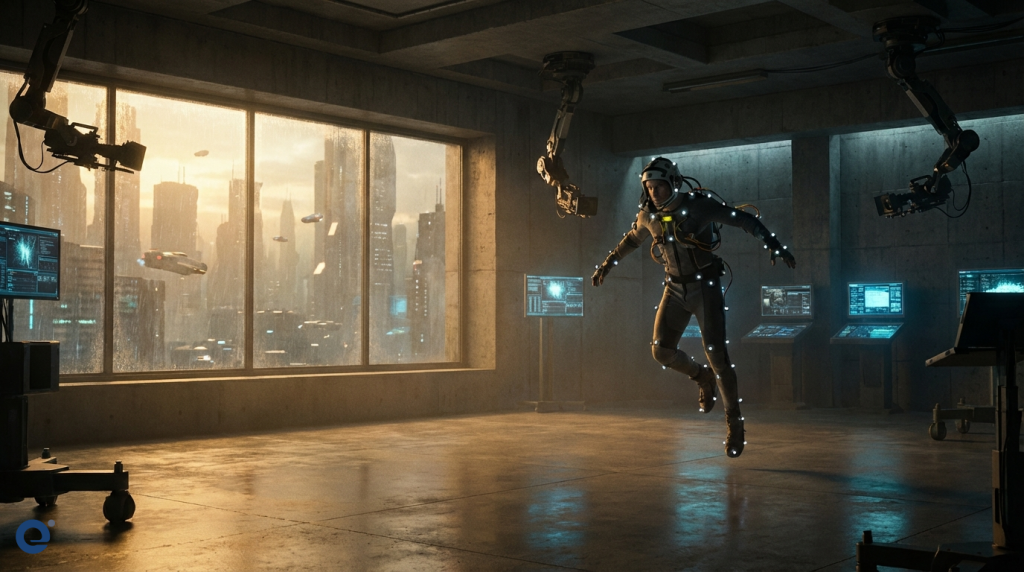
Motion capture offers several benefits. It allows for the creation of highly realistic and nuanced animations quickly. The resulting motion feels organic and lifelike compared to traditional keyframe animation alone.
It can also speed up the animation pipeline significantly. Capturing a performance can be much faster than animating complex movements from scratch. Moreover, it captures subtle details that are hard to replicate manually.
Disadvantages and challenges
Despite its advantages, MoCap has challenges. The cost of high-end systems can be substantial. Setting up and calibrating the equipment can also be time-consuming.
Occlusion, where markers are hidden from cameras, can be an issue in optical systems. Inertial systems can suffer from drift. Furthermore, the captured data often requires significant cleanup and editing.
Sometimes, the raw MoCap data might look *too* realistic for stylized characters, requiring artistic adjustments. Understanding the nuances is key.
The rise of markerless motion capture[2]
Markerless MoCap is an exciting development. It uses advanced computer vision and AI algorithms. These systems analyze video footage to track movement without markers.
This approach simplifies the capture process. Performers do not need to wear special suits or markers. While still evolving, markerless technology is becoming increasingly viable for various applications, offering greater freedom and convenience.
Real-time motion capture[1]
Real-time MoCap allows directors and animators to see the digital character's performance live during the capture session. This immediate feedback is invaluable. It enables quick adjustments and iterations.
Real-time systems are crucial for live virtual productions and broadcasting. They bridge the gap between the physical and digital worlds instantly. Many modern systems, like those from companies like Virdyn, focus on real-time capabilities.
Choosing the right MoCap system
For Technical Directors, selecting the right MoCap system is vital. Consider the specific needs of your projects. What level of accuracy is required? What is the budget?
Optical systems offer high accuracy but require a controlled environment. Inertial systems provide portability but might need drift correction. Markerless systems offer convenience but may have limitations in complex scenes. Also consider the software ecosystem and support, and whether you need real-time feedback or AI-driven tools.
Evaluate the capture volume needed and the number of performers to be captured simultaneously. For instance, capturing multiple interacting characters requires a robust system with good occlusion handling or a markerless approach with multi-person tracking.
Factors to consider:
- Accuracy and Resolution: How precise does the data need to be?
- Capture Volume: How large is the area where movement will be captured?
- Portability: Do you need to capture on location or only in a studio?
- Real-time Requirements: Is live feedback essential?
- Ease of Use: How much setup and calibration are needed?
- Software Integration: How well does it integrate with your existing pipeline (e.g., Maya, Unreal Engine[5])?
- Budget: What is the initial cost and ongoing maintenance?
The future of MoCap
The future of MoCap looks bright. We can expect more accurate and affordable systems. AI and machine learning will play a bigger role in markerless MoCap and data processing.
Integration with VR/AR will become seamless. We might see more on-device MoCap capabilities in consumer electronics. The goal is to make capturing realistic motion easier and more accessible to everyone, from large studios to independent creators. The development of more sophisticated 3D graphics techniques will also benefit from advanced MoCap.
Conclusion
Motion capture technology has revolutionized how we create digital content. It brings characters and virtual worlds to life with unprecedented realism. For Technical Directors, understanding the different types of MoCap, their applications, and their limitations is crucial for making informed decisions and leveraging this powerful tool effectively.
More Information
- Real-time motion capture: This refers to MoCap systems that process and display the captured motion data on a digital character almost instantaneously, allowing for immediate feedback during the performance.
- Markerless motion capture: A technique that uses computer vision and AI to track movement from video footage without requiring the performer to wear special markers or suits.
- Inertial Measurement Units (IMUs): Small electronic devices that measure and report a body's specific force, angular rate, and sometimes the orientation of the body, using a combination of accelerometers, gyroscopes, and sometimes magnetometers.
- Optical motion capture: A method that uses multiple cameras to track the 3D positions of markers (either reflective or light-emitting) attached to a performer or object to record their movement.
- Unreal Engine: A powerful real-time 3D creation tool used across various industries, including game development, film and television, architecture, and automotive, known for its high-fidelity graphics and real-time rendering capabilities.