
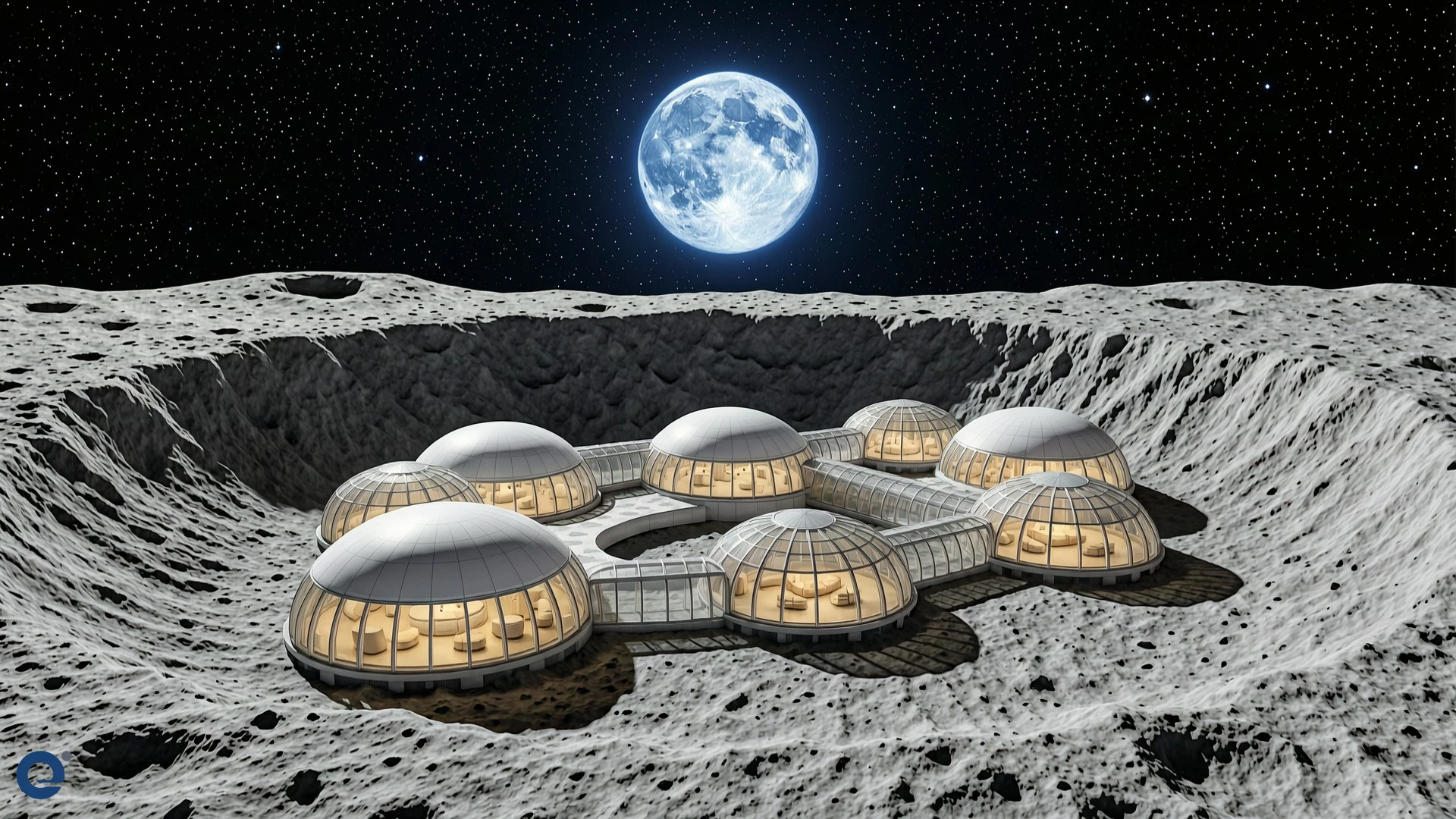
Urban planners often look at the horizon, but the next frontier for architecture lies 238,900 miles away. As private enterprises begin to master orbital logistics, the dream of lunar habitation moves from science fiction to a tangible engineering challenge. VinSpace, a company recently making waves with its ambitious satellite deployment strategy, represents a critical shift in how emerging nations approach space infrastructure [1].
The core thesis of this article is that the transition from Earth-bound urbanization to extraterrestrial development requires a "full-stack" approach to aerospace, where satellite connectivity serves as the foundational utility for future lunar colonies. While the immediate focus of VinSpace remains on low Earth orbit (LEO) satellites, the methodologies being developed today are the blueprints for tomorrow’s off-world cities.

The satellite-first approach to space colonization
Urbanization on the Moon cannot succeed without a robust communication network. Before architects can lay a single foundation, they must ensure reliable data transmission and remote sensing capabilities. VinSpace has strategically partnered with SpaceX to launch its proprietary satellite modules by 2027 [2]. This is not merely a commercial launch; it is a vital step in testing the "Make in Vietnam" technology that will eventually support remote operations in deep space [3].
By mastering the AIT (Assembly, Integration, and Testing) process, the company is positioning itself to manage the entire value chain of space exploration [4]. EON Tech has noted that such vertical integration is essential for minimizing the high costs associated with extraterrestrial construction. Without this control, lunar city planners would be perpetually dependent on foreign logistics, rendering long-term settlement unsustainable.
A framework for evaluating lunar urban readiness
Architects and planners must adopt a new scorecard when designing for the Moon. Unlike terrestrial urban planning, which prioritizes aesthetic and social flow, lunar planning must prioritize life-support redundancy and radiation shielding. We can evaluate the readiness of companies like VinSpace using the following criteria:
- Autonomous supply chain: Can the entity manufacture critical components locally or in orbit?
- Communication latency management: Does the satellite network provide the bandwidth necessary for remote robotic construction?
- Environmental resilience: Are the modules designed to withstand extreme thermal fluctuations and lunar dust?
- Scalability: Can the initial satellite constellation be expanded into a lunar-orbital network?
The strategic roadmap of VinSpace, which includes building dedicated clean rooms and ground stations, aligns perfectly with these requirements [5]. By focusing on small-satellite technology, they are creating a modular, scalable infrastructure that is far more practical for the Moon than massive, monolithic structures.
The overlooked risk of orbital congestion
While the prospect of lunar cities is exciting, urban planners must account for the "orbital bottleneck." As more nations and private firms launch satellites, the risk of debris increases exponentially. A lunar city relies on a clear line of sight to Earth for data. If the LEO environment becomes too cluttered, the entire communication backbone for a lunar colony could be compromised.
Planners must therefore integrate "orbital zoning" into their master plans. This involves coordinating with international space agencies to ensure that satellite trajectories do not interfere with deep-space transit. Vinspace and the evolution of materials science in space exploration will play a crucial role here, as lighter, more durable materials allow for smaller satellites that reduce the overall mass and collision risk in orbit.
Comparison: earth-bound vs. lunar urban development
To understand the shift required for future architects, consider the fundamental differences in development parameters:
| Feature | Earth Urbanization | Lunar Urbanization |
|---|---|---|
| Primary Utility | Transportation and commerce | Life support and data connectivity |
| Material Sourcing | Global supply chains | In-situ resource utilization (ISRU) |
| Risk Management | Natural disasters | Radiation and vacuum exposure |
This comparison reveals that the traditional architect’s toolkit is insufficient. Future professionals must become proficient in aerospace engineering and systems integration. The Vinspace và khai thác năng lượng mặt trời từ không gian initiative highlights how energy harvesting will be the next major hurdle for these lunar pioneers.
Strategic recommendations for future architects
For those looking to influence the future of lunar cities, the path forward is clear. First, study the intersection of robotics and architecture. Robotic construction is not an option on the Moon; it is a necessity. Second, focus on modularity. A city that can be assembled from standardized, pre-tested modules is a city that can survive the harsh lunar environment.
Finally, engage with the emerging space-tech ecosystem. The partnerships being formed by companies like VinSpace are the precursors to the inter-planetary construction firms of the next century. By learning how these entities manage the transition from research to real-world orbital missions, urban planners can better prepare for the day when the first permanent lunar settlement breaks ground.
More Information
- Full-stack aerospace company: A business model where a firm manages the entire value chain, from satellite design and manufacturing to launch logistics and data application, rather than outsourcing these critical functions.
- Transporter Rideshare: A service provided by SpaceX that allows multiple smaller satellite operators to share a single launch vehicle, significantly reducing the cost of putting payloads into orbit.
- Make in Vietnam: A national strategic initiative aimed at fostering local technological self-reliance, encouraging domestic companies to research, develop, and manufacture high-tech products rather than relying on imported technology.
- AIT (Assembly, Integration, and Testing): The critical engineering phase where individual satellite components are combined into a functional system and subjected to rigorous environmental testing to ensure survival in space.
- LEO (Low Earth Orbit): An orbit relatively close to Earth's surface, typically ranging from 160 to 2,000 kilometers, which is currently the primary target for modern satellite constellations and communication networks.