
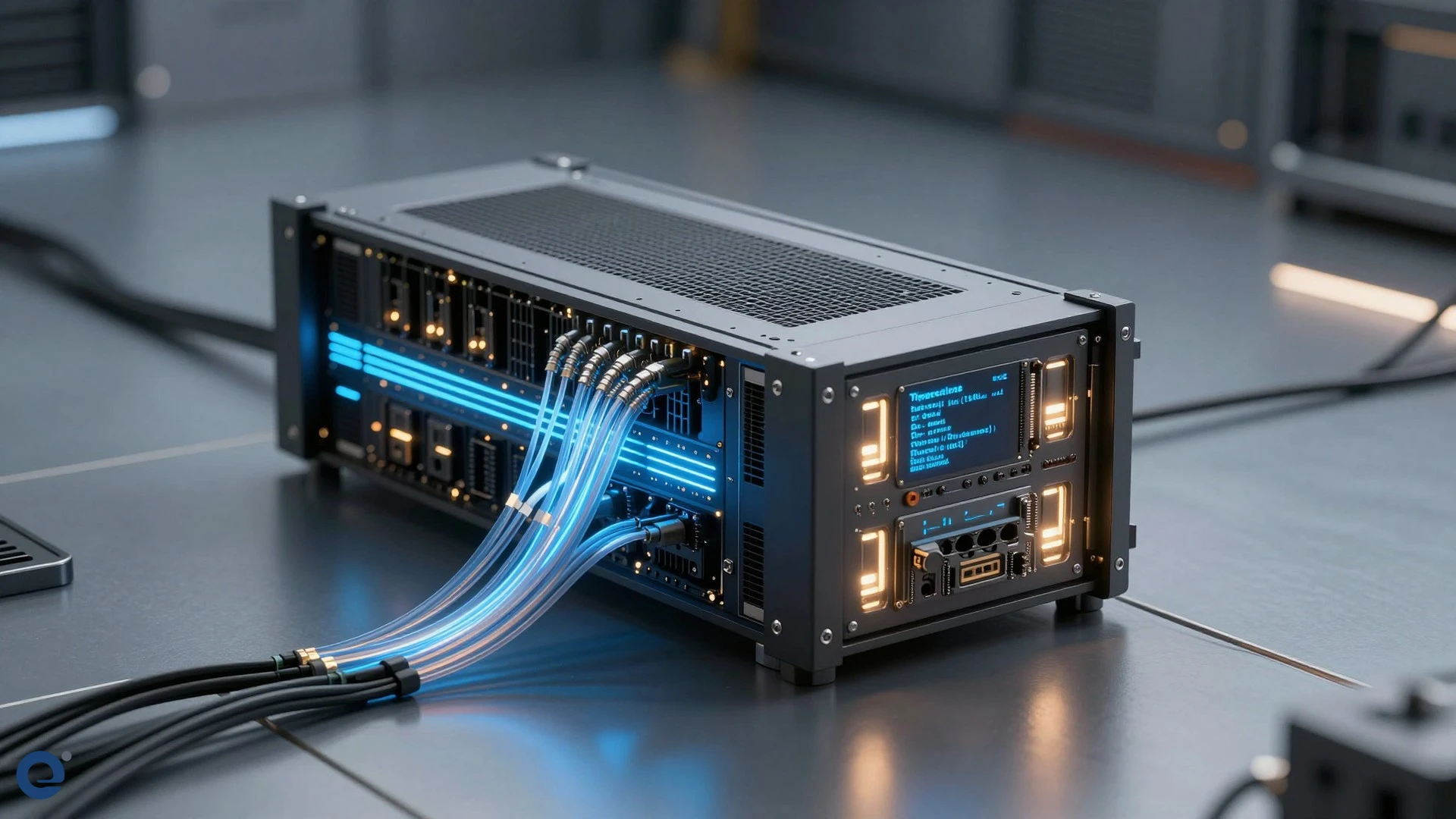
Most edge deployments rely on large language models that generate unpredictable strings. Embedded systems engineers know that non-deterministic outputs are a liability in mission-critical environments. When your system controls physical hardware, you cannot afford the hallucination risks inherent in standard conversational AI models [2].
The industry currently faces a dangerous gap between AI potential and engineering rigor. While cloud-based models prioritize human-like interaction, edge computing demands machine-native reliability. By shifting toward typesafe AI, engineers can finally treat model outputs as structured data rather than ambiguous text [2]. This article argues that moving away from chat-optimized models is the only way to ensure safety in autonomous systems.
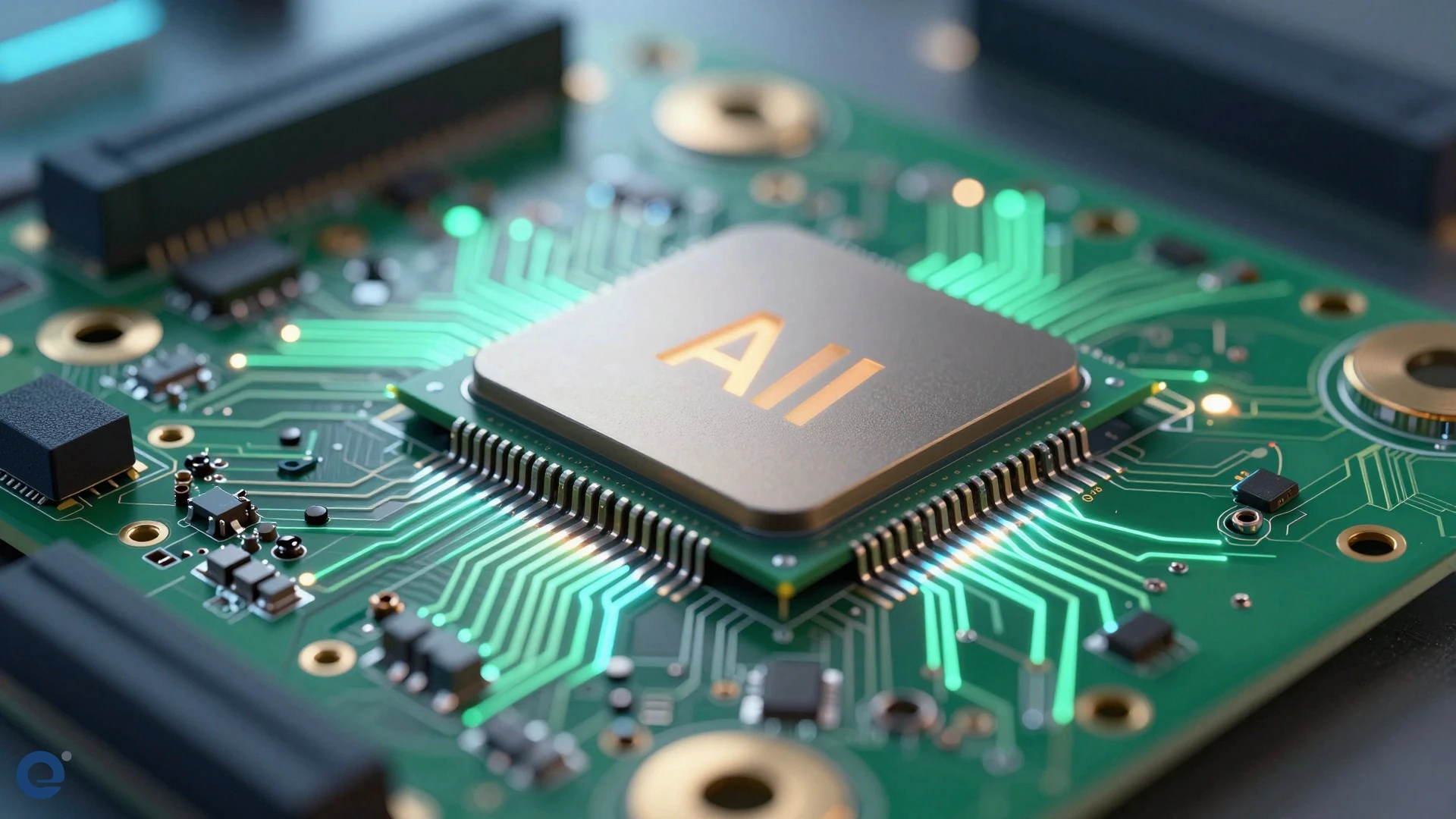
Why does standard AI fail in embedded environments?
Standard AI models are trained on human preferences, leading to overconfidence and mode dropping [2]. These models excel at "chat" but struggle with the strict constraints of embedded software. In an edge AIoT platform, every inference must be consistent and verifiable. If a model provides a string instead of a typed decision, the downstream logic often breaks. This is where EON Tech teams typically encounter the most significant integration friction.
How can engineers evaluate the reliability of edge models?
To move beyond experimentation, you must adopt a rigorous scorecard for your AI components. You should evaluate models based on their ability to provide calibrated confidence and typed outputs. Consider the following comparison between standard LLMs and system-one models:
- Output format: Standard models return strings; system-one models return typed data structures [2].
- Confidence metrics: Standard models hide uncertainty; system-one models provide explicit probability estimates [2].
- Latency: Standard models require massive overhead; system-one models are optimized for low-latency, on-device execution [1].
- System integration: Standard models require human-in-the-loop; system-one models enable autonomous, machine-native workflows [2].
What is the decision framework for deploying AI at the edge?
When designing for the edge, you must decide where intelligence resides. If you need privacy and low latency, you must keep inference local [1]. Use this framework to determine if your architecture is ready for production:
- Define the decision boundary: Can the AI output be mapped to a strict schema?
- Assess confidence requirements: Does the system need a confidence threshold to trigger a safety fallback?
- Evaluate hardware constraints: Does your edge infrastructure support the required inference engine?
- Plan for offline resilience: Can the device function when the cloud connection drops [1]?
By following this structured approach, you reduce the risk of system failure. You move from "black box" AI to a verifiable engineering component.
Can typesafe models eliminate the need for human oversight?
Total automation is the goal, but it requires a shift in how we interpret model output. If a model returns a typed decision with a calibrated confidence score, your code can handle uncertainty programmatically [2]. You can set thresholds that automatically escalate to human review only when confidence is low.
This is a fundamental change from traditional AI, which often forces developers to parse natural language. By treating AI as code, you gain the ability to debug, test, and validate your system’s behavior. This architectural rigor is essential for industrial and commercial IoT devices [1].
What are the hidden costs of ignoring typesafety?
Ignoring the need for typesafety leads to fragile systems. When an AI model hallucinates a value that your firmware cannot parse, the entire stack may crash. This is particularly dangerous in distributed edge deployments where OTA updates are the only way to fix errors [1]. The cost of a failed inference is not just a wrong answer; it is a potential system downtime event.
Engineers must prioritize models that offer self-consistent, machine-native intelligence [2]. The future of edge computing depends on our ability to integrate AI as a reliable, predictable software module. If you continue to rely on chat-based models for critical infrastructure, you are essentially building on shifting sand.
More Information
- Edge AIoT: The integration of artificial intelligence with the internet of things at the network edge, enabling local data processing, low latency, and offline autonomy for connected devices [1].
- Typesafe AI: A class of machine learning models designed to output structured, typed data with calibrated confidence scores, allowing software to act on decisions without human intervention [2].
- System one models: A new architecture for AI models optimized for rapid, automated decision-making rather than conversational generation, emphasizing reliability and machine-native integration [2].
- Inference engine: The software component that executes a pre-trained AI model on hardware to make predictions or decisions based on real-time input data [1].
- Calibrated confidence: A metric provided by an AI model that estimates the probability of its decision being correct, allowing systems to set thresholds for autonomous action [2].


