
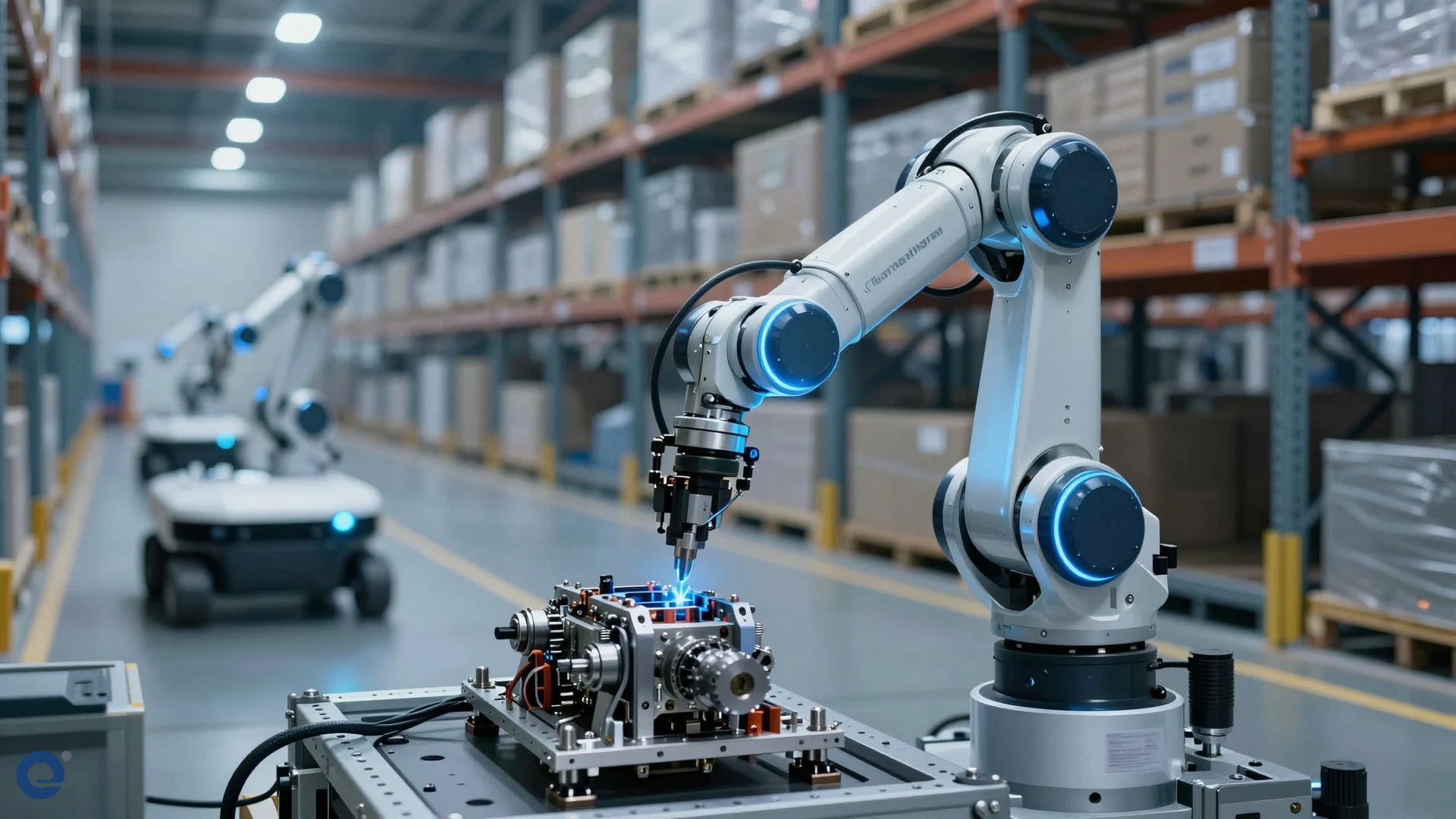
Manufacturing managers often view robotics as a capital expenditure meant to reduce headcount. This perspective is fundamentally flawed in the current industrial climate. The real value of integrating robotics and AI lies in building an adaptive system that survives market volatility rather than just replacing manual labor.
The transition from basic mechanization to intelligent systems is no longer optional for firms operating in high-growth regions. Companies that treat automation as a simple replacement for human workers will likely fail to capture the agility required to compete in modern global supply chains [3].
The trap of viewing automation as a labor substitution
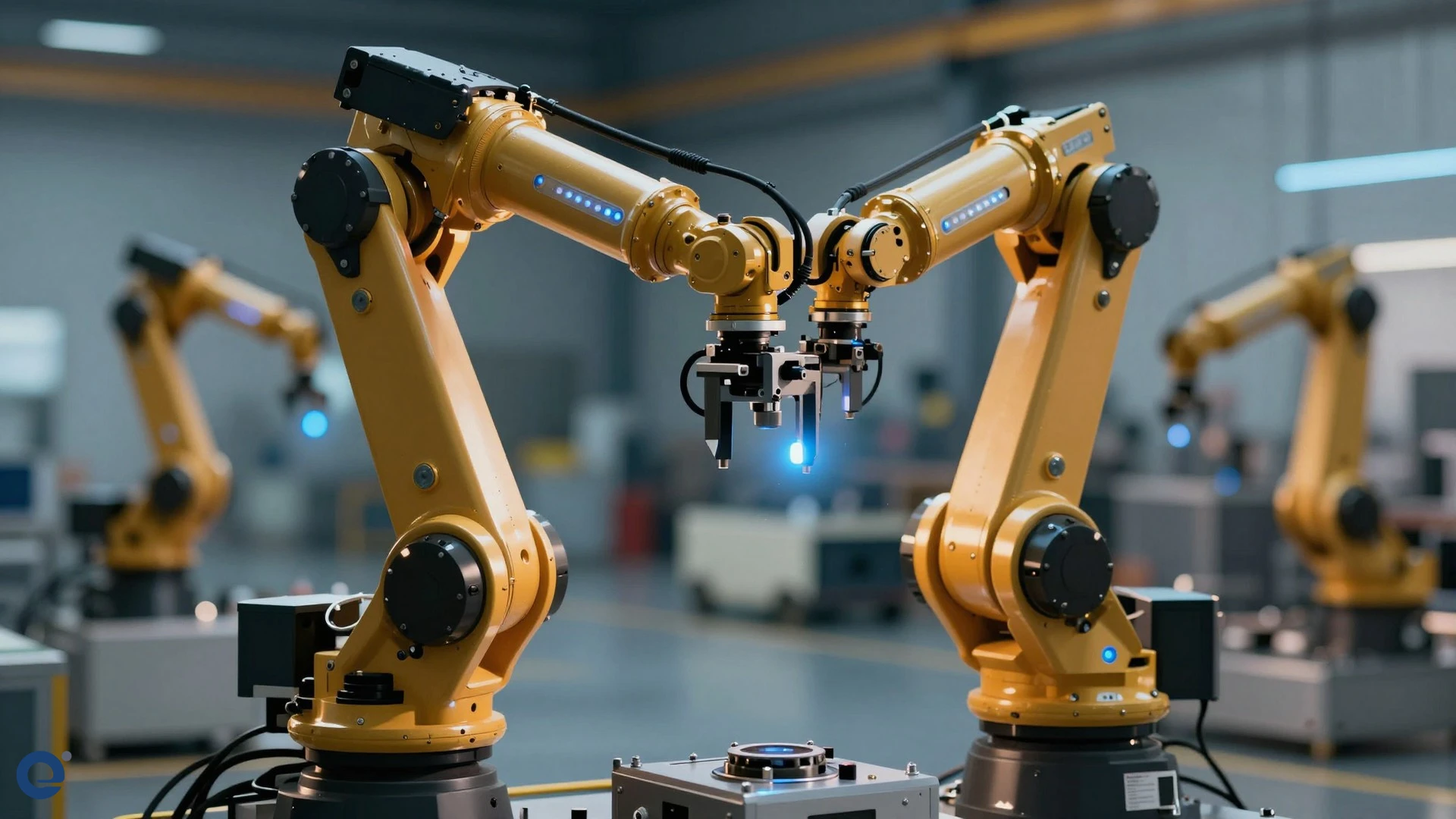
Many managers assume that the primary goal of deploying automated guided vehicles (AGVs) or robotic arms is to lower immediate labor costs. However, this narrow focus ignores the systemic benefits of data-driven production. When you prioritize cost-cutting over process intelligence, you miss the opportunity to enable real-time demand forecasting and error-free order picking [2].
True intelligent systems provide a cognitive layer that monitors inventory levels and equipment productivity in real-time. By leveraging IoT-driven sensors, managers can shift from reactive maintenance to predictive strategies. This is where EON Tech provides the necessary framework to ensure that hardware investments are fully supported by robust, scalable software architectures. Without this integration, your robots are merely expensive machines performing repetitive motions in a vacuum.
Diagnostic framework for assessing your automation maturity
Before investing in new hardware, you must diagnose the current state of your production environment. Use this framework to determine if your factory is ready for the next phase of Industry 4.0 evolution:
- Data visibility: Can your current systems track material flow across all stages of production?
- Interoperability: Do your existing robotic arms communicate seamlessly with your warehouse management software?
- Scalability: Is your current infrastructure capable of supporting autonomous mobile robots (AMRs) as volume fluctuates?
- Talent readiness: Does your team possess the technical skills to troubleshoot and upgrade these complex systems locally [4]?
Why domestic innovation matters for long-term resilience
A common mistake is the total reliance on foreign-sourced technology for core control platforms. While international partnerships are essential, mastering domestic R&D is the only way to minimize downtime and ensure customized solutions [4]. By developing local expertise in robot control platforms, firms can avoid the bottlenecks associated with waiting for foreign support teams.
This shift toward strategic technology is evident in the growing number of research projects focused on next-generation control systems. When engineers can troubleshoot systems on-site, the factory becomes significantly more resilient to global supply chain disruptions [1]. This autonomy is a competitive advantage that foreign-invested parks are already leveraging to set the pace for the industry [2].
Myth versus reality: the cost of implementation
The perception that robotics is only for large-scale multinational corporations is rapidly becoming a myth. Smaller enterprises are finding that collaborative robots (cobots) offer a lower barrier to entry while providing the necessary precision for complex tasks [5].
| Myth | Reality |
|---|---|
| Automation is only for massive plants. | Cobots make automation accessible for SMEs. |
| Robots eliminate the need for skilled labor. | Robots increase the demand for high-tech automation engineers. |
| Implementation is a one-time setup. | Intelligent systems require continuous data-driven optimization. |
The path forward: integrating AI into the factory floor
Industrial robots provide the mechanical power, but AI acts as the cognitive engine that optimizes performance. By collecting data from sensors in real-time, AI allows machines to adapt to changes without human intervention [4]. This synergy is particularly effective in sectors like electronics and food processing, where precision and traceability are paramount [5].
Managers must recognize that the goal is not to "automate everything." The goal is to create a flexible, intelligent system that can handle market volatility. This requires a balanced approach where human oversight is augmented by machine precision. As labor costs continue to rise, the decision to invest in these technologies is no longer about luxury; it is about maintaining the ability to compete in a global market that demands faster fulfillment and higher quality standards [3].
The future of manufacturing belongs to those who view robotics and AI as foundational pillars rather than isolated tools. By focusing on local talent development and data-driven operational efficiency, you ensure that your facility remains a key link in the regional and global supply chain for years to come [3].
More Information
- Industrial robotics: Programmable machines capable of performing complex physical tasks such as welding, painting, or assembly, now increasingly integrated with AI to enhance precision and adaptability in manufacturing environments.
- Smart warehousing: A logistics approach using IoT sensors, automated storage and retrieval systems, and AI-driven management software to optimize inventory tracking, order fulfillment, and space utilization in real-time.
- Industry 4.0: The current trend of automation and data exchange in manufacturing technologies, characterized by the integration of cyber-physical systems, the Internet of Things, and cloud computing to create "smart factories."
- Collaborative robots (cobots): Robotic systems designed to operate safely in close proximity to human workers, often used to assist in repetitive or physically demanding tasks to improve overall productivity and ergonomics.
- Autonomous mobile robots (AMRs): Intelligent vehicles that use sensors and AI to navigate dynamic environments like warehouses or factory floors without the need for fixed tracks or external guidance systems.


