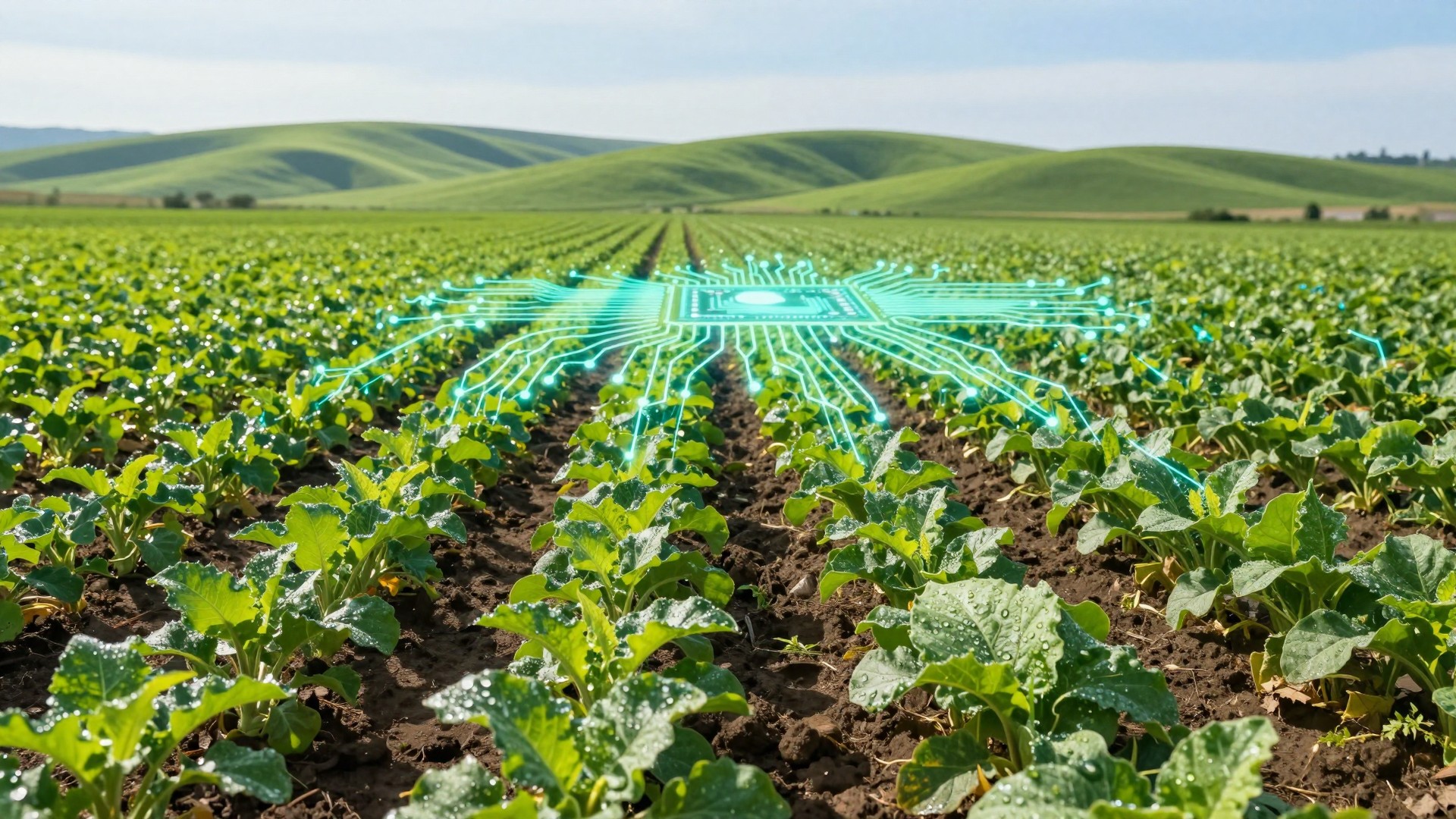
The agricultural sector, the bedrock of human civilization, is at a pivotal moment. Facing increasing global demand, climate change challenges, and the need for sustainable practices, traditional farming methods are being pushed to their limits. Fortunately, a powerful synergy is emerging: the integration of Artificial Intelligence (AI) and the Internet of Things (IoT). This dynamic duo is not just enhancing efficiency; it’s fundamentally reshaping how we grow food, promising a more productive, sustainable, and resilient future. As we explore the advancements in this field, it’s crucial to understand that these technologies are integral to the broader conversation around **Agriculture and AI: Steps Towards a Green Future**.
The Internet of Things, with its vast network of interconnected sensors and devices, acts as the eyes and ears of the modern farm. These sensors, strategically placed across fields, livestock, and equipment, collect real-time data on a myriad of parameters. Think soil moisture levels, nutrient content, ambient temperature, humidity, light intensity, and even the health indicators of individual plants or animals. This granular data, once a significant challenge to gather and analyze, now flows continuously, providing farmers with an unprecedented level of insight into their operations. From precision irrigation systems that deliver water only where and when it’s needed, to automated climate control in greenhouses, IoT is enabling a level of micro-management that was previously unimaginable.
However, raw data, while valuable, is only the first step. The true power of smart farming lies in how this data is interpreted and acted upon. This is where Artificial Intelligence steps in. AI algorithms, particularly machine learning models, are capable of processing vast datasets, identifying patterns, and making predictions with remarkable accuracy. For instance, AI can analyze historical weather patterns, soil conditions, and crop growth data to predict optimal planting times, forecast yields, and even anticipate potential disease outbreaks. This predictive capability allows farmers to be proactive rather than reactive, mitigating risks and maximizing resource utilization.
One of the most significant impacts of AI and IoT in agriculture is in the realm of precision farming. Instead of applying resources uniformly across an entire field, smart farming allows for targeted interventions. AI-powered systems can analyze sensor data to determine precise nutrient requirements for specific areas of a field, leading to optimized fertilizer application. Similarly, irrigation systems can be dynamically adjusted based on real-time soil moisture readings, preventing both water wastage and crop stress. This not only boosts yields but also significantly reduces the environmental footprint of farming, conserving precious water resources and minimizing chemical runoff.
The application of AI extends to pest and disease management as well. Early detection and identification of threats are critical for preventing widespread crop damage. AI algorithms can be trained to recognize the visual symptoms of diseases or the presence of specific pests from images captured by drones or ground-based cameras. This allows for prompt and localized treatment, often using less invasive methods, thereby reducing reliance on broad-spectrum pesticides. This targeted approach to **pest control using artificial intelligence in agriculture** is a game-changer for both crop health and environmental sustainability.
Livestock management is another area where AI and IoT are making significant strides. Wearable sensors can monitor the health and well-being of individual animals, tracking their activity levels, body temperature, and feeding patterns. AI can then analyze this data to detect early signs of illness, optimize feeding regimes, and even predict estrus cycles for breeding purposes. This not only improves animal welfare but also enhances productivity and reduces losses for farmers.
Furthermore, the integration of AI and IoT is crucial for addressing the challenges posed by climate change. AI can analyze complex climate models and local weather data to provide farmers with more accurate and timely weather forecasts, enabling them to make informed decisions about planting, harvesting, and protecting their crops from extreme weather events. This proactive approach to **weather forecasting and disaster risk management in agriculture using AI** is becoming increasingly vital in a volatile climate.
The economic implications of smart farming are also substantial. By optimizing resource allocation, reducing waste, and increasing yields, AI and IoT technologies can lead to significant cost savings and improved profitability for farmers. This enhanced efficiency and productivity are vital for ensuring food security for a growing global population. Moreover, the ability to produce higher quality crops through precise management can open up new market opportunities and increase the competitiveness of agricultural products.
Challenges remain, of course. The initial investment in smart farming technology can be a barrier for some farmers, particularly smallholders. Ensuring data security and privacy is also paramount. However, as the technology becomes more accessible and cost-effective, and as more training and support become available, the adoption of these transformative solutions is expected to accelerate. The future of agriculture is undeniably intelligent, driven by the seamless integration of AI and IoT. This evolution promises not only greater efficiency and profitability but also a more sustainable and resilient food system for generations to come.